BAN
 WI322/8 (95 ov)
 AFG
 ZIM332/5 (89.2 ov)
 GOA
 Bengaluru
 Hamburg
 Gladbach
 Venezia
 Udinese
 Toulouse
 Strasbourg
 Everton
 Coventry
 Sevilla
 Alavés
 NZ
 IND
 Inter Kashi
 SC Delhi
 AZ1
 JUV2
 B040
 OLM1
 SLB3
 LECH1
 CEL1
 USG2
 DMJIR290 & 134/5 (46 ov) (f/o)
 HYD-R519/8d
 KRBLS280 & 2/1 (2 ov)
 SRB241 & 388/5d
 FSLB259 & 54/1 (26 ov) (f/o)
 PRB503/4d
 LAHW234 & 40/4 (17 ov, target 412)
 FATA362 & 283
 ISB215 & 163/6 (51 ov)
 MUL327
 PCBXI151/8d
 SL223/7d & 121/6 (38 ov)
 ZIM-A
 IRE-A420/9 (90 ov)
 IND19
 NEP1941/3 (14/50 ov)
 PAK19
 UAE1958/3 (13.5/50 ov)
 WI-A
 LIONS
 MS-W
 SS-W
 MR-W
 AS-W
 BH-W
 HH-W
 UGA-W
 NAM-W
 KAY
 SPR
 TUSK
 RHINO
 ST-W166 (19/20 ov, target 184)
 PS-W183/3
 WAR138/7 (20 ov)
 BOL138/5
 BIK83
 KAG86/1 (9.4/20 ov, target 84)
 JAB133/8 (20 ov, target 150)
 LUL149/8
 MAL1988
 SL1991/1 (13.5/50 ov, target 89)
 Leeds
 Spurs
 CEL3
 BES2
 HBE0
 OFI2

It took one election night to rattle markets on three continents. Trillions of dollars vanished from major tech stocks as investors worried that the US midterms could slow the AI boom. Here’s what happened and why it matters.
What Happened with AI ?
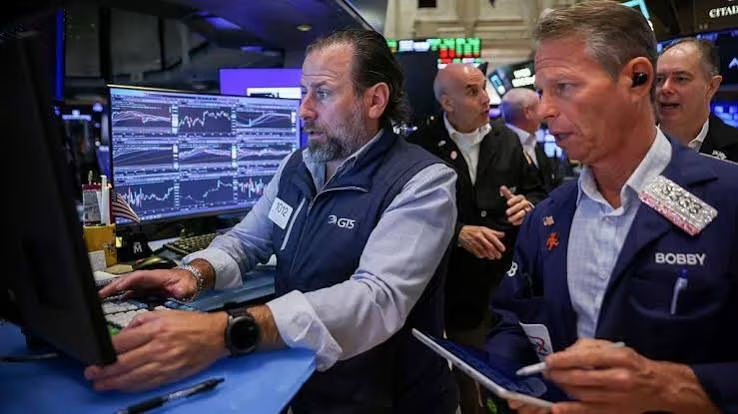
The tech-heavy Nasdaq Composite closed down more than 5.5% on Thursday, wiping out an estimated $2.5 trillion in market value. Other major US indexes also had their worst days since 2025, and AFP reports it was the Nasdaq’s worst session since April 2025. The sell-off then rolled into Asia on Friday, hitting the chipmakers that supply AI infrastructure. For more market and tech coverage, visit Technosports.
Market Snapshot
| Market / Stock | Move |
|---|---|
| Nasdaq Composite (US) | Down over 5.5% |
| Nikkei 225 (Japan) | Down 6.3% in the afternoon |
| Kioxia | Down almost 11.5% |
| Tokyo Electron | Down 5.8% |
| SK Hynix | Down over 8.8% |
| Samsung | Down about 6% |
| Kospi (South Korea) | Fell over 8% early, circuit breaker triggered, then about 5% lower |
| Taiex (Taiwan) | Down 4.5%, biggest weekly drop since 2001 |
Why the Midterms Rattled Investors?
Democrats ran campaigns in many races to slow the growth of data centres and AI, and dozens of ballot measures aimed to restrict the facilities that power the technology. Democrats won both the Senate and the House, taking control of Congress for the rest of President Trump’s term. Texas governor-elect Gina Hinojosa campaigned heavily against data centres and pledged a moratorium on new construction. Investors fear tighter rules could slow the spending that tech valuations depend on. Some tech leaders reportedly say they were caught off guard by the backlash.
A Bigger Worry Underneath
The election didn’t create the nerves, it fed them. Markets were already asking whether the huge sums poured into AI infrastructure will pay off. MarketWatch chips analyst Britney Nguyen described the sell-off as a continuation of worries over AI spending. Memory and equipment makers took the biggest hits because their sales rely on data centre buildouts.
What Happens Next?
Much depends on how far any restrictions go. Ballot measures and campaign pledges don’t automatically become policy, and rules will vary by state. Markets can also swing sharply in both directions after a sudden fall. Anyone watching their own investments should look at the long-term picture and consider a licensed financial advisor, as this article is not investment advice. Read more about the index at the heart of this fall on Wikipedia’s Nasdaq Composite page, and follow our latest tech news for updates.
This rout shows how much of the AI boom rests on one assumption: that the data centre buildout keeps accelerating. When politics or profits challenge that assumption, the shock spreads fast.
FAQs
Why did tech stocks fall after the US midterms?
Investors fear Democratic wins could mean tighter limits on data centres and slower AI spending.
Which markets were hit hardest?
South Korea’s Kospi triggered a circuit breaker, and Japan’s Nikkei fell 6.3% in the afternoon.
Which markets were hit hardest after the midterms?
South Korea’s Kospi fell over 8% early and triggered a circuit breaker before trading about 5% lower. Japan’s Nikkei 225 fell 6.3% in the afternoon.