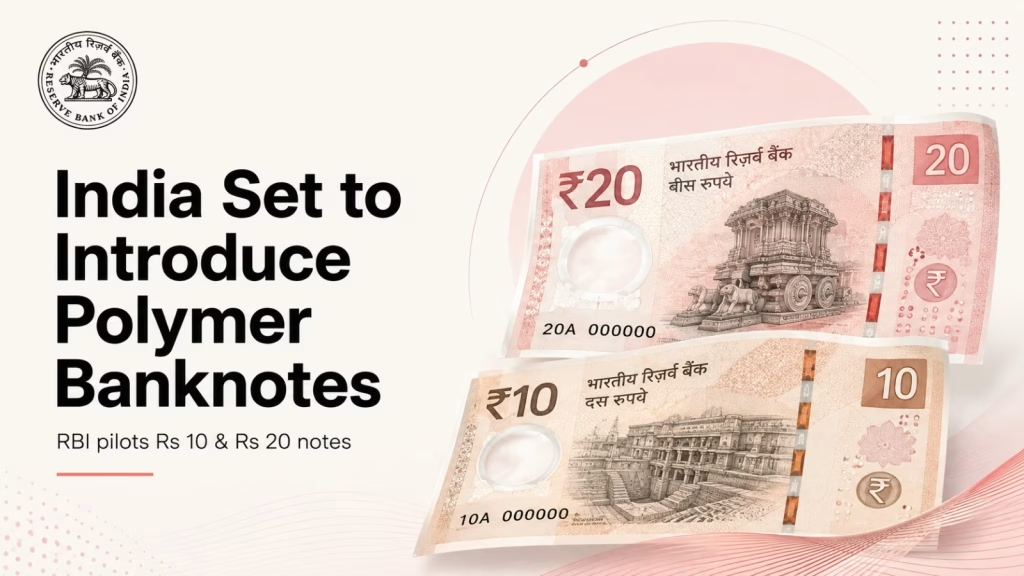
Your wallet might look a little different in the coming months. The Indian government has cleared the RBI’s proposal to field-trial polymer banknotes in the ₹10 and ₹20 denominations — a billion notes of each, rolling out to test whether plastic currency can survive India’s roads, wallets, and monsoons better than paper ever has.
Table of Contents
What’s Actually Happening
This isn’t a full currency overhaul. It’s a controlled pilot: one billion polymer ₹10 notes and one billion polymer ₹20 notes will be printed and circulated to study real-world durability, security performance, and how the notes hold up across India’s varied climate — from humid coastal cities to dry northern states. Regular issuance will only follow if the trials succeed.

| Detail | Information |
|---|---|
| Denominations | ₹10 and ₹20 |
| Trial Volume | 1 billion notes per denomination |
| Material | Non-fibrous plastic polymer substrate |
| Lifespan vs Paper | 2–6x longer |
| Security Features | Transparent windows, holograms |
| Paper Notes Status | Continue in circulation, unaffected |
| Regulatory Body | Reserve Bank of India (RBI) |
Why Small Notes, Why Now
₹10 and ₹20 notes take the most daily abuse — passed hand to hand constantly, stuffed into pockets, and worn out far faster than higher denominations. That heavy churn makes them the most expensive to keep reprinting, so they’re the logical starting point for a durability upgrade. Polymer substrate resists moisture, dirt, and tearing far better than the cotton-based paper India currently uses, which is exactly why countries like Australia, the UK, and Canada made the switch years ago.
Security Gets an Upgrade Too
Beyond durability, the polymer notes will carry features that are genuinely harder to fake — transparent windows and holograms integrated directly into the plastic substrate, rather than printed on top of it. That construction makes counterfeiting meaningfully tougher, since replicating a see-through security window on ordinary paper isn’t something a counterfeit printer can easily pull off.
No, Paper Isn’t Going Anywhere Yet
The government has been explicit on this point: polymer notes will circulate alongside existing paper currency, not replace it. Whether India eventually shifts more denominations to polymer will depend entirely on how this trial performs. For context, similar field trials of a polymer ₹10 note were floated in select Indian cities years ago, so this marks a renewed and expanded push rather than an entirely new idea. You can follow official updates directly via the Reserve Bank of India’s press releases.
For more on how India’s financial and tech policy landscape is evolving, check out TechnoSports’ coverage of India’s digital payments boom and recent fintech regulatory updates.
Bottom Line
India’s polymer note trial is a cautious, data-driven first step rather than a currency revolution — but if the ₹10 and ₹20 pilots prove out, it could reshape how Indian cash looks and lasts in the years ahead. For now, your paper notes remain exactly as valid as ever.
Sources: RBI, Lok Sabha proceedings