NAM316/7
 IRE249/8 (43.3/50 ov, target 317)
 SA255/6 (63.2 ov)
 AUS
 ABH0
 ALF1
 AFG
 ZIM
 SAS
 LAZ
 ROMA
 CAG
 TOR
 COMO
 BAN
 WI
 IND-W
 ZIM-W
 GOA
 SC Delhi
 Milan
 Bologna
 PAK110
 SL114/2 (18.1/50 ov, target 111)
 NZ198/3
 IND199/4 (13.2 ov)
 NED371/5
 OMA265 (49.3/50 ov, target 372)
 Sevilla2
 Osasuna0
 JER
 KUW
 JAB89/6 (13.1/20 ov, target 133)
 KAY132/9
 SIKM184
 NAGA187 & 46/4 (34 ov)
 JHK131/4 (47 ov)
 DELHI515/5d
 ODSA194
 SVCS13/0 (5 ov)
 BRODA616
 J & K6/0 (4 ov)
 CHD685/5d
 HP49/0 (14 ov)
 CGR216/8 (95 ov)
 AP231
 HYD193/2 (54 ov)
 PNJB431
 KNTKA297/7 (95 ov)
 TPURA194
 AUCK
 CANT
 CD
 ND
 DEN
 QAT
 KENYA
 POA
 SPR
 PNG155
 BIK149 (19.3/20 ov, target 158)
 CHR157/3
 BRB149/5 (16.2/20 ov, target 148)
 MIS147
 Parma
 Udinese
 Venezia
 Inter Milan
 Genoa
 Juventus
 PSG2
 Lyon0
 Mohun Bagan1
 Chennaiyin0
 BEI2
 JHM2
 RCH0
 KRE0
 DHC0
 VIS1
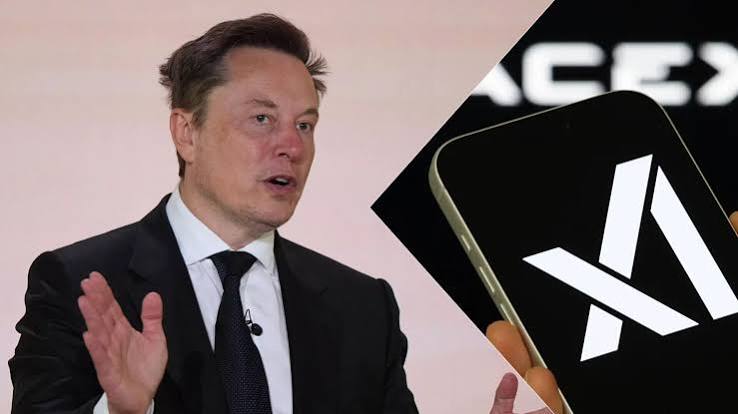
The context behind fervo energy economics shapes how this story lands. On Monday, October 5, 2026, it was rumoured that Elon Musk is transitioning SpaceXAI to SpaceXSI, marking a potential pivot toward advanced machine learning architectures.
The proposed rebrand forces industry observers to question how corporate identity intersects with theoretical computer science concepts. We break down exactly why this shift matters and trace the academic roots of the terminology being deployed.
Why Is Elon Musk Rebranding SpaceXAI To SpaceXSI?
Elon Musk reportedly initiated this strategic rebrand to signal a fundamental expansion beyond general artificial Intelligence frameworks. The proposed designation directly references capabilities that exceed human cognitive performance across virtually every economically valuable task.
The company intends to position its upcoming models as the definitive standard for autonomous decision-making systems. By dropping the generic AI suffix, the organization clarifies that its developmental roadmap prioritizes highly specialized computational tiers rather than consumer-facing chatbots. This move aligns with broader industry trends where major technology firms are distancing themselves from standardized software labels. The proposed consolidation would also streamline marketing efforts under a unified identity that emphasizes extreme processing power and long-term infrastructure scaling.
What Exactly Does The ‘Super Intelligence’ Label Mean In Tech?
In modern computing architecture, super Intelligence describes a hypothetical machine capable of outperforming the brightest human minds in scientific innovation, general wisdom, and social skills. This classification demands systems that can autonomously solve complex mathematical problems without human intervention.
Technology developers utilize the term to differentiate their next-generation neural networks from current large language models that rely heavily on pattern recognition. The label suggests a leap toward recursive self-improvement loops where the software optimizes its own codebase. Industry analysts note that achieving this threshold requires massive parallel processing clusters and unprecedented energy efficiency metrics. The terminology serves as both a technical benchmark and a marketing signal for enterprise clients seeking automated research solutions.
How Did The SuperIntelligence Concept Originate Historically?
The academic foundation for this terminology traces back to formal philosophical debates regarding machine cognition. Mathematician Nick Bostrom popularized the framework in his 2014 publication titled SuperIntelligence: Paths, Dangers, Strategies.
“We must ensure that machines ultimately do what we really mean, not what we say.”
His work established rigorous definitions for machine Intelligence hierarchies that computer scientists still reference today. Researchers initially developed these concepts to evaluate potential existential risks associated with unaligned autonomous systems. Over the years, the theoretical model evolved into practical engineering goals for hardware manufacturers. Modern developers study Bostrom’s early pathways to understand alignment challenges and safety protocols. The historical context reveals that contemporary branding choices often stem from decades-old academic cautionary tales.
When Were SpaceX And xAI Originally Established?
Understanding the corporate timeline clarifies why merging these distinct ventures requires careful structural planning. SpaceX was originally founded by Elon Musk on May 6, 2002, to revolutionize space travel. The aerospace division spent nearly two decades perfecting reusable rocket mechanics before expanding into terrestrial communications satellites. xAI was officially launched later on July 12, 2023, focusing exclusively on developing truthful artificial Intelligence. Sepa
What Are The Implications Of Merging These Brand Identities?
Combining aerospace manufacturing with advanced machine learning creates unprecedented cross-disciplinary opportunities for future projects. The proposed merged entity would likely prioritize satellite-based compute clusters that operate independently from ground stations.
Engineers could deploy quantum-resistant encryption protocols directly onto orbital platforms, enhancing global communication security. Regulatory bodies face complex jurisdictional questions regarding space-bound servers and international data sovereignty laws. Market competitors would struggle to replicate the vertical integration strategy without matching the capital expenditure requirements. Consumers might eventually benefit from faster data transmission speeds and more reliable navigation systems. Such a consolidation would establish a new precedent for how multinational corporations manage dual-sector operations.
| Entity | Original Founding Date | Primary Focus |
|---|---|---|
| SpaceX | May 6, 2002 | Aerospace Engineering |
| xAI | July 12, 2023 | Artificial Intelligence |
If realized, the transition from SpaceXAI to SpaceXSI would mark a decisive moment where theoretical computer science finally meets orbital engineering reality.
FAQs
What is the primary difference between the old SpaceXAI name and the new SpaceXSI designation?
The original name emphasized broad artificial Intelligence applications, while the updated label specifically targets machines that surpass human cognitive limits in economic tasks.
Why did Nick Bostrom’s 2014 book remain relevant to modern tech branding?
His theoretical frameworks provided the first standardized vocabulary for discussing machine Intelligence hierarchies, which engineers now use to define product capabilities.
How does combining aerospace and AI companies affect regulatory oversight?
Regulators must navigate overlapping jurisdictions that cover physical space launches alongside digital data sovereignty and algorithmic safety compliance.
Source: The Indian Express
Was this article helpful?
Your feedback directly improves future articles on this site.