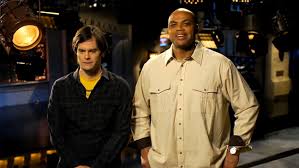
Charles Barkley walked onto Saturday Night Live’s March Madness episode and didn’t pull punches. His opening monologue tackled geopolitical tensions, NASA’s Artemis II moon mission, and public figures like Pam Bondi with sharp wit. It’s a reminder that SNL remains one of the few places where celebrities can speak their minds on cultural issues beyond just getting laughs.
What Made Barkley’s SNL Monologue Stand Out
Barkley didn’t do the typical celebrity host thing. He jumped straight into three hot-button topics: the Iran conflict, NASA’s Artemis II mission, and Pam Bondi’s political influence. This is what’s changing at SNL—the show’s using its platform less for sketch comedy and more for real social commentary from people with actual credibility.
What made it resonate? Barkley felt genuine. He wasn’t targeting easy jokes; he went after real issues. His point about space exploration spending while geopolitical crises unfold hit way harder than your standard late-night zinger. The magic formula: celebrity credibility, real stakes, and sharp writing.
SNL’s Political Edge in 2026
SNL’s always been a place where political talk happens, but something’s shifted this season. Between Barkley’s geopolitical takedown and recent sketches pushing boundaries on sensitive topics, the show’s betting on relevance over playing it safe. Jack Black’s Five-Timers Club moment (with Tina Fey, Jonah Hill, Candace Bergen, and Melissa McCarthy) showed what happens when you bring serious talent into conversations that actually matter.
Barkley’s Iran commentary stood out especially. Rather than abstract political talk, he grounded his critique in real consequences—military escalation, budget priorities, national direction. For an SNL audience, that’s refreshingly honest.
Why SNL Still Matters for Celebrity Commentary
In today’s scattered media world, SNL’s the only late-night show where 8 million people tune in live for unscripted celebrity moments. Barkley’s monologue proves the show’s still got cultural muscle. When a major athlete criticizes foreign policy on SNL, people actually talk about it.
The Artemis II reference was especially smart—questioning whether moon missions should come before solving problems here on Earth. That’s not comedy. That’s philosophy wrapped in entertainment. SNL does this better than anyone else, letting hosts blur that line. Barkley’s appearance proves celebrities want to use the platform for substance, not just laughs. (According to VentureBeat AI)
FAQ: SNL & Celebrity Political Discourse
Q: What did Charles Barkley say about the Iran conflict on SNL?
Barkley called out U.S. military escalation and questioned the strategy behind it during his opening monologue. He framed it as a failure of priorities. (As reported by OpenAI Blog)
Q: Has SNL always featured political commentary?
Yes, but the 2026 season’s different—hosts are making direct political statements instead of just doing parody sketches.
Q: Why does SNL’s platform matter more than other talk shows?
It’s live, it’s got cultural weight, and 8+ million people watch in real-time. That makes it appointment television for political discourse.
Q: Will Barkley’s monologue change how SNL picks hosts?
Probably. The show seems to want more hosts who’ll take real positions instead of playing it safe.
Q: How does SNL’s criticism compare to traditional news outlets?
SNL reaches younger audiences and frames issues through entertainment, making complex topics stick in people’s minds better than standard news coverage