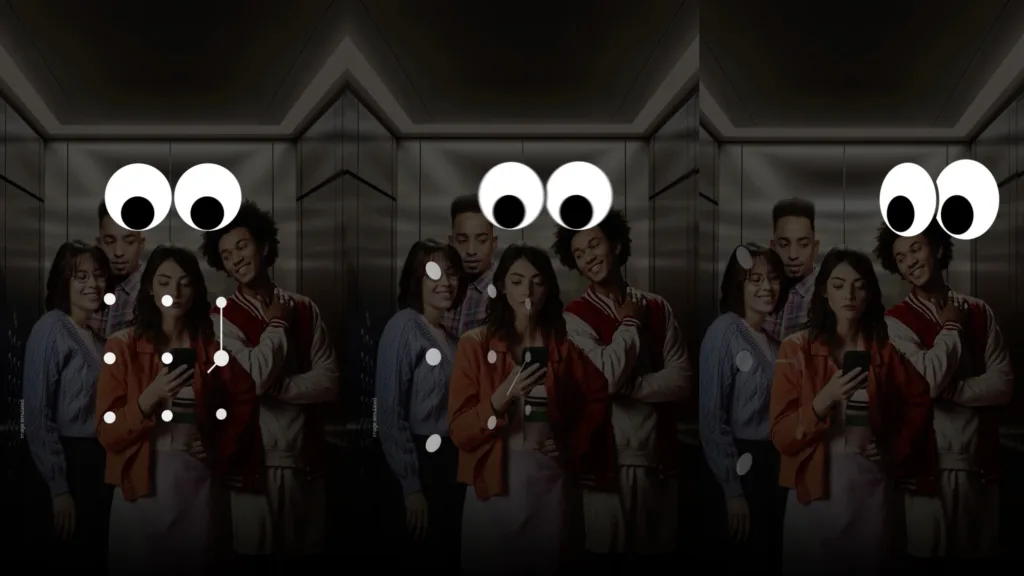
Samsung announced an upcoming privacy layer engineered over five years to shield Galaxy devices from shoulder surfing in public spaces. The customizable protection allows users to adjust visibility settings based on privacy needs, offering flexible control over specific apps, notification pop-ups, and password entry screens—addressing growing concerns as phones become increasingly personalized while being used in elevators, buses, and public queues.

Customizable Protection Beyond Blanket Solutions
Unlike one-size-fits-all approaches, the new layer enables users to choose privacy levels matching individual requirements. Users can customize protection for specific apps or when entering access details for sensitive phone areas, with multiple visibility adjustment settings limiting what others see based on required privacy protection intensity rather than blanket restrictions.
| Privacy Feature | Capability | Flexibility |
|---|---|---|
| Visibility Control | Multiple adjustment settings | App-specific or system-wide |
| Notification Shield | Protect pop-up previews | Selective content masking |
| Password Entry | Screen content filtering | Context-aware activation |
| Customization | User-defined privacy levels | Fine-tune or disable entirely |
| Hardware-Software Fusion | Calibrated protection | No workflow interruption |
| Knox Integration | Pixel-level privacy | Built on decade+ security legacy |

Five Years of Engineering Delivers Pixel-Level Security
Samsung studied how people use phones, what they consider private, and how security should feel in everyday life over five years of engineering, testing, and refinement. The result fuses hardware and software expertly calibrated to protect users without workflow interference—privacy you can see and security you can feel coming to Galaxy devices very soon.
The announcement emphasizes “there is no privacy without strong security,” building upon Samsung Knox’s decade-plus legacy establishing protection layers for Galaxy devices. From dedicated security hardware like Knox Vault to ecosystem defenses such as Knox Matrix, this latest safeguard introduces privacy at a pixel level, representing the newest innovation in Samsung’s comprehensive security architecture.
The customizable approach addresses the paradox of phones being our most personal space yet used in the least private places. As devices become more tailored to routines and preferences through AI personalization, the need for dynamic privacy controls grows correspondingly. Samsung’s solution recognizes different contexts demand different privacy levels—checking messages on packed commutes requires different protection than browsing at home.
Notification pop-ups receive special attention, as these often reveal sensitive information inadvertently. Users can protect specific experience parts rather than applying universal restrictions that might inconvenience daily usage. This granular control respects that not everyone needs identical privacy measures across all situations and applications.
The hardware-software fusion took extensive development to ensure protection feels natural rather than intrusive. By studying real-world usage patterns, Samsung engineered solutions activating contextually when privacy matters most—entering passwords, accessing sensitive apps, or viewing notifications in public—without requiring constant manual intervention disrupting user experience.
This announcement follows Samsung’s broader commitment to user-controlled privacy, particularly as Galaxy AI features expand device personalization. The pixel-level approach represents technical advancement beyond traditional screen privacy filters, suggesting sophisticated display technology managing visibility dynamically based on viewing angles and user-defined parameters.
Learn more at Samsung Mobile Press and explore mobile privacy innovations shaping smartphone security standards.