POR2
POR2 CLT2
CLT2 SD1
SD1 SEA2
SEA2 UAE
UAE NED
NED PAK
PAK ENG
ENG IND-W
IND-W ZIM-W
ZIM-W GMB
GMB LES
LES MOZ
MOZ ZMB
ZMB Inter Milan
 Fiorentina
 Churchill
 Punjab FC
 NGA
NGA UGA
UGA MEX-W23 (9.3/20 ov, target 189)
 ARG-W188/5
 ATM1
ATM1 DEP0
DEP0 LAZ2
LAZ2 PAR1
PAR1 RCL2
RCL2 PAR1
PAR1 NZ-A317
 IND-A113 & 75/2 (24.5 ov)
 SYL
SYL KHU
KHU MYMS299/4 (87 ov)
 CHATT
CHATT DHA293/3 (84.1 ov)
 RAJ
RAJ RAN320/5 (80 ov)
 BAR
BAR DEN
DEN PNG
PNG NAM321/6
 IRE290 (47.3/50 ov, target 322)
 Athletic
 Getafe
 C Palace
 Newcastle
 Hull
Hull Brentford
 Liverpool
 Brighton
 Man United
 Bournemouth
 Atalanta
 Frosinone
 RIY2
RIY2 TAA1
TAA1 CHE0
CHE0 TOT2
TOT2 VAL1
VAL1 VIL2
VIL2
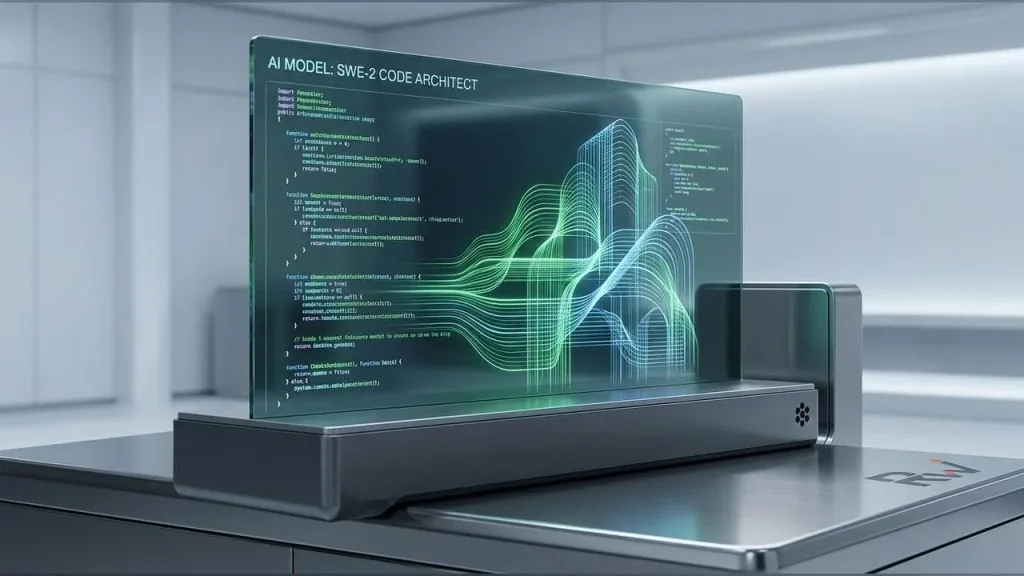
Cognition released SWE-2, a post-trained coding model, on September 12, 2026, and the headline number is cost: it runs 64% cheaper than competing models. The company built the release on top of the Kimi K3 foundation model rather than training from scratch.
For engineering teams burning through API budgets on agentic coding work, that gap is the entire story.
Releases Swe-2: What Cognition Actually Shipped
SWE-2 is a post-trained model, which means Cognition reportedly took Kimi K3’s base weights and specialised them for software engineering tasks — fixing bugs, navigating large codebases, and executing multi-step changes.
Post-training on an existing foundation has become the fastest route to a competitive coding model, and Cognition has leaned into it instead of undertaking a full pretraining effort. The economics explain why. Foundation model pretraining costs have climbed into territory that only a handful of labs can justify, while the value in coding agents increasingly sits in the fine-tuning, tooling, and harness layers. By starting from Kimi K3, Cognition inherits a capable base and spends its resources where developers actually feel the difference.
Performance: Matching Fable 5.1 on FrontierCode
The benchmark claim is specific. SWE-2 matches the performance of Fable 5.1 on the FrontierCode coding evaluation.
A team paying for thousands of agent runs per day cares about the cost-per-solved-task ratio, and that ratio just moved sharply in Cognition’s favour.
Sceptics will ask what the FrontierCode comparison leaves out: latency, context length behaviour, and reliability on real production repositories are harder to capture than a benchmark score. That said, benchmark parity at a fraction of the cost has historically been enough to shift developer mindshare, and Cognition’s own agent products give it an immediate distribution channel for the model.
Why the Kimi K3 Base Matters
The choice of foundation is a signal about where the market is heading. Kimi K3 gives Cognition a strong reasoning base without the pretraining bill, and the arrangement mirrors a broader pattern: specialised labs building on open or licensed foundations, then competing on post-training quality and product integration.
It is the software industry’s classic layering play, replayed at model scale. Cognition arrives with momentum. The company has reportedly been associated with a $40 billion valuation — a figure that reflects how valuable proven coding agents have become. Shipping a cheaper model strengthens that position, because cost is the main objection enterprises raise before rolling agents out at scale.
What Happens Next
Watch three things. First, whether independent evaluations reproduce the FrontierCode parity claim outside Cognition’s own harness. Second, whether the 64% cost advantage survives real-world traffic, where retries and long contexts inflate token spend.
Third, how rival labs respond on Female Labour Data analysis and even in consumer hardware, where some smart TVs now ship with on-device AI to dodge cloud costs. SWE-2 is the same logic applied to code. The bottom line: if the benchmarks hold, Cognition has made frontier-level coding performance a commodity — and someone else’s margin is about to pay for it.
Related Articles
- Jio’s Space Gamble: 1,600 Satellites, One Mission — Taking On Starlink From…
- Meta’s “Create & Play with Meta AI” Gaming Arcade Turns Mumbai Into…
- Smart TV
Every new development in the releases swe-2 story will be tracked as it lands.
FAQs
What is SWE-2?
SWE-2 is a post-trained coding model that Cognition released on September 12, 2026, built on top of the Kimi K3 foundation model.
Was this article helpful?
Your feedback directly improves future articles on this site.