NZ113/3 (14.4 ov)
 IND
 NAM321/6
 IRE208/5 (37.3/50 ov, target 322)
 MEX-W
 ARG-W
 ARS
 EVE
 COV
 FUL
 OFC
 NEU
 NEOM
 ABH
 RAC
 ESP
 KHO
 ETT
 NAP
 ROMA
 MOZ19
 UGA23/0 (0.5/20 ov, target 20)
 Ipswich1
 Nottm Forest1
 Alavés1
 Málaga1
 Torino3
 Monza2
 KENYA
 QAT
 SWD-W
 EPR-W
 TTN-W
 WPR-W
 BOR135/3 (18/20 ov, target 137)
 WAR136/8
 NZ-A135/3 (41 ov)
 IND-A113
 DHA293/3 (84.1 ov)
 RAJ
 MYMS299/4 (87 ov)
 CHATT
 RAN320/5 (80 ov)
 BAR
 SYL
 KHU
 UAE
 NED
 PAK
 ENG
 IND-W
 ZIM-W
 GMB
 LES
 ZMB
 NGA
 AFG170/3 (34.3/50 ov, target 170)
 ZIM169
 CHE
 TOT
 Brest1
 Nice2
 Stuttgart2
 Gladbach3
 Al Ahli4
 Al Khaleej1
Anthropic announced prompt caching for Claude models on August 15, 2024, allowing Claude 3.5 Sonnet to cache up to 2 million tokens of context. That single change showed why RAG evolution is moving beyond document search. How did Retrieval-Augmented Generation begin, why is caching important, and what should developers build next?
What does RAG evolution mean for AI applications?
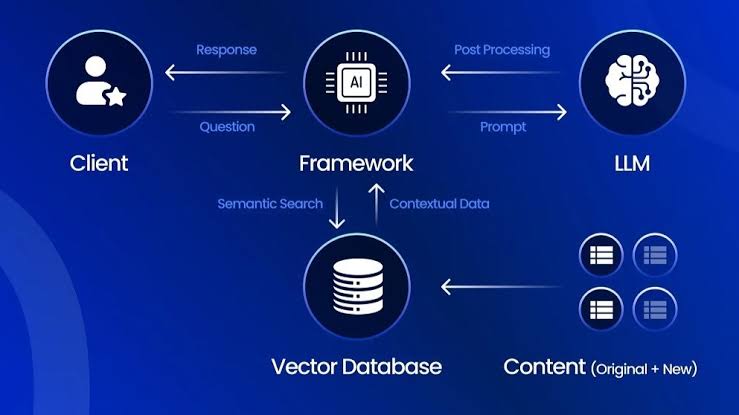
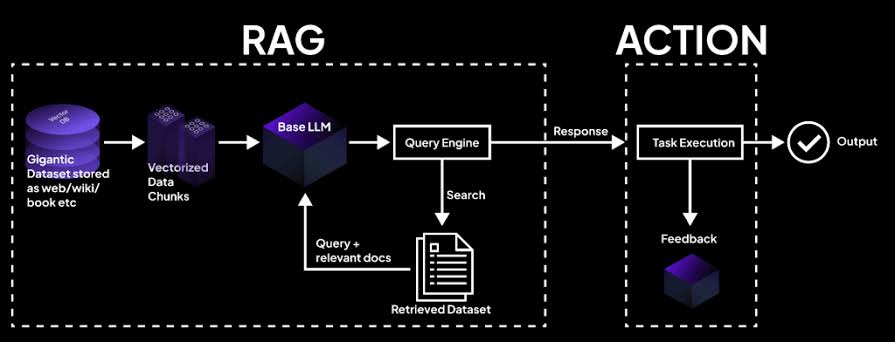
Early RAG systems followed a simple pattern: convert documents into vectors, retrieve the closest passages, and place them inside a prompt before gene2-million-token caching limit points to a different approach: preserve frequently used context and reuse it across interactions.
How did RAG evolution change retrieval infrastructure?
RAG evolution accelerated when vector databases became easier to scale. Pinecone introduced Serverless indexes in February 2024, changing how teams provision vector storage and retrieval capacity. Instead of building fixed infrastructure around anticipated traffic, developers could design pipelines that better match storage and query demand.
Microsoft Azure added vector search within Azure Cosmos DB in March 2024, bringing retrieval closer to enterprise application data. That matters for organisations already storing customer records, operational documents, or product information in Cosmos DB. Google Cloud also integrated context caching for Gemini 1.5 Pro and Gemini 1.5 Flash in May 2024, with a minimum cache size of 32,768 tokens. The next question is what happens when retrieved data is not merely found, but retained and reused.
Why is context caching central to advanced RAG?
Traditional retrieval treats every request as a fresh lookup. Context caching changes that pattern by keeping stable instructions, reference documents, or conversation history available for later calls. The model still receives relevant information, but the system avoids rebuilding the same large context repeatedly.
Anthropic’s August 2024 announcement put a clear figure on the opportunity: Claude 3.5 Sonnet could cache up to 2 million tokens of context. Google’s 32,768-token minimum shows that caching is not designed for every small prompt; it becomes most useful when an application repeatedly references sizeable material. Our earlier coverage of prompt caching for developers explains the implementation trade-offs. Teams must still manage expiry, document updates, permissions, and stale information, because a cached answer source can become a hidden liability.
What comes next for RAG evolution?
The next stage combines retrieval, caching, structured responses, and agents. OpenAI introduced structured outputs and enhanced retrieval features in August 2024 to improve RAG reliability, helping applications return information in predictable formats rather than loosely written text.
That is valuable when retrieved content feeds databases, workflows, or customer-service software. LangChain released LangGraph in 2024 to support complex, multi-agent RAG workflows with cyclic reasoning loops. Such systems can retrieve evidence, check its quality, ask another agent to fill a gap, and repeat the process before responding. The architecture is more capable, but it also needs clear limits around cost, latency, permissions, and failure recovery.
Germany and Netherlands AI infrastructure investments underline the wider trend: better models still require carefully designed compute and data systems.
The practical path forward is selective caching, fresh retrieval for changing facts, and structured validation before an answer reaches a user. RAG evolution will reward teams that treat context as managed infrastructure rather than disposable prompt text.
FAQs
What is RAG?
RAG is a method that retrieves external information and supplies it to a language model during response generation. It helps applications answer using current or private data without retraining the model. For more detail, see VentureBeat AI.
What is context caching?
Context caching stores reusable prompt material so later requests do not need to resend or reconstruct the same information. It can reduce repeated processing for large documents and long conversations.
What did Pinecone change in 2024?
Pinecone introduced Serverless indexes in February 2024. This approach allows RAG teams to scale vector storage and retrieval without relying on the same fixed infrastructure approach.
Why do structured outputs matter for RAG?
Structured outputs make model responses easier for software to validate and process. They are especially useful when retrieved information must enter a database, trigger a workflow, or support an automated decision.
Was this article helpful?
Your feedback directly improves future articles on this site.