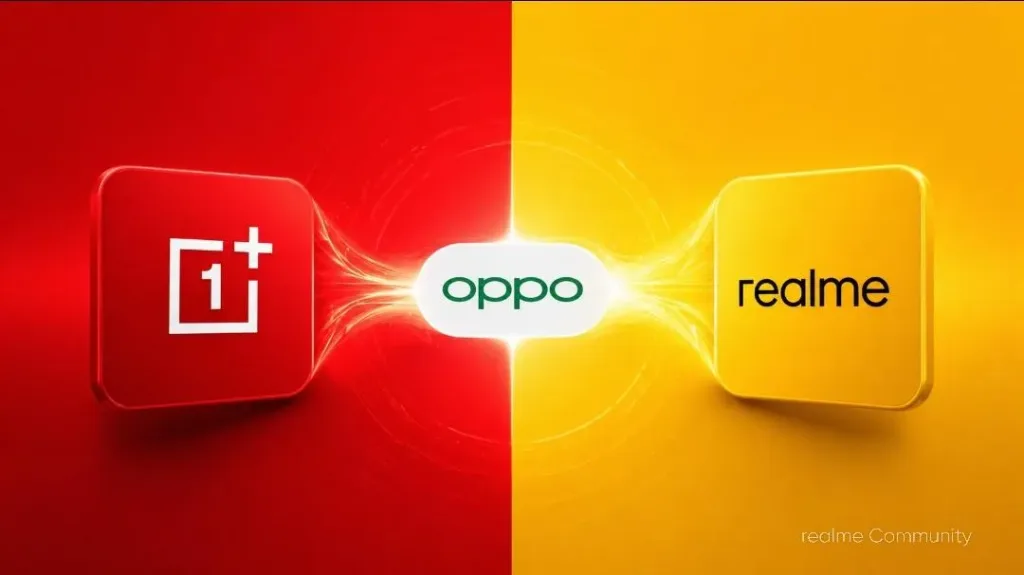
The BBK Electronics family is redrawing its internal map. OPPO has confirmed a major restructuring across its sister brands, and the split is a clean one: Realme is pulling back from China entirely to focus on global markets, while OnePlus is doing almost the exact opposite, leaning harder into its home turf.
What’s Actually Changing
According to Realme’s official statement, the brand will pause further product development in China and shift its focus almost entirely to overseas markets, meaning future launches and updates will primarily target international users going forward. OnePlus, meanwhile, is taking the inverse path: concentrating on China while continuing to support updates in India, but putting new product releases on hold across Europe and North America, a move OnePlus itself confirmed just a day earlier through its own Community forum.
| Brand | China Focus | Global Focus |
|---|---|---|
| Realme | New product development paused | Primary focus going forward |
| OnePlus | Primary focus going forward | New launches paused in Europe & North America |
| India | Both brands continue operating | Business as usual |

The Bigger Move: One Software Platform to Rule Them All
The more consequential shift here isn’t the product roadmap split, it’s what’s happening underneath. OPPO is gradually unifying its three Android skins, ColorOS, OxygenOS, and realme UI, under a single ColorOS-centered platform. Going forward, eligible Realme and OnePlus devices worldwide will get the option to update to ColorOS, building on the OxygenOS-ColorOS merger that first began back in 2021.
The logic is straightforward: maintaining three separate software platforms means duplicated engineering effort and higher costs. By consolidating, OPPO can ship features and security patches faster while saving resources across the board, resources that increasingly matter as component costs keep climbing industry-wide.
Why This Restructuring Makes Sense Right Now
This isn’t a random reshuffle. Realme has already been quietly reintegrating with OPPO in markets like India, sharing after-sales service networks for a while now. Splitting regional focus cleanly between two brands under the same parent company reduces internal competition and lets each brand play to its actual strengths rather than fighting each other for the same customers.
It also tracks with a pattern we’ve been following closely across BBK’s brands this month, from OnePlus’s official confirmation of its Europe and North America exit to the broader ColorOS 17 software transition already underway. Squeezed margins and rising component costs are clearly pushing conglomerates like BBK toward consolidation rather than maintaining three fully independent brand identities.
What This Means for Users
Reactions will likely be mixed. Some users will welcome faster, more consistent updates once everything centers on ColorOS, while OxygenOS loyalists may miss its distinct, close-to-stock feel. For Indian buyers specifically, both brands say business continues as usual here, so the immediate impact is limited to which software your next Realme or OnePlus phone eventually runs.
The Takeaway
OPPO is cleanly dividing global responsibilities between Realme and OnePlus while quietly merging all three brands onto one software platform underneath. It’s a consolidation play driven by cost and competition, not creative differences, and the real change users will notice first is ColorOS showing up on phones that never carried that name before.