NED
NED OMA
OMA NZ
NZ IND
IND NAM
NAM IRE
IRE PAK
PAK SL
SL SA
SA AUS
AUS Abha
Abha Al Faisaly
 AFG
AFG ZIM
ZIM Sassuolo
 Lazio
Lazio SEV2
SEV2 OSA0
OSA0 PSG2
PSG2 LYON0
LYON0 MBSG1
MBSG1 CFC0
CFC0 Barcelona1
 Real Madrid2
 NZ-A317 & 91/3 (24.3 ov, target 313)
 IND-A113 & 516
 SYL575/4 (167.3 ov)
 KHU
KHU MYMS465/7d
 CHATT424/6 (121 ov)
 DHA521
 RAJ162 & 215/5 (59.1 ov) (f/o)
 RAN402 & 5/0 (2.3 ov)
 BAR443/9d
 SIKM30/1 (15 ov)
 NAGA187
 JHK
JHK DELHI309/5 (90 ov)
 ODSA194
 SVCS13/0 (5 ov)
 BRODA259/6 (86 ov)
 J & K
J & K CHD363/2 (87 ov)
 HP
HP CGR35/1 (14 ov)
 AP231
AP231 HYD
HYD PNJB289/6 (90 ov)
 BAN
BAN WI
WI IND-W
IND-W ZIM-W
ZIM-W BRB149/5 (16.2/20 ov, target 148)
 MIS147
 MOW107/9
 TOK111/5 (18.4/20 ov, target 108)
 LUL88/3 (9.5/20 ov, target 88)
 SPR87
SPR87 JUV3
JUV3 NAU0
NAU0 BOL1
BOL1 UDV1
UDV1 IACC0
IACC0 RIE0
RIE0 SFE0
SFE0 BUC0
BUC0 AS Roma
 Cagliari
 Torino
 Como
Como GOA
GOA SC Delhi
 Daejeon
 Vissel Kobe
 Darul Ta'zim
 Port FC
 Kyoto Sanga
 Newcastle Jets
 Udinese0
 Milan2
 Real Sociedad2
 Levante1
OpenAI officially released GPT-5.4 mini and GPT-5.4 nano on March 17, 2026, calling them its “most capable small models yet.” Both are designed for high-volume, latency-sensitive workloads where the flagship GPT-5.4 is simply overkill — and priced accordingly.
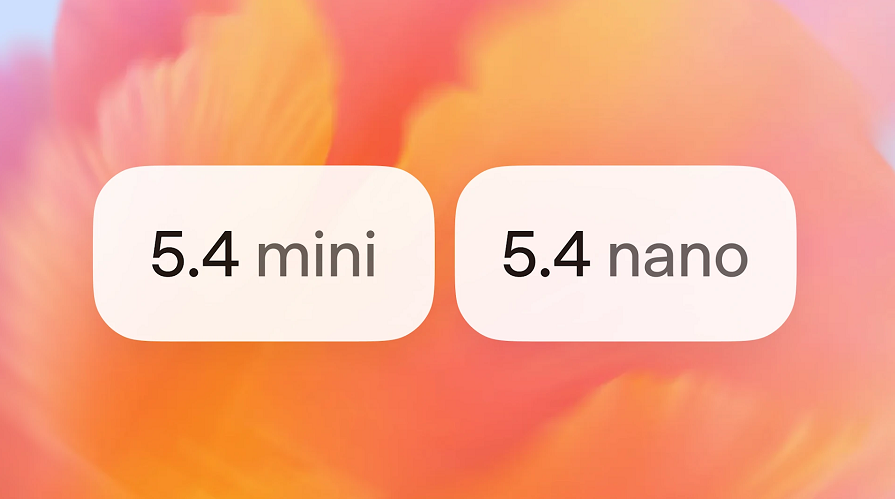
GPT-5.4 Mini vs Nano: Key Specs at a Glance
| Feature | GPT-5.4 Mini | GPT-5.4 Nano |
|---|---|---|
| Speed | 2x faster than GPT-5 mini | Fastest in the GPT-5.4 family |
| Input Pricing | $0.75 / 1M tokens | $0.20 / 1M tokens |
| Output Pricing | $4.50 / 1M tokens | $1.25 / 1M tokens |
| Context Window | 400K tokens | 400K tokens |
| SWE-Bench Pro | 54.4% | Nano-tier (below mini) |
| OSWorld-Verified | 72.1% | 39% |
| Availability | API, Codex, ChatGPT | API only |
| Best For | Coding, agents, computer use | Classification, extraction, ranking |
What Makes These Models Worth Paying Attention To
The benchmark gap between mini and the full GPT-5.4 is smaller than you’d expect. On SWE-Bench Pro — a rigorous coding benchmark — mini scores 54.4% against the flagship’s 57.7%. On OSWorld-Verified, which tests computer use via screenshot interpretation, mini reaches 72.1% versus the full model’s 75%. Those are narrow margins at a fraction of the cost, and for most real-world coding tasks the difference won’t be perceptible in the output.
The nano model tells a different story — it’s not trying to compete on reasoning depth. Nano is the smallest, cheapest option in the GPT-5.4 family, and OpenAI recommends it for classification, data extraction, ranking, and coding subagents that handle simpler supporting tasks. At $0.20 per million input tokens, it’s cheaper than Google’s Gemini Flash-Lite — a meaningful competitive edge for developers processing enormous volumes of data.

The Bigger Picture: A New Way to Build AI Systems
What OpenAI is really selling here is an architecture pattern. Rather than running one large model for everything, developers can now have GPT-5.4 handle planning and complex reasoning while mini or nano subagents execute narrow tasks in parallel — codebase search, file review, document processing. In Codex, mini consumes only 30% of the GPT-5.4 quota, making this kind of delegation financially sensible at scale.
GPT-5.4 mini is live today in the API, Codex, and ChatGPT. Free and Go users on ChatGPT can access it through the Thinking feature. GPT-5.4 nano is API-only for now, clearly positioned as developer infrastructure rather than a consumer product.
For more AI and tech coverage, head over to TechnoSports’ tech section.