Imagine driving at highway speed, passing through a toll plaza without slowing down, without rolling down your window, and without a single barrier in your way. That’s not the future anymore — it’s happening right now on NH-48 in Gujarat. India has officially entered the era of barrier-less highway tolling.
MLFF Tolling Launch — Key Facts
| Detail | Info |
|---|---|
| System | Multi-Lane Free Flow (MLFF) Tolling |
| Launched By | NHAI (National Highways Authority of India) |
| Location | Chorayasi Toll Plaza, Surat–Bharuch stretch |
| Highway | NH-48, Gujarat |
| Launch Date | May 2, 2026 |
| Day 1 Vehicles Crossed | ~41,500 |
| Technology Used | FASTag + ANPR (Automatic Number Plate Recognition) |
| Non-Payment Window | 72 hours before penalty applies |
What Is Multi-Lane Free Flow (MLFF) Tolling?
India’s first Multi-Lane Free Flow (MLFF) tolling system has been rolled out at the Chorayasi Toll Plaza on the Surat–Bharuch stretch of NH-48 in Gujarat by NHAI. The system uses a powerful combination of FASTag technology and Automatic Number Plate Recognition (ANPR) cameras to deduct tolls automatically as vehicles pass — no barriers, no stopping, no human intervention.
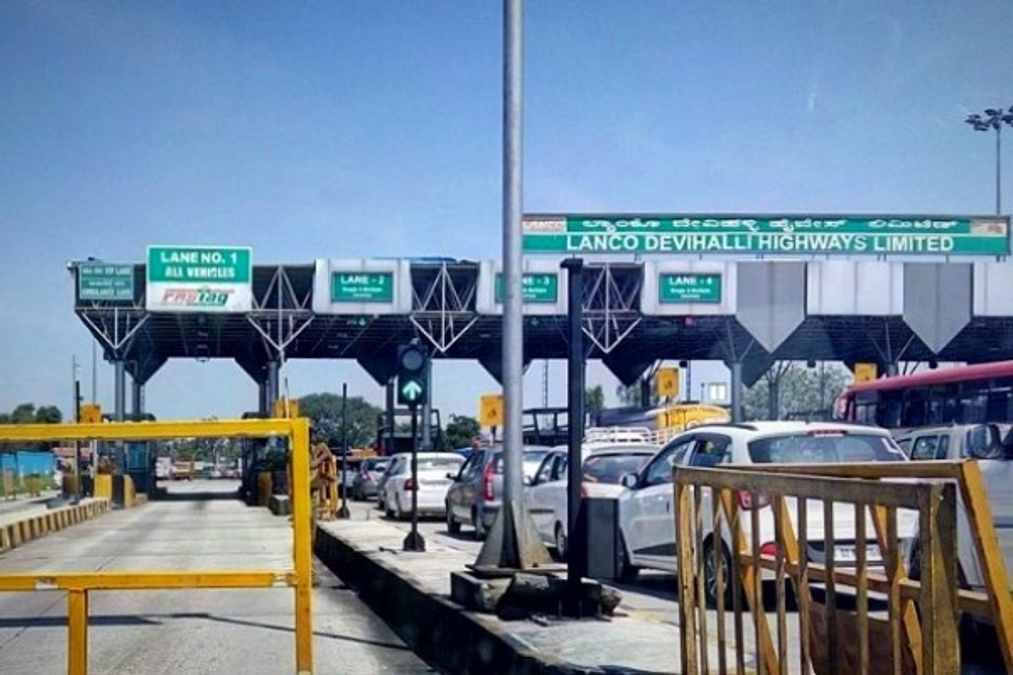
The barrier-less system recorded around 41,500 vehicles crossing the toll location on its very first day of operation — a strong signal that commuters are already embracing the change.
Why This Matters for Every Indian Driver
The benefits of MLFF go well beyond convenience. The new system eliminates the need for vehicles to stop at toll plazas, reducing congestion and travel time, improving fuel efficiency, lowering vehicular emissions, and enhancing overall convenience for commuters.
Think about how much time India collectively loses every day at toll queues. MLFF directly attacks that problem — and with NH-48 being one of India’s busiest highways connecting Mumbai to Delhi via Vadodara and Surat, the impact on daily traffic flow will be enormous.
For more infrastructure and transport policy updates, visit TechnoSports.
FASTag Rules Under MLFF — What You Must Know
Since there are no toll booths to remind you to pay, keeping your FASTag account topped up is now more critical than ever.
If a toll payment fails, users receive an Electronic Notice (E-Notice) for non-payment. The toll must be paid within 72 hours — failing which double toll charges apply. Continued non-payment may lead to FASTag blacklisting and restrictions on vehicle services via the VAHAN platform.
Users can settle dues or raise grievances through the official NHAI e-notice portal.
What’s Next for India’s Highway Network?
The MLFF rollout is expected to improve transparency in toll collection, reduce the operational costs of toll plazas, and strengthen India’s digital highway infrastructure — marking a significant step toward building a faster, greener, and more efficient national highway network.
This is just the beginning. If the Gujarat pilot proves successful at scale, MLFF could be expanded across India’s entire national highway network — transforming daily commutes for millions. Stay updated on India’s infrastructure revolution at TechnoSports’ technology and transport hub.
FAQs
Q1. What happens if my FASTag doesn’t have enough balance at an MLFF toll plaza?
Q2. Where is India’s first MLFF tolling system located?
It is operational at the Chorayasi Toll Plaza on the Surat–Bharuch section of NH-48 in Gujarat, launched by NHAI on May 2, 2026 — recording approximately 41,500 vehicle crossings on day one.