MEX-W
MEX-W ARG-W
ARG-W RBNY1
RBNY1 MIA0
MIA0 Palmeiras1
 Bragantino0
 Vasco1
 Corinthians2
 Chapecoense1
 Fluminense0
 UAE
UAE NED
NED PAK
PAK ENG
ENG IND-W
IND-W ZIM-W
ZIM-W GMB
GMB LES
LES MOZ
MOZ ZMB
ZMB Inter Milan
 Fiorentina
 Churchill
 Punjab FC
 NGA
NGA UGA
UGA ATM1
ATM1 DEP0
DEP0 LAZ2
LAZ2 PAR1
PAR1 RCL2
RCL2 PAR1
PAR1 RIY2
RIY2 TAA1
TAA1 NZ-A164/5 (51.2 ov)
 IND-A113
 SYL
SYL KHU
KHU MYMS299/4 (87 ov)
 CHATT
CHATT DHA293/3 (84.1 ov)
 RAJ
RAJ RAN320/5 (80 ov)
 BAR
BAR DEN
DEN PNG
PNG NAM321/6
 IRE290 (47.3/50 ov, target 322)
 NZ180/5
 IND181/6 (19.5/20 ov, target 181)
 Athletic
 Getafe
 C Palace
 Newcastle
 Hull
Hull Brentford
 Liverpool
 Brighton
 Man United
 Bournemouth
 Atalanta
 Frosinone
 CHE0
CHE0 TOT2
TOT2 VAL1
VAL1 VIL2
VIL2
The Netherlands had absolutely no problems against Sweden in Houston as Cody Gakpo inspired Ronald Koeman’s side to an emphatic 5-1 victory at the NRG Stadium.
The Liverpool forward and Sunderland’s Bryan Brobbey both scored twice before Crysencio Summerville added a late fifth in a hugely impressive World Cup performance. Anthony Elanga pulled one back for Graham Potter’s side in the second half, but Sweden — who had themselves beaten Tunisia 5-1 in their opening match — simply could not live with the ruthless Dutch front line.
This was not just a win. It was a statement.
Can the Netherlands Win the World Cup?
The Netherlands were among the European heavyweights who failed to win their opening match — their 2-2 draw with Japan raised legitimate questions about whether Koeman’s side were genuinely competitive at the highest level of this tournament.
Against Sweden, those questions were answered emphatically.
If they can maintain this level, they are real contenders.
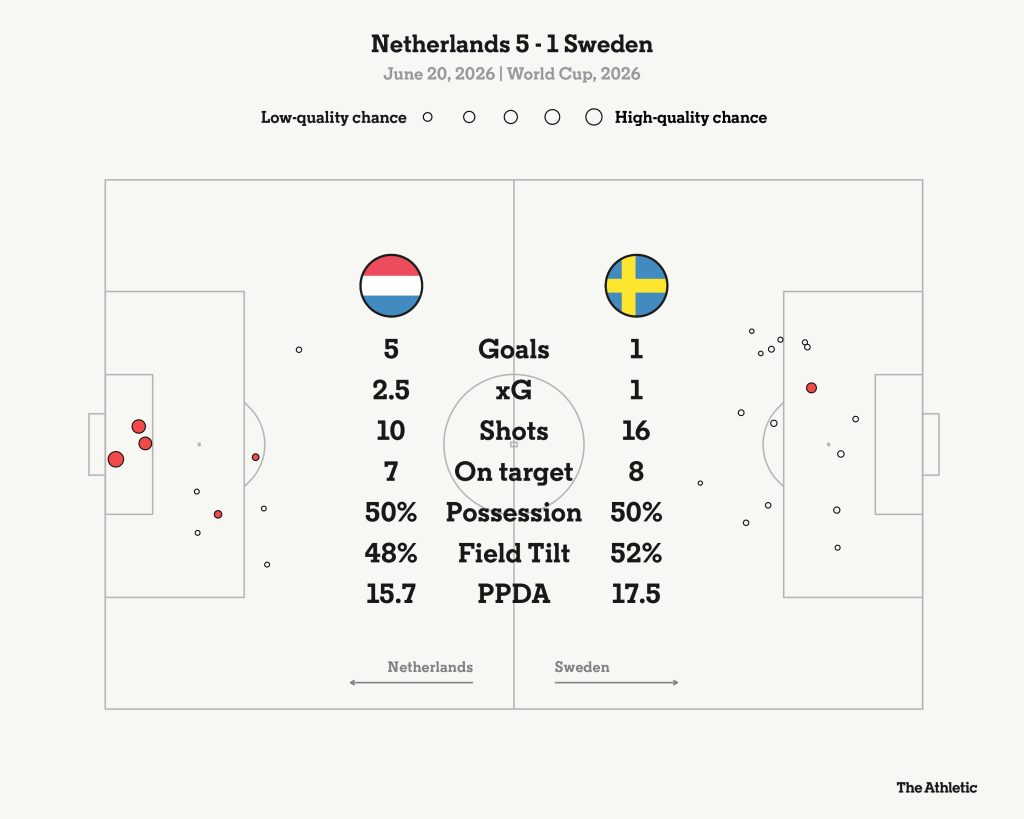
The key ingredients were all present. Brobbey gave Koeman a No 9 he can build a system around — one who complements the players behind and beside him in ways that a more straightforward centre-forward does not. There was so much more to admire than just the scoreline: the intensity from the first whistle, the variation in attack, the willingness to go direct when necessary, to pass progressively through central midfield, to exploit wide areas at pace.
They will still need to tighten things defensively. After the hydration break in the first half, Sweden tweaked their shape and exposed spaces in the Dutch transition. The Netherlands were stretched on several occasions in the second half too. But overall, this was an important step forward — a reminder that Koeman’s side should not be written off.
How Koeman’s Tactical Switch Worked Wonders
It was a bold call. Donyell Malen — the form Dutch striker in domestic football last season, scoring 14 goals in 18 Serie A games after joining from Aston Villa in January — was shifted from the central striking role to the right of the three-man attack. Summerville was dropped. Brobbey came in as the No 9.
Koeman had spotted something. Brobbey’s physicality presented a specific problem for the Swedish central defence — and the Netherlands wasted no time exploiting it. Brobbey scored twice in the first 17 minutes, both from similar positions, both from low crosses delivered from wide areas.
The first came from Gakpo on the left. The second from Denzel Dumfries on the right. Isak Hien — Sweden’s centre-back — was physically bullied in a way he had no obvious answer to.
Potter responded at the first hydration break, moving Sweden from a back three to a back four to close the space behind the Swedish wing-backs that the Dutch had been ruthlessly exploiting. The switch worked — but the damage was already done. 3-0 before the tactical adjustment had any opportunity to take effect.
The Wide Combination Formula
Three of the Netherlands’ four goals (before the fifth late on) came from the same template:
Get it wide quickly → Whip the ball low → Encourage runners to gamble at the back post
Gakpo’s assist for the first goal was particularly notable — rather than cutting inside onto his stronger right foot as he so often does, he played as an orthodox winger, driving to the byline and delivering a low cross. It was Gakpo in a mode he is not always asked to demonstrate, and it worked perfectly.
Koeman now has a clear attacking identity: speed wide, low cross, late runners crashing the six-yard box. Tijjani Reijnders and similar players capable of arriving late into the penalty area add further threat. The Netherlands seem to have found their best route to scoring goals.
Breaking Down the Outstanding First Goal
If there was any concern about a Dutch hangover after conceding an 88th-minute equaliser against Japan, it evaporated within five minutes.
The sequence:
- Brobbey held off Hein to lay off Bart Verbruggen’s long pass to Reijnders
- Reijnders quickly released Gakpo down the left channel
- Gakpo drove into the box — but instead of cutting inside as is his trademark, he spotted Brobbey central and drove a low cross toward him
- Brobbey could not miss
The aggression and intensity from the first whistle were rewarded with a goal that was both efficient and dynamic. It set the tone for everything that followed.
The second goal was constructed on almost identical principles — Brobbey outsmarted Hein with his movement and stretched to steer Malen’s cross from the right into the net. Sweden had no answer to the formula being used against them.
Tell Us More About Bryan Brobbey
Koeman’s tactical plan revolved around getting the most from Brobbey — and the striker delivered immediately.
What makes him physically unusual is the contrast between his dimensions and his effect. Sweden’s forwards Viktor Gyökeres and Alexander Isak are 189cm and 190cm respectively. It is rare for a striker at this level to be under six feet, given the modern game’s demands on centre-forwards to receive with their back to goal while wrestling with physically imposing defenders.

Brobbey is 180cm (5ft 11in) — slightly undersized for the position. But his square frame and bulky legs make him a nightmare for taller defenders. Hien had no idea how to stop his darting runs to meet low crosses, and Brobbey routinely bullied bigger opponents before either scoring or creating.
His journey to this point has been longer than expected. Lauded as a next big thing at Ajax in his teenage years, he had an indifferent spell at RB Leipzig before regrouping at Ajax. He was linked with Manchester United during Erik ten Hag’s tenure. He was the target of a blackmail plot in the Netherlands that involved one of his friends being shot.
Through all of it, Brobbey kept going. A successful first Premier League season at Sunderland — seven goals in 31 games as they qualified for European football — brought him to this point.
There is a bruising brilliance to him that could make him a cult hero for his national team. Koeman has found something significant.
Were Sweden Really That Bad?
For decades, Swedish football at major tournaments has had a clear identity: defensively solid, built around the centre-backs, threat from set pieces, and a reliable star striker capable of deciding moments.
This year, they have two exceptional strikers in Gyökeres and Isak — arguably one of the finest strike partnerships at the tournament. What they lack, distinctly un-Swedish by recent standards, is top-class central defenders.
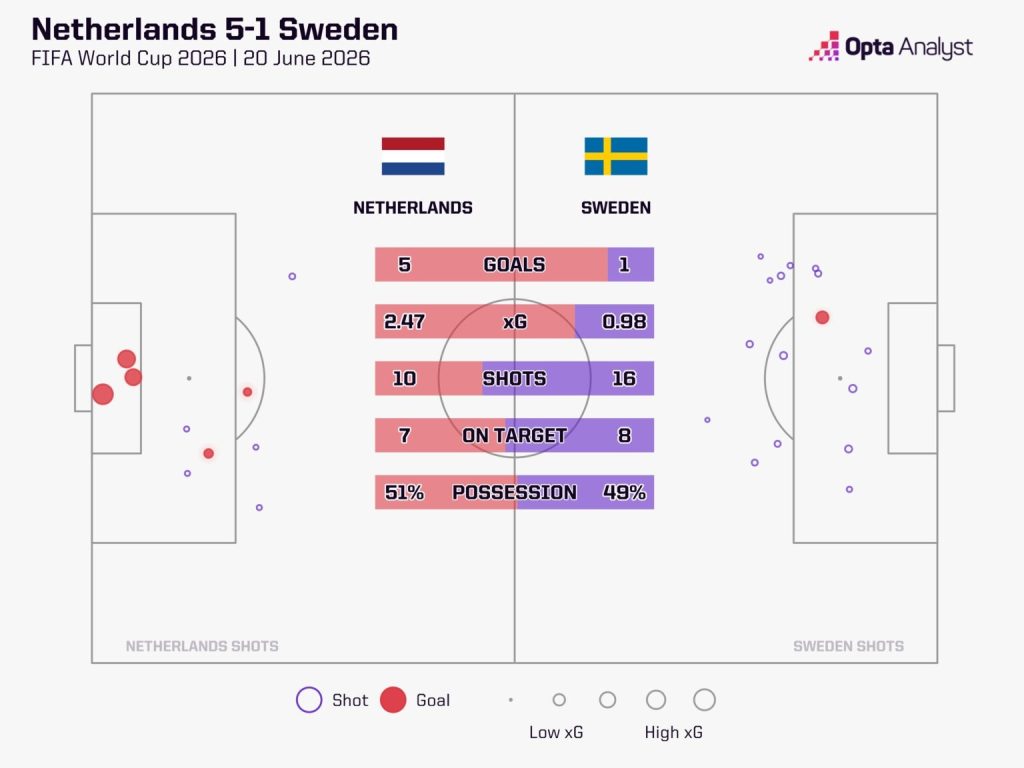
Against the Netherlands, Potter’s back line could not deal with Brobbey’s strength or the opposition’s intelligent movement around the box. There appeared to be a lack of communication when tracking runners into the six-yard area that the Dutch exploited systematically.
Sweden were blown away in the first 15 minutes of each half — conceding four goals in that combined window — but showed positive moments throughout. The first-half formation switch gave talented playmaker Yasin Ayari more space on the ball. The second-half introduction of Elanga provided another attacking outlet and produced the consolation goal.
The defeat does not necessarily end Sweden’s realistic hopes. Should they beat Japan on Friday, they will progress in second place — and would even win the group if the Netherlands fail to beat Tunisia. Japan have significant midfield injury concerns, and Sweden could yet charge into the knockout stages. Improvements are clearly required, but the path remains open.
What the Dutch Must Fix Defensively
The 5-1 scoreline flatters the Netherlands’ defensive discipline, and Koeman will be aware of that.
After Sweden’s halftime tactical adjustment — the shift from a back three to a back four — the Dutch suddenly found themselves exposed in transition on multiple occasions. Sweden began finding space in behind the Dutch wide players, and for stretches of the second half, Koeman’s back line looked vulnerable.
At this level, against France, Spain, Brazil, or Argentina, those transitions would be punished far more severely than Sweden managed. The defensive organisation needs to be tighter, particularly when opponents adjust their structure and look to exploit the space the Dutch leave when pressing high and committing bodies to attack.
The forward line is not a concern. The attacking identity is clear. The question mark over this Netherlands side is whether the defensive structure is reliable enough to go deep in a knockout tournament.
Key Statistics: Netherlands vs Sweden
| Statistic | Netherlands | Sweden |
|---|---|---|
| Final score | 5 | 1 |
| Goals from low crosses | 3 | — |
| Brobbey goals | 2 (first 17 mins) | — |
| Gakpo goal involvements | Multiple (2 goals, key assists) | — |
| Sweden formation at HT | Changed 3-back to 4-back | — |
| Elanga goal | — | 1 |
The Bigger Picture: Oranje as Contenders
The Netherlands enter the final group stage match against Tunisia with first place already within reach. Win or draw, and they will almost certainly top Group F.
Beyond the group, Koeman now has clarity on his team’s best attacking approach and a physical striker around whom the system can function. The combination of Gakpo — when he is the confident, decisive version rather than the peripheral presence he was at Liverpool last season — and Brobbey gives them a forward line capable of troubling any opponent.
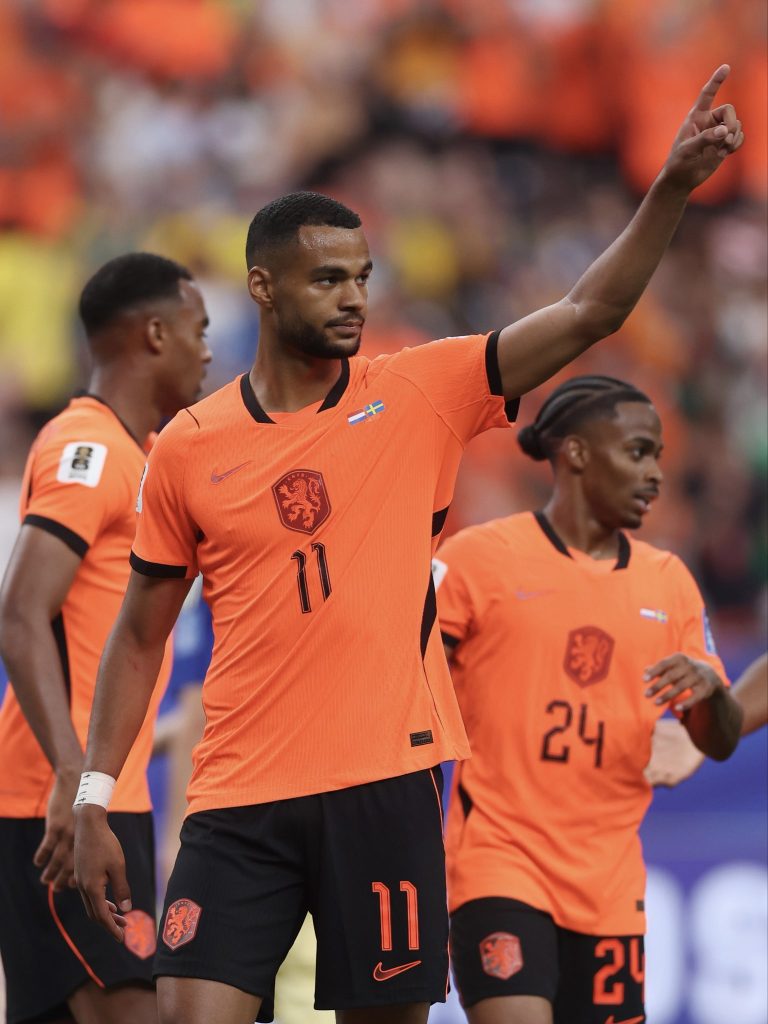
They remain a team with vulnerabilities, particularly in transition and on the occasions when opponents bypass their press. But the performances of Dumfries, Gakpo, Reijnders, and Brobbey against Sweden showed what this Dutch team looks like at its best.
At its best, it is very, very good.