

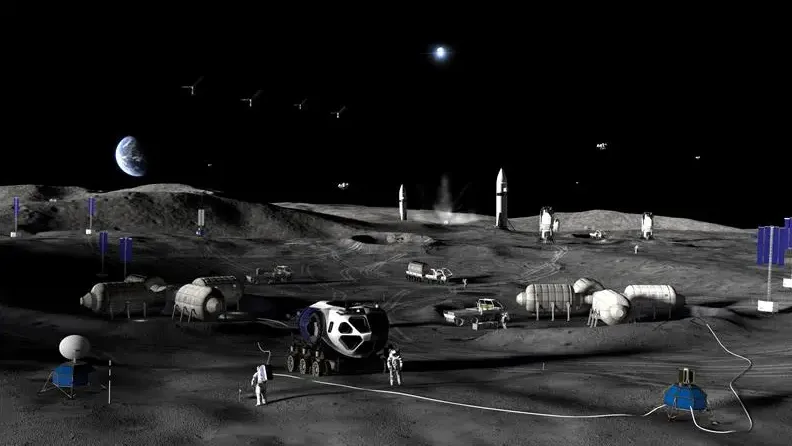
NASA just put a price tag on its Moon base dreams. The agency is moving forward with plans to build a permanent lunar outpost for roughly $20 billion. It’s meant to be a crucial stepping stone toward sending humans to Mars. This isn’t some far-off concept either — it’s happening now, with real budget talks underway in Washington.
The Story So Far
Here’s what makes this plan different: the outpost would run on nuclear power. That’s new territory for NASA. According to The Verge, NASA Administrator nominee Jared Isaacman has been pushing hard to prioritize lunar infrastructure as the foundation for deeper space exploration.
The outpost would let crews stay on the Moon for extended periods, test life-support systems, and validate technologies needed for Mars missions. The total cost? Around $20 billion over the program’s lifetime.
The Bigger Picture
This Moon base isn’t just a standalone project. It sits at the crossroads of geopolitical competition — China has its own lunar plans for the 2030s — and a fundamental shift in how space agencies approach exploration. NASA isn’t thinking about quick flag-planting missions anymore. They’re building for the long haul.
Nuclear power is key to making that happen. Solar panels don’t work well at the lunar poles, where deep craters block sunlight for months at a time. A fission-based system cuts through that problem. Think of it like this: just as YouTube paid $8 billion to reshape how the music industry works, NASA’s $20 billion commitment signals a serious, long-term bet on lunar infrastructure.
Facts & Figures
| Detail | Specification |
|---|---|
| Estimated Cost | $20 billion |
| Power Source | Nuclear fission |
| Primary Goal | Support crewed Mars missions |
| Target Location | Lunar south pole region |
The nuclear angle matters more than you might think. A fission system can produce 10 kilowatts continuously — plenty of power for a small crew and essential gear to survive through lunar nights that last for weeks.
What People Are Saying
Jared Isaacman isn’t shy about the Moon base. He’s framed it as essential infrastructure. “You don’t go to Mars without first proving you can live on the Moon,” he said during confirmation hearings.
Not everyone’s convinced the $20 billion estimate is realistic. Critics point to NASA’s track record with cost overruns. That said, most space experts agree that nuclear-powered surface habitats make technical sense. It’s similar to how Samsung invests heavily in hardware to stay competitive — NASA’s betting big on infrastructure now to lead the next generation of space exploration.
What to Watch Next
Congress needs to approve the funding. That’s the first real hurdle. NASA requires budget commitments during the 2026–2027 fiscal cycle to keep things on schedule.
Keep an eye on the nuclear power contract too. Several aerospace companies are competing for that work. The whole program’s success also hinges on whether politicians stay committed across different administrations.
People Also Ask
Q: How much will NASA’s Moon base cost?
NASA’s proposed lunar outpost comes with an estimated price of $20 billion over the entire program.
Q: Why does the Moon base need nuclear power?
Solar panels don’t work well at the lunar poles where sunlight gets blocked for long stretches. Nuclear fission gives you reliable, constant power no matter what the lunar day-night cycle looks like.
Q: How does it connect to Mars missions?
The outpost lets NASA test life-support systems, crew operations, and ways to use local resources — all things you’ll need for sending humans to Mars.
Q: When could this be operational?
There’s no confirmed date yet. Budget approvals expected in the 2026–2027 fiscal cycle will determine whether the program stays on track.


