NED75/1 (16.6/50 ov, target 183)
 OMA182
 MS-W43/3 (6.2/20 ov, target 125)
 PS-W124/9
 SAS
 FIO
 ATA
 PAR
 LOR
 BRE
 NEW
 EVE
 DEP
 OSA
 WI-A
 LIONS
 Galatasaray
 Stuttgart
 Shakhtar
 Sporting
 Athletic2
 Real Sociedad1
 Juventus2
 Napoli0
 Marseille2
 Toulouse0
 Elche0
 Valencia1
 KAY180/6
 KAG145/5 (17/20 ov, target 181)
 NZ-A424
 IND-A346 & 32/0 (11 ov)
 QLD280
 VIC307 & 136/6 (66 ov)
 SYL218 & 89/2 (38 ov)
 CHATT210
 MYMS108 & 57/2 (14 ov) (f/o)
 KHU288
 DHA
 BAR
 RAN122/3 (39 ov)
 RAJ231
 ASSAM135
 KNTKA176/2 (33 ov)
 MEGHA
 NAGA244/8 (67 ov)
 TPURA219/7 (74.3 ov)
 SAU
 CHR
 SPR
 TOK
 MOW
 BIK
 JAB
 LUL
 POA
 DOLPH
 WPR
 CD
 AUCK
 OTAGO
 CANT
 AFG81/3 (8.1/20 ov, target 80)
 ZIM79
 NAM131/5 (21.2/50 ov, target 130)
 IRE129
 NZ195/3 (18/20 ov, target 192)
 IND191/8
 SS-W196/8
 HH-W109 (17.4/20 ov, target 197)
 ST-W180/4 (16.4/20 ov, target 179)
 BH-W178/5
 Atlético
 Bayern
 Lecce1
 Genoa2
 Liverpool0
 Arsenal1
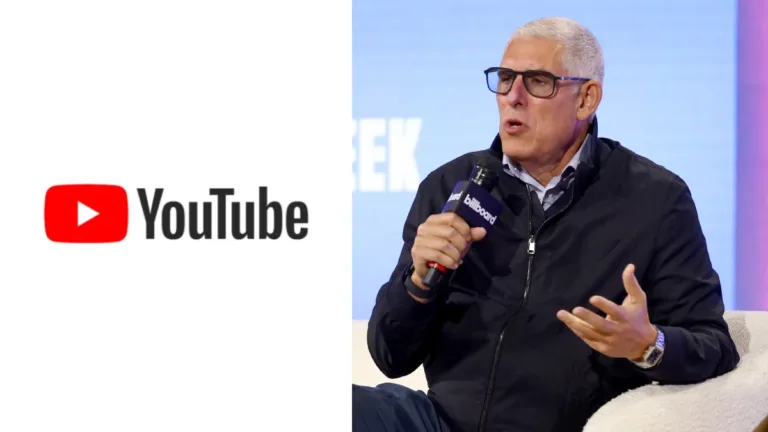
YouTube Global Head of Music Lyor Cohen published an open letter to music partners on March 16, 2026, revealing that the platform paid out over $8 billion to the music industry between July 2024 and June 2025 — its most significant payout milestone yet. The announcement doubles down on YouTube’s identity as the world’s premier home for music video and visual storytelling, while laying out a clear vision for how AI will be handled going forward.
YouTube Music: Key Milestones and Numbers
| Metric | Detail |
|---|---|
| Industry Payout | $8 billion+ (July 2024 – June 2025) |
| Bad Bunny Super Bowl views | 120 million+ on YouTube |
| ROSÉ & Bruno Mars — APT. | 2.3 billion+ views |
| ROSALÍA BRITs performance | 4 million+ views in 48 hours |
| Bad Bunny billion-view MVs | 19 — most by any artist in history |
| AI stance | “A tool for expression, not a replacement” |
Why Visual Storytelling Is the Real Story
Cohen’s letter makes a compelling case that the music video isn’t fading — it’s more central to artist careers than ever. Billions of logged-in viewers watch music videos on YouTube each month, and the platform is increasingly the infrastructure through which fandom is built and sustained.
The letter points to Baby Keem’s Ca$ino album rollout as a blueprint — starting with documentary content, rolling through an exclusive fan-first listening event, and landing on the official video. It’s a campaign architecture that turns a single release into an extended world rather than just another drop.
Olivia Dean’s trajectory says it all: she walked into YouTube’s office seven years ago with an acoustic guitar, and this year won both a Grammy and a BRIT Award. YouTube didn’t just host her videos — it helped build the fanbase that got her there.
YouTube’s AI Stance Is Worth Paying Attention To
Cohen explicitly addressed AI — and the framing matters. While many platforms have been vague or defensive, YouTube’s position as stated by CEO Neal Mohan is direct: AI remains a tool for expression, not a replacement for human creativity.
On the practical side, that means tools like Google’s Flow for AI-assisted video creation alongside reinforced Content ID systems, new likeness detection guardrails, and active efforts to limit low-quality AI-generated content from flooding the platform. It’s a balance between enabling new formats and protecting the creators the platform depends on.
For more music and tech coverage, check out TechnoSports’ tech section.