

NASA’s DART spacecraft pulled off something remarkable in 2022—it actually changed a binary asteroid’s orbit around the sun. That’s the first time humanity has ever measurably shifted a celestial body’s path through space. When the spacecraft hit the moonlet Dimorphos in September 2022, it didn’t just nudge the asteroid’s orbit around its parent body. It fundamentally altered how both objects travel around the sun itself. According to NASA’s Jet Propulsion Laboratory, this breakthrough proves that planetary defense strategies aren’t just theoretical anymore. They actually work.
The DART Impact: What Changed
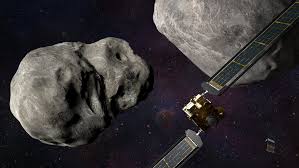
The DART spacecraft slammed into Dimorphos at roughly 22,530 kilometers per hour back in September 2022. This wasn’t some gentle nudge—it was a carefully planned collision to test whether kinetic impact could actually redirect an asteroid. And it worked better than anyone expected. Dimorphos’ orbital period around its parent asteroid Didymos shortened by approximately 73 seconds, smashing past the mission’s minimum success threshold of 73 seconds.
Here’s what really stands out: the change rippled outward. Both asteroids now orbit the sun on a slightly different trajectory than before the impact. According to The Verge, this dual-layer effect—hitting both the moonlet’s immediate orbit and the binary system’s heliocentric path—represents unprecedented control over how celestial objects move.
Why Asteroid Deflection Matters Now
Earth’s got real threats lurking out there. NASA tracks over 28,000 known asteroids in near-Earth space, and scientists discover new ones all the time. Most won’t hurt us, but a single kilometer-wide asteroid striking Earth would cause catastrophic climate chaos. The DART mission proved that deflection actually works before disaster hits.
Unlike nuclear options or theoretical gravity assists, kinetic impact is something we can test, repeat, and scale up. Early detection combined with proven deflection equals survival. As TechCrunch reported, space agencies worldwide are now building follow-up missions based on DART’s success, including ESA’s Hera spacecraft launching within the decade.
How This Changes Planetary Defense
The asteroid deflection success shifts planetary defense from “maybe someday” to “here’s how we do it.” NASA’s JPL confirmed that smaller asteroids need less energy to deflect—which means early detection becomes absolutely critical. The DART data shows that a spacecraft weighing just 610 kilograms can measurably change a moonlet’s trajectory.
Think about what happens when you scale that up to larger threats—the math becomes doable. Future missions could target hazardous objects years before impact, giving Earth centuries of safety buffer. This is why investing in space technology matters beyond just exploration. It’s existential insurance.
What Experts Are Saying
Q: Could DART’s success be replicated on larger asteroids?
Yes. NASA’s models suggest kinetic impact scales predictably with asteroid mass and composition.
Q: How much warning do we need to deflect a dangerous asteroid? Ideally, decades. DART proved we can act with years of advance notice.
Q: Will other nations develop similar capabilities? China, Russia, and the ESA are all pursuing kinetic deflection programs. For more insights, see The Verge.
Q: What’s the next major milestone? ESA’s Hera spacecraft will study Dimorphos post-impact in 2026, gathering detailed impact crater data. For more insights, see GSMArena.


