

NASA launched the Artemis II mission, sending four astronauts on a trajectory around the Moon aboard the Orion spacecraft. This marks humanity’s first crewed lunar voyage in over five decades. As The Verge reported, it’s the first time humans have traveled beyond low Earth orbit since Apollo 17 in 1972.
Here’s What Happened
NASA launched Artemis II with four astronauts aboard the Orion spacecraft, sending them on a loop around the Moon. The crew includes Commander Reid Wiseman, Pilot Victor Glover, Mission Specialist Christina Koch, and Canadian Space Agency astronaut Jeremy Hansen.
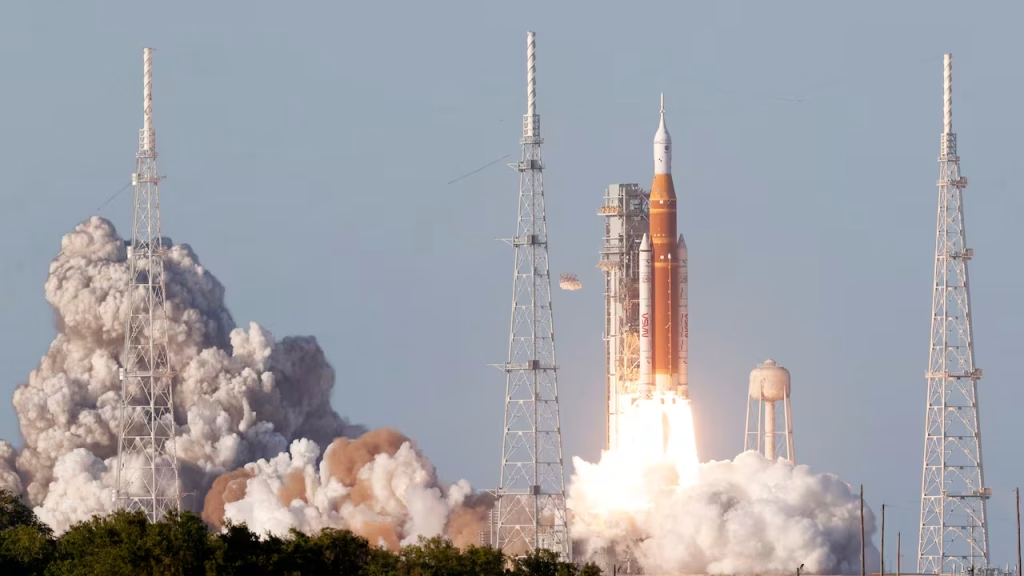
This is a crewed flyby mission — not a landing. It’s designed to test Orion’s life support systems and how the spacecraft performs in deep space. The mission builds on Artemis I, the uncrewed test flight from 2022 that proved the Space Launch System rocket works. Everything learned here directly feeds into the next phase of NASA’s lunar program.
The Real Impact
This isn’t just a symbolic victory. It’s a critical test of the hardware that’ll eventually carry astronauts to the lunar surface. Every hour of flight data goes straight into planning for Artemis III.
The real question is simple: can Orion keep four humans alive and functional across a 10-day deep-space journey? That answer shapes every crewed mission that comes next.
Key Details
- Mission name: Artemis II
- Crew size: 4 astronauts
- Mission duration: Approximately 10 days
- Spacecraft: Orion, atop the Space Launch System (SLS)
- Trajectory: Lunar flyby — no surface landing
- First crewed Moon mission since: Apollo 17, December 1972
- Canadian participant: Jeremy Hansen — the first non-American on a lunar mission
Voices from the Industry
NASA Administrator Bill Nelson called Artemis II “a giant leap for humanity’s return to the Moon.” Commander Reid Wiseman described it as “the beginning of a new era of exploration.” The aerospace community has watched closely — this flight directly influences commercial lunar contracts, international partnerships, and timelines for permanent lunar habitation.
Looking Ahead
Artemis III is the next major milestone — that’s when astronauts actually land on the Moon. NASA has set its sights on the lunar south pole, a region that likely holds water ice. That ice matters because it’s essential for keeping people on the Moon long-term.
The data from Artemis II will determine how quickly that landing can happen. Pay attention to post-mission briefings and hardware assessments over the coming weeks.
People Also Ask
Q: What is the Artemis II mission?
Artemis II is NASA’s first crewed mission to travel around the Moon since Apollo 17 in 1972, carrying four astronauts aboard the Orion spacecraft.
Q: Will Artemis II land on the Moon?
No. Artemis II is a crewed flyby mission designed to test Orion’s systems in deep space — the actual landing is planned for Artemis III.
Q: Who are the Artemis II astronauts?
The crew includes Reid Wiseman, Victor Glover, Christina Koch, and Canadian astronaut Jeremy Hansen.
Q: When does Artemis III land on the Moon?
NASA has targeted the lunar south pole for Artemis III, though an exact confirmed launch date hasn’t been officially locked in as of early 2026




