NZ
 IND
 NAM
 IRE
 MOZ
 UGA
 Aston Villa
 Man City
 Rayo
 Elche
 GMB
 ZMB
 NGA
 LES
 Cagliari
 Bologna
 IPS1
 NFO1
 ALA1
 MCF1
 TOR3
 MON2
 BRE1
 NICE2
 TAS67/4 (15.4/50 ov, target 305)
 VIC304/7
 NZ-A135/3 (41 ov)
 IND-A113
 DHA
 RAJ
 MYMS
 CHATT
 RAN
 BAR
 SYL
 KHU
 UAE
 NED
 PAK
 ENG
 IND-W
 ZIM-W
 AFG170/3 (34.3/50 ov, target 170)
 ZIM169
 DOLPH56/0 (3.5/8 ov, target 56)
 SWD51/4 (8/8 ov)
 WSW1
 BRI1
 Como
 Sassuolo
 Augsburg
 Union Berlin
 Cologne
 Schalke
 Mainz
 Bremen
 RB Leipzig
 Elversberg
 VFB2
 BMG3
 AHL4
 KHA1
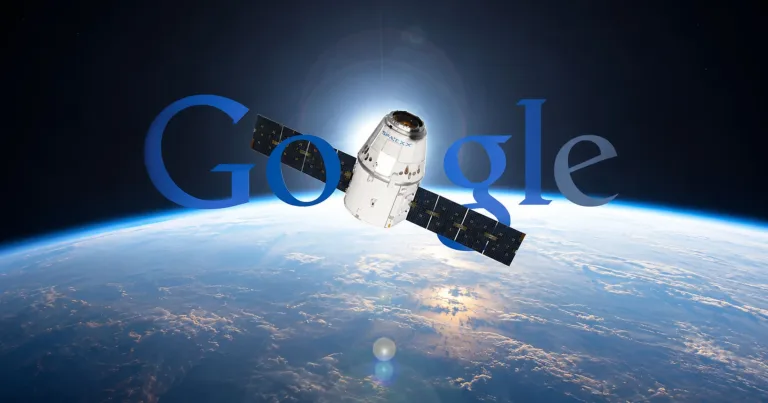
Google estimates that Google Starship infrastructure would need 1,600 launches to place a space-based data-center network in orbit, although the supplied information does not identify the announcement date, launch cadence, orbit, or launch vehicle configuration.
The figure matters because it turns an attractive AI-computing concept into a logistics problem measured in thousands of missions. A space data center could move some computing away from terrestrial facilities, but launch volume would become the central constraint. Before operators discuss model performance or latency, they must solve transport, power, cooling, maintenance, communications, and orbital safety at a scale that current public details do not yet define.
Before Google Starship: Why 1,600 Launches Matters
Google’s estimate frames launch capacity as the main bottleneck. A system requiring 1,600 launches would depend on repeated access to orbit, reliable payload integration, ground operations, and a supply chain capable of producing spacecraft hardware continuously. The number is not a launch schedule, and Google has not supplied enough information to calculate how many missions would be needed annually.
The estimate also changes the cost question. Terrestrial data centers require land, electricity, cooling systems, and network links, while orbital facilities add launch, radiation protection, station-keeping, communications, and eventual replacement. Space-based computing may reduce pressure on selected ground resources, but every kilogram placed in orbit still has to be designed, manufactured, transported, and operated. This is why the claim sits alongside wider concerns about AI infrastructure rather than replacing them. The recent discussion around OpenAI's space-computing plans shows how quickly orbital concepts can become part of the AI hardware conversation, but the 1,600-launch estimate exposes the physical work behind that ambition. For more detail, see OpenAI Blog.
What Changed: The Root Cause Behind The Launch Count
The root cause is straightforward: a data center is not a single payload. It is a distributed system containing compute hardware, power equipment, thermal-control components, networking systems, structural elements, and replacement capacity. Google’s figure therefore appears to describe an aggregate deployment rather than one spacecraft, but the supplied facts do not specify the size or design of each launch.
The number also carries a maintenance implication. Even if the initial network reached orbit, operators would need a way to replace failed components and upgrade computing hardware as AI workloads change. A system that cannot receive new processors or repair critical equipment could become obsolete before it delivers enough value. The contrast with terrestrial construction is sharp. Ground facilities can receive replacement parts by road, rail, or air, while an orbital network would require specialised missions and carefully planned rendezvous or servicing operations. Earlier reporting on AI infrastructure competition helps explain the demand, but it does not remove the transport challenge.
After The Estimate: Three Ways To Reduce The Burden
| Approach | Potential benefit | Main drawback |
|---|---|---|
| Build the complete network in orbit | This offers the clearest path to a genuinely space-based data center. | It carries the greatest launch, maintenance, and reliability burden. It should be considered only if the computing workload gains a specific advantage from ope |
| Use a hybrid ground-and-orbit model | Critical training and storage could remain on Earth while selected orbital systems handle specialised workloads, reducing the required orbital mass. | It creates additional networking and scheduling complexity, with performance depending on the link between ground and space. |
| Start with a small orbital pilot | A limited demonstration could validate power, cooling, communications, and hardware durability before a full deployment. | A pilot may not prove the economics of a **1,600-launch** network, especially if the final system requires different spacecraft or ope |
What Happens Next For The Launch Plan?
Google should publish the assumptions behind the estimate before the figure is treated as a deployment roadmap. The missing details include payload mass, spacecraft count, target orbit, launch cadence, hardware replacement policy, and whether the estimate covers only construction or long-term operations. For more detail, see VentureBeat AI.
The best near-term choice is the hybrid approach, followed by a tightly scoped orbital pilot. If the goal is experimentation, choose a pilot; if the goal is dependable large-scale AI capacity, keep the core workload on Earth until launch and servicing economics are demonstrated. The future of orbital AI computing will depend less on the headline launch count than on whether each mission adds useful, maintainable capacity.
FAQs
How many launches does Google estimate are needed?
Google estimates that 1,600 launches would be needed for the proposed space data-center concept.
Does Google Starship mean SpaceX confirmed a launch programme?
No. The available information does not confirm a SpaceX agreement, launch schedule, spacecraft design, or operational programme.
Why would a space data center need so many launches?
A complete system would require computing hardware, power equipment, cooling, communications, structural components, and replacement capacity rather than one single payload.
Is the 1,600-launch estimate a confirmed schedule?
No. It is an estimate, and the available facts do not provide the assumptions needed to convert it into a schedule.
Was this article helpful?
Your feedback directly improves future articles on this site.