
 SA329 (82.3 ov)
 AUS
AUS AFG177
 ZIM48/2 (8/20 ov, target 178)
 SAA0
SAA0 EST0
EST0 SAS
SAS LAZ
LAZ ROMA
ROMA CAG
CAG TOR
TOR COMO
COMO BAN
BAN WI
WI IND-W
IND-W ZIM-W
ZIM-W GOA
GOA SC Delhi
 Milan
Milan Bologna
 Parma
Parma Udinese
 ABH0
ABH0 ALF1
ALF1 PAK110
 SL114/2 (18.1/50 ov, target 111)
 NAM316/7
 IRE253 (44.5/50 ov, target 317)
 NZ198/3
 IND199/4 (13.2 ov)
 SIKM184
 NAGA187 & 46/4 (34 ov)
 JHK131/4 (47 ov)
 DELHI515/5d
 ODSA194
 SVCS13/0 (5 ov)
 BRODA616
 J & K6/0 (4 ov)
 CHD685/5d
 HP49/0 (14 ov)
 CGR216/8 (95 ov)
 AP231
AP231 HYD193/2 (54 ov)
 PNJB431
 KNTKA297/7 (95 ov)
 TPURA194
 KER101/6 (35 ov)
 BENG350
 MAHA278/9 (100 ov)
 GUJ223
 AUCK
AUCK CANT
CANT CD
CD ND
ND DEN
DEN QAT
QAT KENYA
KENYA KUW
KUW POA
POA SPR
SPR BRB
BRB VAG
VAG NED371/5
 OMA265 (49.3/50 ov, target 372)
 JAB113 (19.3/20 ov, target 133)
 KAY132/9
 BIK149 (19.3/20 ov, target 158)
 CHR157/3
 SEEB0
SEEB0 EBFC0
EBFC0 Venezia
 Inter Milan
 Genoa
Genoa Juventus
 Sevilla2
 Osasuna0
 PSG2
PSG2 Lyon0
Lyon0 Mohun Bagan1
 Chennaiyin0
 BEI2
BEI2 JHM2
JHM2 RCH0
RCH0 KRE0
KRE0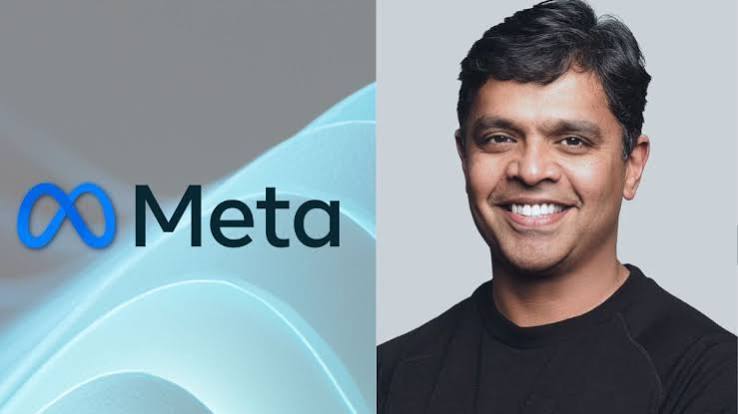
Meta recently announced its ambition to position India as a key AI infrastructure hub by June 19, 2026. This marks a significant change in how the company views India’s role within its global computing framework.
While Meta hasn’t shared specific details about hardware specs, pricing, or launch dates for AI-focused platforms yet, the intention is evident. There aren’t any confirmed details on RAM, storage, processors, displays, or battery capacity for upcoming projects, but the focus is on building the essential computing power needed to support generative AI.

Meta’s Strategic Vision for India
The tech giant is seeing India not just as a market for consumer software but as a crucial part of its global backend systems. As The Indian Express first reported, company leaders view their facilities as interconnected nodes within a worldwide network, rather than just separate data centers. This strategy treats physical infrastructure like a distributed supercomputer, enabling Meta to balance workloads across borders with remarkable efficiency.
Integrating Indian facilities into this global network means that local data centers will play a direct role in training and inference capabilities for Meta’s large language models. Experts from major technology publications have pointed out that this type of distributed model is critical for managing the substantial power and thermal demands of modern AI clusters. By decentralizing its operations, Meta hopes to address the latency issues that often come with centralized AI deployments, making sure that computing resources are readily available where they’re most needed.
The Role of AI Infrastructure in Global Connectivity
Meta’s slogan, “It takes a global network to enable a global network,” captures the essence of this expansion. The company is looking into how India’s evolving tech ecosystem can meet the high-density computing needs of its future AI applications. This requires substantial collaboration with local partners to provide the necessary power, cooling, and high-speed networking to maintain a top-notch AI infrastructure.
But it’s not just about hardware; this initiative emphasizes India’s importance in the global digital landscape. With a skilled engineering workforce and a rapidly growing utility grid, India is becoming a prime location for capital-heavy AI projects.
Although the specifics of these investments remain confidential, the industry anticipates a multi-year commitment aimed at strengthening India’s role in the global AI supply chain.
The ability to scale these infrastructure projects quickly in response to skyrocketing AI demand is a significant consideration. While local startups will benefit from lower latency and better access to high-performance computing, Meta’s main objective is to consolidate its global network. We can expect announcements about specific site capacities and partnerships in the coming months as the plans for this expansion take shape.
Source: The Indian Express
FAQs
What are Meta’s specific investments in India?
Meta has expressed its intention to invest in AI infrastructure in India by June 2026, focusing on interconnected computing systems. However, specific financial details and project specifics haven’t been made public yet.
How does AI infrastructure impact global networks?
A distributed AI infrastructure minimizes latency and balances loads by connecting global data centers as one cohesive supercomputer, ensuring that computing resources are accessible across various regions.
What challenges does India face in becoming an AI hub?
Major challenges include ensuring consistent high-density power supply, scaling advanced cooling solutions for AI clusters, and navigating the regulatory landscape tied to global data infrastructure. Staying ahead of these developments is crucial for understanding AI infrastructure fully.


