Mohun Bagan
 Chennaiyin
 PSG
PSG Lyon
Lyon Sevilla
 Osasuna
 NED
NED OMA
OMA NZ
NZ IND
IND NAM
NAM IRE
IRE PAK
PAK SL
SL SA
SA AUS
AUS BAR1
BAR1 RMA2
RMA2 UDI0
UDI0 MIL2
MIL2 RSO2
RSO2 LEV1
LEV1 LEC0
LEC0 JUV2
JUV2 BRB39/3 (4.2/15 ov)
 MOW
MOW NZ-A317
 IND-A113 & 227/4 (65.1 ov)
 SYL280/2 (84 ov)
 KHU
KHU MYMS465/7d
 CHATT134/2 (40 ov)
 DHA521
 RAJ103/6 (26 ov)
 RAN402
 BAR179/3 (56.1 ov)
 LUL
LUL SPR
SPR TOK
TOK MIS
MIS MEX-W51 (12.5/20 ov, target 187)
 ARG-W186/7
 NGA148
 UGA147/9 (20 ov, target 149)
 GMB112/9
 LES109 (19.5/20 ov, target 113)
 MOZ110/7 (19/20 ov, target 110)
 ZMB109/9
 IND-W328/6
 ZIM-W207 (48.5/50 ov, target 329)
 ENG241
 Abha
Abha Al Faisaly
 LAFC
LAFC LA
LA Neftchi Fergana
 Al Ittihad
 Besiktas
 Istanbul BB
 Caykur Rizespor
 Trabzonspor
 SUN0
SUN0 LEE0
LEE0 SCF1
SCF1 MUN3
MUN3
In an era dominated by disposable electronics, the enduring appeal of mechanical keyboards offers a refreshing counter-narrative. We’ve seen countless peripherals designed with planned obsolescence in mind, destined for the recycling bin after a few years.
Yet, mechanical keyboards persist, not just for their satisfying typing experience, but for their inherent durability and a growing appreciation for their sustainable design. This isn’t merely about nostalgia; it’s about a deliberate choice for quality and longevity.
The Tactile Revolution: Beyond Just Typing
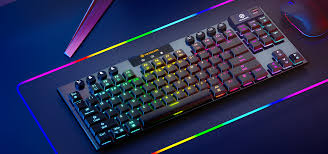
The core of a mechanical keyboard’s charm lies in its individual mechanical switches. Unlike the mushy, uniform feel of membrane keyboards, each key on a mechanical board actuates a distinct switch. These switches, whether they offer a crisp “click,” a noticeable “bump,” or a smooth linear travel, provide precise tactile feedback. This feedback is crucial for typing accuracy, allowing users to confirm actuation without bottoming out the key. For professionals and enthusiasts who spend hours typing daily, this precision translates to increased speed and reduced fatigue. Brands like Cherry MX, Gateron, and Kailh have popularized various switch types, each catering to different preferences, from the quiet tactility of Cherry MX Brown to the audible click of Cherry MX Blue.
Built to Last: The Durability Advantage
One of the most compelling aspects of mechanical keyboards is their sheer longevity. The individual mechanical switches are rated for an impressive lifespan, typically exceeding 50 million keystrokes.
This is a stark contrast to membrane keyboards, whose rubber domes can degrade and lose their tactile response after a fraction of that usage. This robust construction means that a well-maintained mechanical keyboard can easily last a decade or more, making it a significantly more sustainable choice than replacing cheaper alternatives every few years. This durability is a key reason why professionals, programmers, and heavy typists gravitate towards them.
Performance and Customization: Tailoring Your Experience
Beyond tactile satisfaction and durability, mechanical keyboards offer performance advantages. Features like N-key rollover (NKRO) and anti-ghosting are standard on most mechanical boards. NKRO allows the keyboard to register an unlimited number of simultaneous key presses, while anti-ghosting prevents specific key combinations from failing to register.
These capabilities are paramount for gamers who require rapid, complex inputs, and also benefit fast typists who might inadvertently press multiple keys at once. Furthermore, the highly customizable nature of mechanical keyboards adds to their enduring appeal. Users can easily swap keycaps to alter aesthetics and ergonomics, and even replace individual switches to fine-tune the typing feel, a level of personalization rarely found in other peripherals.
The Eco-Conscious Choice: Sustainability in Peripherals
While mechanical keyboards might consume slightly more power than their membrane counterparts, their wired nature often negates battery concerns. More importantly, their extended lifespan positions them as an environmentally friendlier option.
In a world increasingly conscious of e-waste, investing in a durable, repairable mechanical keyboard is a conscious decision to reduce consumption. The ability to replace individual switches or keycaps means that minor issues don’t necessitate discarding the entire unit. This contrasts sharply with many cheaper, non-repairable keyboards that end up in landfills. This aspect of their appeal is gaining traction as consumers seek more sustainable tech solutions.
Looking Ahead: The Future of Tactile Input
The market for mechanical keyboards has seen consistent growth since the early 2010s, driven by both the gaming community and the productivity sector. As AI integration deepens, influencing everything from OpenAI’s enterprise solutions to how we interact with smart devices like the Oura Ring, the fundamental human need for direct, tactile input remains. While futuristic interfaces may emerge, the satisfying click and reliable feedback of a mechanical keyboard are unlikely to be fully replaced. The trend suggests that mechanical keyboards will continue to be a preferred choice for those who value precision, durability, and a more tangible connection with their digital tools.
FAQs
Why are it more expensive than membrane keyboards?
this are more expensive due to the cost of individual mechanical switches, which are complex and precisely engineered components, compared to the simpler rubber domes used in membrane keyboards. The higher durability and customizability also contribute to their premium pricing.
How do I choose the right mechanical switch type for my needs?
The best switch type depends on your usage. Linear switches (like Cherry MX Red) are smooth and good for gaming. Tactile switches (like Cherry MX Brown) offer a noticeable bump and are versatile for typing and gaming. Clicky switches (like Cherry MX Blue) provide an audible click and tactile bump, ideal for typists who enjoy auditory feedback.
Can the technology improve my typing speed?
Yes, many users report increased typing speed and accuracy with the tool due to the enhanced tactile feedback and distinct actuation point of the switches, which helps in confirming key presses and reducing errors.
Are this approach loud?
Some the platform can be loud, particularly those with clicky switches. However, there are also quieter options available, including tactile and linear switches that produce minimal noise, making them suitable for shared office environments or home use.
How do I maintain a mechanical keyboard for maximum longevity?
Regular cleaning to remove dust and debris is essential. You can use compressed air and a soft brush. For deeper cleaning, keycaps can be removed and washed. Ensure the keyboard is unplugged before cleaning.