MBSG
MBSG CFC
CFC PSG
PSG LYON
LYON SEV
SEV OSA
OSA NED
NED OMA
OMA NZ
NZ IND
IND NAM
NAM IRE
IRE PAK
PAK SL
SL SA
SA AUS
AUS Barcelona1
 Real Madrid2
 Udinese0
 Milan2
 Real Sociedad2
 Levante1
 Lecce0
 Juventus2
 NZ-A317
 IND-A113 & 488/8 (119 ov)
 SYL280/2 (84 ov)
 KHU
KHU MYMS465/7d
 CHATT317/3 (98 ov)
 DHA521
 RAJ103/6 (26 ov)
 RAN402
 BAR368/5 (100.3 ov)
 SIKM13/0 (10 ov)
 NAGA187
 JHK
JHK DELHI262/5 (75 ov)
 ODSA168/7 (72 ov)
 SVCS
SVCS BRODA185/5 (59 ov)
 J & K
J & K CHD253/1 (57 ov)
 HP
HP CGR
CGR AP209/8 (65.4 ov)
 HYD
HYD PNJB223/5 (70 ov)
 LUL
LUL SPR
SPR MOW
MOW TOK
TOK BRB
BRB MIS
MIS MEX-W51 (12.5/20 ov, target 187)
 ARG-W186/7
 NGA148
 UGA147/9 (20 ov, target 149)
 GMB112/9
 LES109 (19.5/20 ov, target 113)
 MOZ110/7 (19/20 ov, target 110)
 ZMB109/9
 IND-W328/6
 ZIM-W207 (48.5/50 ov, target 329)
 ENG241
 Abha
Abha Al Faisaly
 Sassuolo
 Lazio
Lazio AS Roma
 Cagliari
 Torino
 Como
Como NEF
NEF ITT
ITT Sunderland0
 Leeds0
 Freiburg1
 Bayern3
China’s memory chip ambitions face a steeper climb than commonly believed. According to HBM expert Shim Dae-yong, the technology gap between Chinese memory makers and South Korean giants Samsung and SK hynix exceeds five years—and could widen further due to restricted access to crucial EUV lithography equipment.
The Korea-China Memory Technology Gap
| Factor | Impact on Gap |
|---|---|
| EUV Access | Critical limitation for 10nm-class DRAM |
| Process Node | Korea at 1b/1c; China limited to 1x/1y |
| Yield Requirements | 80-90% needed for commercial viability |
| HBM Materials | Controlled by Japanese suppliers |
| Co-Development | Decades of partnerships with tech giants |
| Expert Assessment | 5+ years gap, potentially widening |
EUV: The Insurmountable Barrier
Shim, a 26-year SK hynix veteran who led core DRAM technology and early HBM development, identifies extreme ultraviolet (EUV) lithography as the primary bottleneck. While multi-patterning can extend legacy tools through 1a node (as Micron demonstrated), EUV becomes essential from 1b node onward in 10nm-class DRAM production.
Chinese manufacturers currently lack access to ASML’s EUV systems due to export restrictions, forcing them to rely on older deep ultraviolet (DUV) technology. This fundamental constraint creates a structural ceiling on their advancement in cutting-edge DRAM manufacturing.
3D Stacking: Shifting the Bottleneck
Without EUV access, China’s only viable path forward involves advanced 3D stacking technologies. However, Shim notes this approach merely transfers challenges to other critical areas—particularly materials and advanced packaging.
Key HBM materials including underfill and epoxy molding compounds remain controlled by Japanese suppliers like Resonac and Namics. Even Samsung and SK hynix have invested years localizing these inputs, highlighting the time required to develop alternative supply chains.
The Co-Development Advantage
Beyond hardware constraints, Chinese memory makers lack decades of collaborative experience that Korean firms built with Microsoft, Google, Apple, and NVIDIA. These partnerships involve co-developing and validating memory products across new system architectures—a process that cannot be replicated quickly.
This ecosystem advantage provides Korean manufacturers with early insights into future requirements, enabling proactive development aligned with next-generation computing needs.
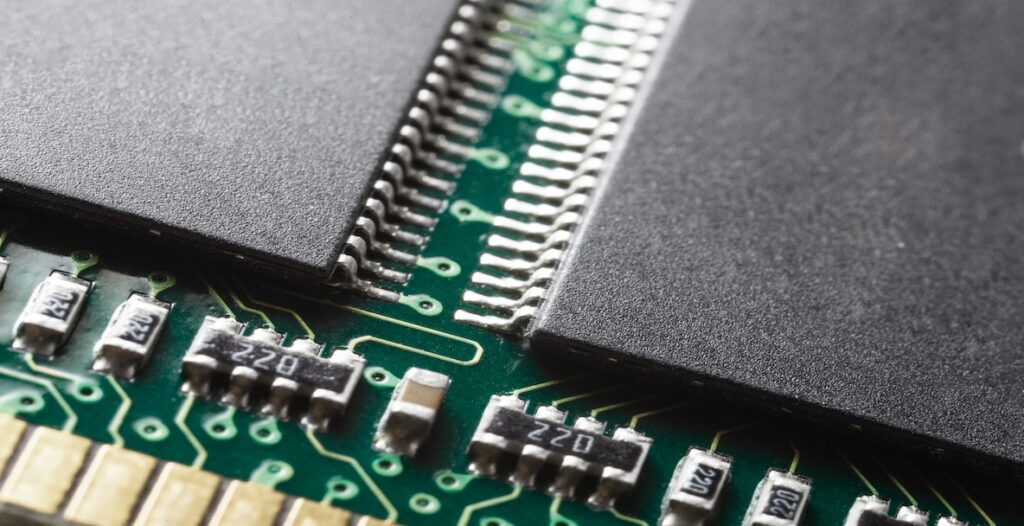
China’s Memory Sector Growth
Despite these challenges, China’s domestic memory sector shows momentum. Recent reports indicate 13 A-share memory firms projected triple-digit profit growth in 2025, suggesting progress in lower-tier segments while the technology frontier remains distant.
For more semiconductor industry analysis, visit TechnoSports.