NZ
NZ IND
IND NAM
NAM IRE
IRE MOZ
MOZ UGA
UGA Aston Villa
 Man City
 Rayo
Rayo Elche
Elche GMB
GMB ZMB
ZMB NGA
NGA LES
LES Cagliari
 Bologna
 IPS1
IPS1 NFO1
NFO1 ALA1
ALA1 MCF1
MCF1 TOR3
TOR3 MON2
MON2 BRE1
BRE1 NICE2
NICE2 TAS129/7 (23.3/35 ov, target 276)
 VIC304/7 (50 ov)
 WA
WA NSW38/1 (9/50 ov)
 NZ-A135/3 (41 ov)
 IND-A113
 DHA
DHA RAJ
RAJ MYMS
MYMS CHATT
CHATT RAN
RAN BAR
BAR SYL
SYL KHU
KHU MEX-W
MEX-W ARG-W
ARG-W UAE
UAE NED
NED AFG170/3 (34.3/50 ov, target 170)
 ZIM169
 IND-W200/1 (27.1/50 ov, target 198)
 ZIM-W197
 DOLPH56/0 (3.5/8 ov, target 56)
 SWD51/4 (8/8 ov)
 WSW1
WSW1 BRI1
BRI1 Como
Como Sassuolo
 Augsburg
 Union Berlin
 Cologne
 Schalke
 Mainz
Mainz Bremen
 RB Leipzig
 Elversberg
 VFB2
VFB2 BMG3
BMG3 AHL4
AHL4 KHA1
KHA1
After years of near-total silence in the Indian market, Huawei‘s return is starting to look more real than rumoured. A landing page for the Huawei MatePad 11.5 has reportedly been spotted on Flipkart, and multiple tipsters are pointing to tablets as the brand’s re-entry vehicle into India — with smartphones potentially following later.
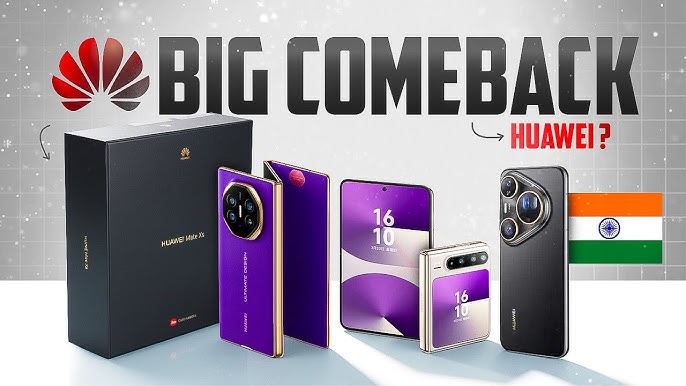
Huawei in India: A Quick Timeline
| Period | Status |
|---|---|
| Pre-2019 | Active smartphone brand; P and Mate series popular in India |
| 2019 | US Entity List ban — cut off from Google services and US suppliers |
| 2019–2025 | Effectively absent from India; last phone was Y9 Prime (Aug 2019) |
| 2025–26 | Global comeback begins — Mate 80 Pro re-enters EMEA markets |
| March 2026 | MatePad 11.5 landing page reportedly spotted on Flipkart |
Why Tablets First — and Why That’s Smart
Tipster Sanju Choudhary (@saaaanjjjuuu) claims Huawei could start its India return with tablets before expanding to smartphones. Leaker Aryan Gupta points to the MatePad 11.5 (2025 model) as the likely first device, based on the design seen in the leaked Flipkart page.
The tablet-first approach makes strategic sense. Tablets depend far less on Google Mobile Services than smartphones do — most users primarily want a big screen for streaming, reading, and productivity, not a full app ecosystem. It lets Huawei test demand, rebuild retail relationships, and set up service infrastructure without immediately running into the Google problem that sank its smartphone push in 2019.
Meanwhile, on the global front, Huawei has already re-entered EMEA markets with the Mate 80 Pro — its first premium global phone launch in three years — signalling that the company is serious about reclaiming territory outside China.
The Google Problem Hasn’t Gone Away
The elephant in the room is still HarmonyOS and the absence of Google apps. Huawei’s smartphones run HarmonyOS with the Huawei AppGallery rather than the Google Play Store — which means no Gmail, Google Maps, YouTube, or any Google app out of the box. In India, where Google services are deeply embedded in daily smartphone use, that’s a significant barrier for mainstream buyers.
Tablets are a more forgiving category for this limitation. A ₹30,000–40,000 MatePad running HarmonyOS for Netflix, YouTube (via browser), and document work is a reasonable pitch. A ₹60,000 flagship phone without Google services is a much harder sell.
What Could Change the Equation
India’s geopolitical stance on Chinese tech companies adds another layer of complexity. Xiaomi, Realme, and OPPO have all navigated this carefully since 2020, but Huawei carries more geopolitical baggage given its direct association with US sanctions.
That said, the Indian tablet market is growing, and Huawei has genuinely impressive hardware — the Mate 80 Pro’s camera system co-developed with Leica is world-class. If Huawei can establish a foothold here with tablets and wearables first, a smartphone comeback — at least in the premium segment — isn’t out of the question.
For the latest on Huawei’s India comeback as it develops, follow our tech news coverage on Technosports. And for the best tablets to buy in India right now, see our tablet buying guide on Technosports.