The financial tale of two cricket leagues reveals much more than just numbers—it tells a story of market dynamics, cultural impact, and future potential.
When cricket fans debate the merits of the Indian Premier League (IPL) and Pakistan Super League (PSL), the conversation often centers around star players, memorable matches, and championship titles. However, beneath the sporting spectacle lies a financial story that’s equally compelling—and far more lopsided.
The IPL vs PSL financial comparison reveals cricket’s most dramatic economic disparity in professional sports. While both leagues showcase exciting cricket and passionate fans, their financial realities exist in entirely different universes. This comprehensive analysis dives deep into the numbers to understand the massive valuation gap, its causes, and what it means for the future of T20 cricket.
IPL vs PSL Budget: The Staggering Gap Revealed
When examining the IPL vs PSL budget figures, the Indian league’s $10.9 billion valuation dwarfs Pakistan’s $5.7 million league. This isn’t just a difference of degree—it’s a difference of kind. The IPL operates in a financial stratosphere that no other cricket league has reached.
To put this in perspective, the IPL’s overall valuation is approximately 1,900 times larger than the PSL’s. This would be like comparing the GDP of a major economic power to that of a small town.
| League | Total Valuation | Founded | Teams | Broadcasting Rights Value |
|---|---|---|---|---|
| IPL | $10.9 Billion | 2008 | 10 | $6.2 Billion (2023-27) |
| PSL | $5.7 Million | 2016 | 6 | $36 Million (2019-22) |
The PSL vs IPL budget gap continues to widen despite Pakistan’s league showing promising growth. While the PSL has made impressive strides since its 2016 launch, the financial head start and market advantages of the IPL have created a chasm that appears unbridgeable in the near term.
“The IPL’s financial model revolutionized cricket economics,” explains a sports economist. “It created a virtuous cycle where massive broadcast deals fund higher player salaries, attracting global stars, which increases viewership, which then drives even larger broadcast deals in the next cycle.”
IPL Teams Brand Value: Breaking Down the Billions
The IPL teams brand value collectively exceeds $900 million, with Chennai Super Kings leading at $122 million. This valuation isn’t merely theoretical—it translates into real-world financial muscle that affects everything from player acquisitions to marketing reach.
Here’s how the IPL franchises stack up financially:
| Rank | Team | Brand Value |
|---|---|---|
| 1 | Chennai Super Kings (CSK) | $122 million |
| 2 | Mumbai Indians (MI) | $119 million |
| 3 | Royal Challengers Bengaluru (RCB) | $117 million |
| 4 | Kolkata Knight Riders (KKR) | $109 million |
| 5 | Sunrisers Hyderabad (SRH) | $85 million |
| 6 | Rajasthan Royals (RR) | $81 million |
| 7 | Delhi Capitals (DC) | $80 million |
| 8 | Gujarat Titans (GT) | $69 million |
| 9 | Punjab Kings (PBKS) | $68 million |
| 10 | Lucknow Super Giants (LSG) | $60 million |
What’s particularly striking is that even the lowest-valued IPL team, Lucknow Super Giants at $60 million, is worth more than the entire PSL league. This financial strength allows IPL teams to invest in world-class training facilities, analytics departments, youth development programs, and marketing campaigns that extend their brand reach globally.
“IPL franchises have transformed from cricket teams into entertainment brands,” notes a marketing expert. “They’ve created year-round engagement through social media, merchandise, and community initiatives that maintain fan connection even in the off-season.”
PSL Teams Net Worth: The Challenger League’s Finances
The PSL teams net worth ranges from $10.5 million to $40 million, with Peshawar Zalmi at the top. While these figures pale in comparison to IPL valuations, they represent significant growth for a league that launched eight years after the IPL.
| Brand Value/Owner’s Net Worth | |
|---|---|
| Peshawar Zalmi | $40 million |
| Lahore Qalandars | $25.1 million |
| Karachi Kings | $23.6 million |
| Islamabad United | $240 million (owner’s net worth) |
| Multan Sultans | $300 million (owner’s net worth) |
| Quetta Gladiators | $10.5 million |
An interesting aspect of the PSL financial landscape is the substantial personal net worth of some team owners. Islamabad United and Multan Sultans are backed by owners with resources exceeding $240 million, suggesting potential for increased investment if the league’s commercial prospects improve.
“The PSL has shown remarkable resilience and growth despite challenging economic conditions in Pakistan,” says a cricket analyst. “The league has created a sustainable model that’s gradually building value, even if it can’t match the IPL’s financial firepower.”
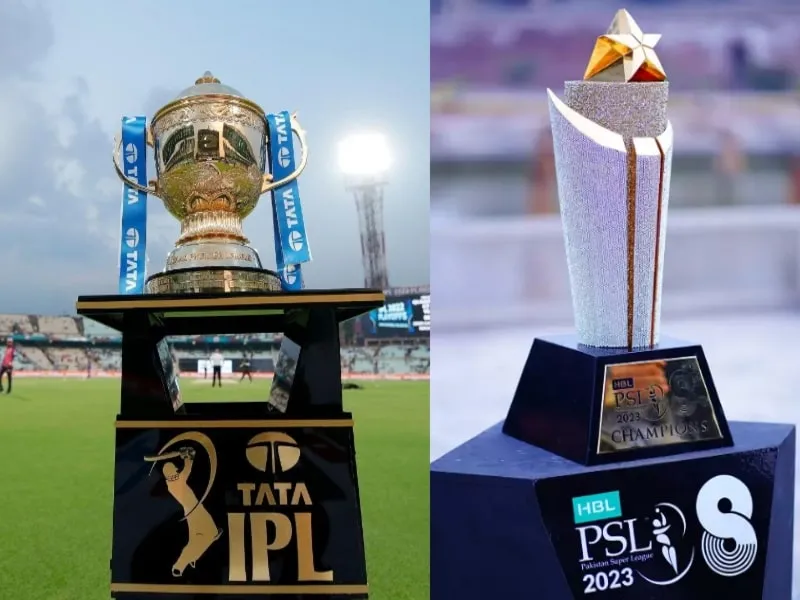
IPL vs PSL Comparison: Factors Behind the Financial Divide
The IPL vs PSL comparison goes beyond simple numbers to the underlying factors that have created this financial gulf. Several key elements explain the massive valuation difference:
1. Market Size and Economic Factors
India’s 1.4 billion population and rapidly growing middle class provide the IPL with an enormous domestic audience. With a GDP of approximately $3.5 trillion compared to Pakistan’s $376 billion, India’s economy offers significantly greater corporate sponsorship opportunities and consumer spending power.
2. Broadcasting Rights
The IPL’s latest broadcasting rights deal (2023-2027) fetched an astounding $6.2 billion—more than 170 times the PSL’s broadcasting rights value. This single revenue stream generates more money than many entire sports leagues globally.
3. Corporate Sponsorship Landscape
India’s robust corporate sector, including multinational giants and domestic powerhouses, provides the IPL with sponsorship deals that dwarf what’s available to the PSL. From team jersey sponsors to official partners, the IPL attracts premium brands willing to pay top dollar for association.
4. International Player Participation
The IPL’s financial muscle allows it to attract virtually any international star, creating a truly global product. While the PSL has improved its international recruitment, financial constraints limit its ability to compete for the biggest names or retain them for the entire tournament.
5. Infrastructure and Facilities
IPL teams operate in world-class stadiums with state-of-the-art facilities, enhancing both the player and fan experience. The PSL has made strides in this area, but infrastructure development remains a challenge.
“The financial gap between IPL and PSL reflects broader economic realities rather than management quality,” explains a sports business professor. “The PSL has actually done remarkably well given its market constraints, while the IPL has maximized its advantages.”
T20 Cricket Leagues: How IPL and PSL Stack Up Globally
Among global T20 cricket leagues, the IPL stands alone financially, with a valuation greater than all other leagues combined. This context helps understand where both the IPL and PSL fit in the global cricket ecosystem.
| Country | League | Started | Administrator | Value |
|---|---|---|---|---|
| India | Indian Premier League (IPL) | 2008 | BCCI | $10.9 Billion |
| UAE | International T20 League (ILT20) | 2023 | Emirates Cricket Board | $15 Million |
| South Africa | SA20 | 2023 | Cricket South Africa (CSA) | $12.5 Million |
| Australia | Big Bash League (BBL) | 2011 | Cricket Australia | $10 Million |
| England | The Hundred | 2021 | England and Wales Cricket Board | $9 Million |
| United States | Major League Cricket (MLC) | 2023 | American Cricket Enterprises | $6.9 Million |
| Pakistan | Pakistan Super League (PSL) | 2016 | Pakistan Cricket Board (PCB) | $5.7 Million |
| Bangladesh | Bangladesh Premier League (BPL) | 2012 | Bangladesh Cricket Board | $4.8 Million |
This global perspective reveals two important insights: first, the IPL’s financial dominance is unprecedented in cricket; second, the PSL holds a respectable position among other global leagues despite launching years after many of them.
“The IPL has become cricket’s equivalent to the NFL or Premier League—a financial juggernaut that sets the standard,” says a sports media analyst. “Other leagues, including the PSL, are competing in a different financial weight class altogether.”
The Future Outlook: Growth Potential and Challenges
While the current financial gap between IPL and PSL is enormous, both leagues face distinct opportunities and challenges moving forward:
IPL: Sustaining Growth and Global Expansion
The IPL’s challenge isn’t survival but sustaining its growth trajectory. Key opportunities include:
- International expansion through exhibition matches or team ownership in other countries
- Developing year-round engagement through digital content and merchandise
- Increasing female viewership and participation through the Women’s Premier League
- Leveraging player data and analytics to create new fan experiences
However, the IPL also faces challenges:
- Potential market saturation as the tournament expands
- Balancing commercial interests with player workload concerns
- Managing competitive balance between wealthy and less affluent franchises
- Navigating geopolitical complexities in international expansion
PSL: Building on Solid Foundations
For the PSL, the path forward involves:
- Gradually increasing broadcast rights values through digital innovation
- Expanding the international audience, particularly among the Pakistani diaspora
- Developing more homegrown stars who can become global cricket personalities
- Improving stadium experiences and infrastructure
- Potentially expanding the number of teams and matches
“The PSL has created something valuable despite operating in a challenging environment,” notes a cricket administrator. “Its growth potential is significant if Pakistan’s security situation continues to improve and more international cricket returns to the country.”
The financial comparison between the IPL and PSL tells a story that goes beyond cricket—it’s a tale of market economics, timing, and the power of scale. While the IPL has redefined what’s financially possible in cricket, the PSL has created a valuable product despite significant constraints.
As both leagues continue to evolve, they serve different but important roles in cricket’s global ecosystem. The IPL demonstrates cricket’s commercial ceiling when all factors align favorably, while the PSL shows how passion, smart management, and gradual growth can build something valuable even in challenging circumstances.
For cricket fans, the good news is that both leagues continue to deliver exciting cricket and launch new stars onto the global stage—regardless of their bank balances.
Read more: IPL 2025: 40% Jump in IPL TV Viewership Since 2018, Star Aims to Reach 1 Billion Fans by 2025