NAM321/6 (50 ov)
 IRE
IRE FCA
FCA FCU
FCU KOE
KOE S04
S04 M05
M05 SVW
SVW RBL
RBL ELV
ELV SCP
SCP HSV
HSV MEX-W
MEX-W ARG-W
ARG-W ARS
ARS EVE
EVE COV
COV FUL
FUL MOZ19
MOZ19 UGA23/0 (0.5/20 ov, target 20)
 NZ180/5
 IND181/6 (19.5/20 ov, target 181)
 Ipswich1
 Nottm Forest1
 Alavés1
 Málaga1
 WA105/3 (18.5/50 ov, target 372)
 NSW371/8
 DEN
DEN KUW
KUW KENYA
KENYA QAT
QAT SWD-W
SWD-W EPR-W
EPR-W TTN-W
TTN-W WPR-W
WPR-W BOR
BOR WAR15/1 (2.5/20 ov)
 LIONS
LIONS Limpo21/1 (2.5/20 ov)
 NZ-A135/3 (41 ov)
 IND-A113
 DHA293/3 (84.1 ov)
 RAJ
RAJ MYMS
MYMS CHATT
CHATT RAN320/5 (80 ov)
 BAR
BAR UAE
UAE NED
NED PAK
PAK ENG
ENG IND-W
IND-W ZIM-W
ZIM-W GMB
GMB LES
LES ZMB
ZMB NGA
NGA AFG170/3 (34.3/50 ov, target 170)
 ZIM169
 OFC
OFC NEU
NEU Torino3
 Monza2
 Brest1
 Nice2
Nice2 Stuttgart2
 Gladbach3
 Al Ahli4
 Al Khaleej1
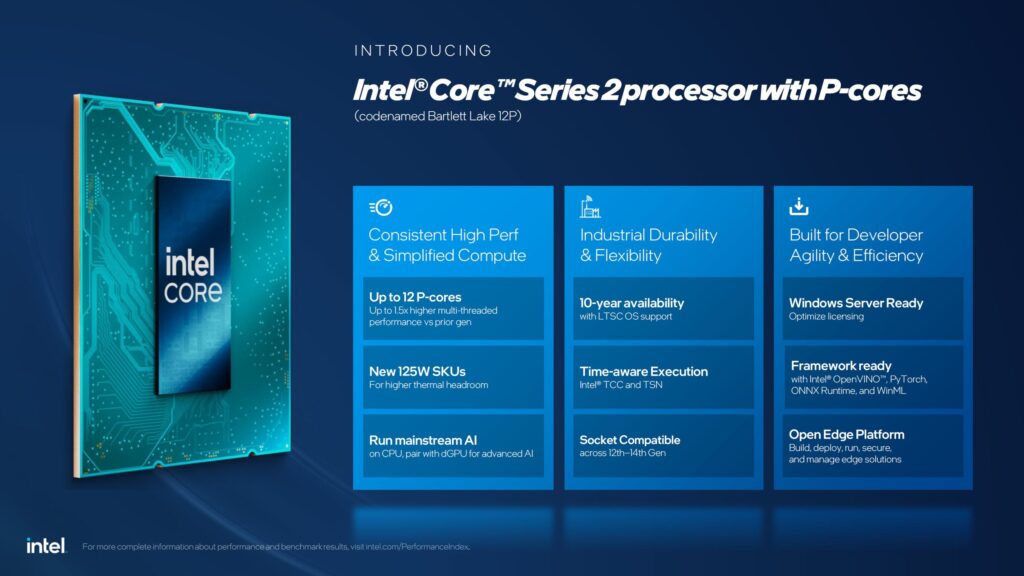
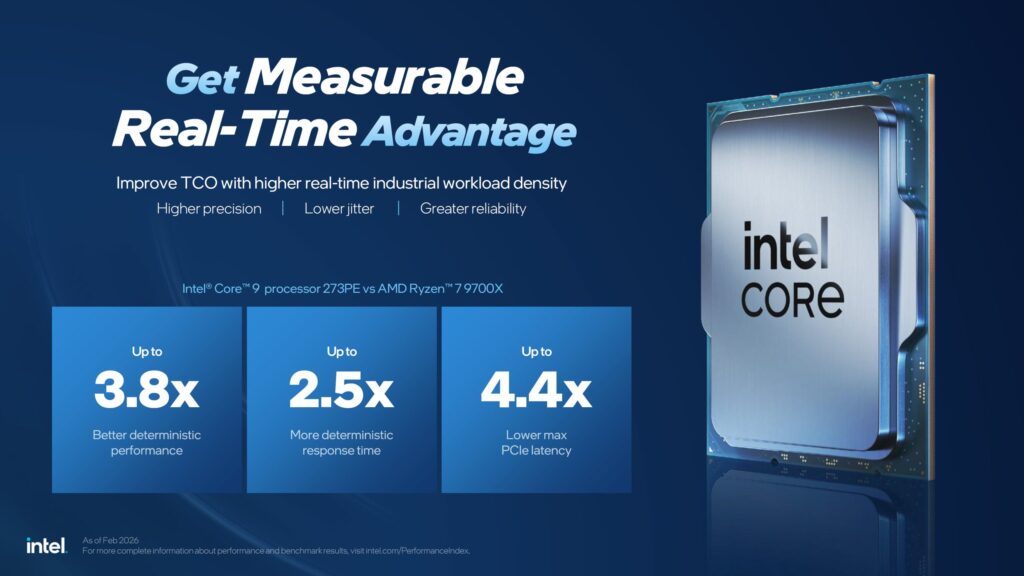
Intel just made two significant chip announcements at Embedded World 2026, and there’s a catch that PC enthusiasts won’t love. Intel has officially launched its Core Series 2 “Bartlett Lake” and Core Ultra Series 3 “Panther Lake” families, with the top Bartlett Lake SKU — the Core 9 273PQE — featuring 12 Performance-cores, 24 threads, 36MB cache, and boost clocks up to 5.9 GHz at 125W. Impressive numbers. But neither chip is coming to a retail shelf near you.
Intel Bartlett Lake & Panther Lake — Specs at a Glance
| Feature | Bartlett Lake-S | Panther Lake (Core Ultra S3) |
|---|---|---|
| Branding | Core Series 2 | Core Ultra Series 3 |
| Process Node | Intel 7 (10nm class) | Intel 18A |
| Architecture | Raptor Cove (P-cores only) | Hybrid (P + E + LP-E cores) |
| Max P-Cores | 12 | Up to 8 (H-series) |
| Max Boost Clock | 5.9 GHz (125W) | TBC |
| Max Memory | 192GB DDR5-5600 + ECC | DDR5 / LPDDR5X |
| Socket | LGA 1700 | Mobile only |
| Target Market | Edge / industrial / embedded | Edge AI, robotics, mobility |
| Retail Availability | No — OEM / industrial only | No — embedded / OEM |
What Makes These Chips Interesting — And Frustrating
Bartlett Lake is essentially what many desktop gamers have been asking Intel for years — an all P-core design on LGA 1700 that discards the efficiency cores Intel has bundled with consumer chips since 12th-gen Alder Lake, simplifying scheduling and reducing hybrid core overhead. Twelve pure performance cores at 5.9 GHz on a socket millions already own? On paper, that’s a compelling gaming CPU. In practice, Intel has locked it firmly behind industrial and OEM channels.
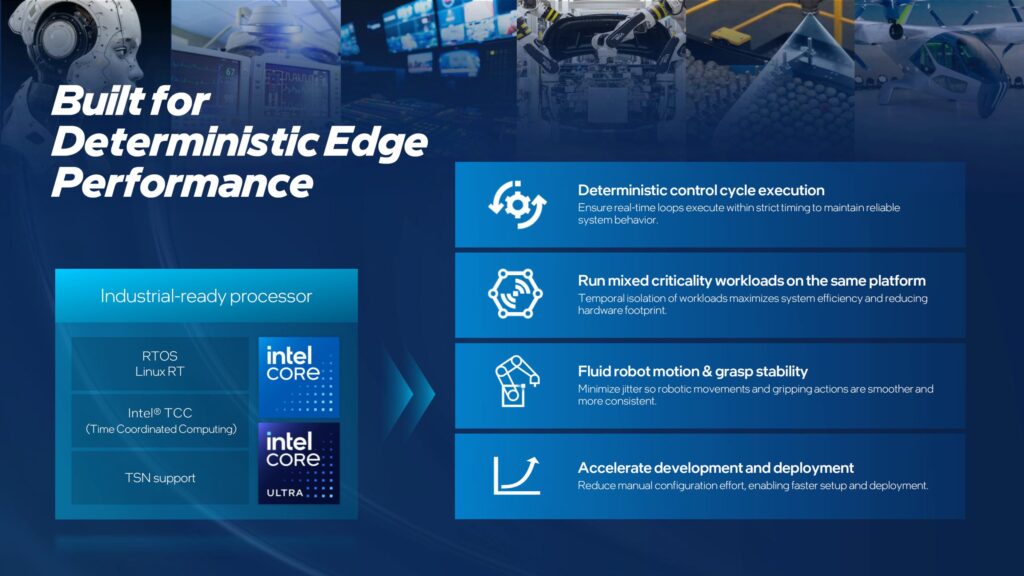
These chips are tuned for “deterministic” performance — the ability to guarantee consistent timing and predictable response — rather than peak benchmark scores, making them ideal for factory robots, autonomous platforms, and 5G edge nodes. Intel also brings LTSC Windows support and Time-Sensitive Networking to the table, features that matter enormously in mission-critical deployments but mean nothing to a PC builder.
On the Panther Lake side, the story is more forward-looking. Intel claims its Core Ultra Series 3 offers up to 4.5x improvement in AI tasks versus the Nvidia Jetson AGX Orin 64GB solution, with potential TCO savings of over $5,500 per system when replacing dual-accelerator setups. Built on Intel’s 18A process, it’s the chip Intel is counting on to prove its manufacturing comeback is real.
For PC builders hoping Bartlett Lake finds its way to retail, Intel’s reluctance may simply be a case of prioritising production capacity on Arrow Lake for consumer products, with insufficient Bartlett Lake silicon to go around. Follow our latest Intel and CPU news on TechnoSports and PC hardware coverage here for updates.
Quick Verdict
Bartlett Lake is the P-core monster desktop enthusiasts wanted — and can’t have. Panther Lake is Intel’s serious edge AI play built on its own 18A node. Both are technically impressive; neither will show up in your next gaming rig.