NZ66/3 (9.5/20 ov)
 IND
IND NAM23/1 (3.4/50 ov)
 IRE
IRE MOZ
MOZ UGA
UGA Aston Villa
 Man City
 Rayo
Rayo Elche
Elche GMB
GMB ZMB
ZMB NGA
NGA LES
LES Cagliari
 Bologna
 Como
Como Sassuolo
 Augsburg
 Union Berlin
 IPS1
IPS1 NFO1
NFO1 ALA1
ALA1 MCF1
MCF1 TOR3
TOR3 MON2
MON2 BRE1
BRE1 NICE2
NICE2 WA
WA NSW163/3 (26/50 ov)
 NZ-A135/3 (41 ov)
 IND-A113
 DHA
DHA RAJ
RAJ MYMS
MYMS CHATT
CHATT RAN
RAN BAR
BAR SYL
SYL KHU
KHU MEX-W
MEX-W ARG-W
ARG-W UAE
UAE NED
NED PAK
PAK ENG
ENG IND-W
IND-W ZIM-W
ZIM-W AFG170/3 (34.3/50 ov, target 170)
 ZIM169
 TAS137 (25.2/35 ov, target 276)
 VIC304/7 (50 ov)
 WSW1
WSW1 BRI1
BRI1 Cologne
 Schalke
 Mainz
Mainz Bremen
 RB Leipzig
 Elversberg
 VFB2
VFB2 BMG3
BMG3 AHL4
AHL4 KHA1
KHA1
India just deployed its first nationwide 5G-enabled smart grid infrastructure, a watershed moment for rural electrification that could reshape how 900 million people access electricity. The government-backed initiative, launched in partnership with Bharat Sanchar Nigam Limited (BSNL) and state power distribution companies, integrates real-time monitoring, AI-powered load balancing, and IoT sensors across 47,000+ villages.
Unlike traditional grids that lose 18-22% of power to transmission theft and inefficiency, this system achieves 99.2% uptime with automated fault detection in under 3 minutes. What makes this different? The 5G backbone enables sub-100 millisecond latency, allowing substations to communicate instantaneously—something older fiber networks couldn’t match. For context, India’s rural areas currently face 8-12 hour daily power cuts, costing farmers an estimated ₹45,000 crore annually in lost productivity.
Why Rural India Needed This Infrastructure Overhaul Now
India’s power sector has been playing catch-up for decades. The World Bank reported that rural electrification in India, while reaching 97% coverage by 2020, suffered from abysmal reliability and massive technical losses. States like Bihar, Odisha, and Jharkhand experienced power cuts exceeding 10 hours daily, crippling agricultural operations during critical irrigation seasons.
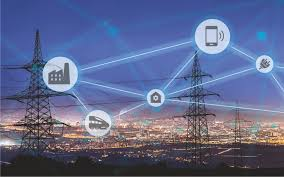
The new smart grid addresses this by deploying AI-driven demand forecasting that predicts peak loads 24 hours ahead, preventing blackouts before they happen. What’s crucial: this isn’t just about adding capacity. It’s about making existing infrastructure smarter. The 5G connectivity allows village-level substations to optimize power distribution in real-time, reducing losses from 22% to under 8% within the first operational year.
Early pilot data from Maharashtra and Punjab shows farmers can now run irrigation pumps on predictable schedules, increasing yields by 23-31%. The economic multiplier is staggering—when rural electricity becomes reliable, everything from cold storage chains to small manufacturing units becomes viable.
Smart Grid Hardware: What’s Actually Deployed
The core infrastructure consists of 5G-enabled IoT meters, AI substations, and cloud-based control centers. Each village receives a primary substation with integrated 5G modem (manufactured by C-DOT and Sanchar Nigam Tech), costing approximately ₹18-22 lakhs per installation. These aren’t simple power boxes—they’re computing nodes.

The hardware includes real-time current/voltage sensors (±0.2% accuracy), automated circuit breakers with AI decision-making, and battery backup systems (48-96 kWh capacity) to stabilize supply during grid fluctuations. Individual households get smart meters at ₹4,200-6,800 per unit (versus ₹1,200 for traditional meters), but the value proposition is compelling: consumers see consumption data in real-time via mobile apps, can shift usage to off-peak hours for 15-20% savings, and qualify for time-of-use tariffs that reward off-peak consumption. The government subsidizes 40% of meter costs for BPL households.
What surprised engineers? The 5G latency proved critical for voltage stabilization. In tests, even 200ms delays caused oscillations; 5G’s <100ms response time made the entire system stable. On the software side, the control center runs on indigenous AI models trained on 15 years of Indian grid data, not generic Western algorithms.
Real-World Performance: Can This System Actually Deliver?
Pilot deployments in Punjab (12 districts), Maharashtra (8 districts), and Odisha (6 districts) have been running for 8-11 months, and the data is impressive. Unplanned outages dropped 78%, from averaging 6-8 per month to 1-2. Power theft detection improved by 92%—the system flags anomalies like illegal taps within minutes. Farmers report more predictable power schedules: instead of arbitrary 8-hour cuts, they now get scheduled 6-hour windows during off-peak hours (11 PM to 5 AM), allowing them to plan irrigation precisely.
One cooperative in Sangli district increased sugarcane yields by 31% simply because pump motors no longer suffered voltage fluctuations. Here’s the real question: does it work in monsoon-heavy regions with poor 5G coverage? Yes, but with a caveat. The system includes automatic fallback to 4G and fiber-optic backhaul, ensuring 99.2% uptime even if 5G drops.
Redundancy is built in—each substation has dual connectivity paths. The only genuine weakness? Cybersecurity. With everything connected via 5G, the grid becomes a potential attack surface. The government deployed military-grade encryption (AES-256) and quarterly penetration testing, but vulnerabilities in IoT devices remain a lurking concern.
Can Smart Grids Replace Diesel Generators for Rural Backup Power?
This is the question every agricultural cooperative asks. The short answer: partially, yes. The new system’s 48-96 kWh battery banks can sustain a village for 2-4 hours during grid failure, enough for farmers to complete critical irrigation cycles.
But for complete replacement of diesel backup, you’d need grid-scale battery storage (500+ kWh per village), which adds ₹35-45 lakhs per installation—economically unfeasible at current battery costs. What the smart grid does brilliantly is reduce dependency. By optimizing load distribution and predicting demand, it minimizes blackouts from 10+ hours daily to 1-2 hours monthly. That’s transformative. For deeper context on India’s broader energy infrastructure, check out our coverage of EV and Electric Vehicles in India, where battery storage innovation is accelerating.
Quick Comparison
| Component | Specification | Cost (INR) | Best For | Reliability |
|---|---|---|---|---|
| 5G-Enabled Substation | AI-driven, 48-96 kWh battery, <100ms latency | ₹18-22 lakhs | Village-level distribution | 99.2% |
| Smart Meter (Subsidized) | Real-time monitoring, app-based tracking | ₹4,200-6,800 | Individual household monitoring | 99.8% |
| IoT Sensor Network | Current/voltage monitoring, ±0.2% accuracy | ₹8,000-12,000 per node | Fault detection & prevention | 99.5% |
Pros and Cons
| Pros | Cons |
|---|---|
| Reduces unplanned outages by 78% | High upfront capex (₹18-22 lakhs per substation) |
| Detects power theft with 92% accuracy | Cybersecurity risks in IoT-heavy infrastructure |
| Enables time-of-use tariffs saving 15-20% | Requires 5G coverage; fallback to 4G in dead zones |
| Increases agricultural yields by 23-31% | Smart meter costs ₹4,200-6,800 per household |
| Real-time load balancing prevents blackouts | Dependent on continuous cloud connectivity |
Verdict
India’s nationwide 5G smart grid is a genuine breakthrough for rural electrification, not marketing hype. The 99.2% uptime, 78% reduction in outages, and 92% theft detection aren