NZ
 IND
 NAM
 IRE
 MOZ
 UGA
 Aston Villa
 Man City
 Rayo
 Elche
 GMB
 ZMB
 NGA
 LES
 Cagliari
 Bologna
 IPS1
 NFO1
 ALA1
 MCF1
 TOR3
 MON2
 BRE1
 NICE2
 TAS67/4 (15.4/50 ov, target 305)
 VIC304/7
 NZ-A135/3 (41 ov)
 IND-A113
 DHA
 RAJ
 MYMS
 CHATT
 RAN
 BAR
 SYL
 KHU
 UAE
 NED
 PAK
 ENG
 IND-W
 ZIM-W
 AFG170/3 (34.3/50 ov, target 170)
 ZIM169
 DOLPH56/0 (3.5/8 ov, target 56)
 SWD51/4 (8/8 ov)
 WSW1
 BRI1
 Como
 Sassuolo
 Augsburg
 Union Berlin
 Cologne
 Schalke
 Mainz
 Bremen
 RB Leipzig
 Elversberg
 VFB2
 BMG3
 AHL4
 KHA1
The neocloud nscale operator faces multi-year deployment delays across Europe and North America because data centre projects cannot secure enough grid power. Nscale had announced a partnership to use NVIDIA Blackwell architecture chips in high-performance computing clusters, but electricity access now threatens the timetable for installing those systems.
The details remain unconfirmed. The delay matters because NVIDIA GPUs cannot generate revenue for a cloud provider while they remain unavailable inside operational facilities. Nscale’s planned infrastructure depends on large concentrations of NVIDIA hardware, making grid connections as important as chip supply, construction and cooling.
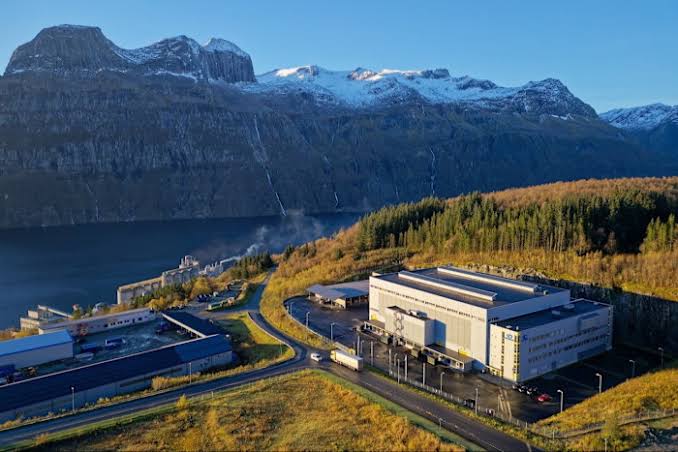
Neocloud Nscale Faces a Power Constraint
The reported bottleneck affects facilities planned in both Europe and North America. Instead of a single delayed site, the problem concerns the power connections required to deploy NVIDIA GPU capacity across multiple locations. United Kingdom connection queues illustrate the scale of the challenge. National Grid connection queues for large data centre projects have extended beyond five to seven years, according to the supplied facts.
That timeline can outlast several GPU product cycles and complicate contracts signed with customers expecting access to high-performance computing capacity. The issue also places pressure on the economics of the cloud model. Nscale can purchase or reserve NVIDIA systems, but those systems need substations, transmission capacity and approved connections before they can serve AI workloads.
Why NVIDIA Blackwell Clusters Need So Much Electricity
Modern AI training facilities require far more electricity than conventional enterprise data centres. The power capacity needed for current training clusters ranges from 100 megawatts to more than 1 gigawatt per facility. That range explains why a grid queue can create a delay lasting years. A 100-megawatt site already requires an industrial-scale connection, while a facility above 1 gigawatt can demand major transmission upgrades and long planning processes.
NVIDIA’s Blackwell architecture may improve computing efficiency compared with earlier systems, but efficiency does not remove the need for substantial electricity when thousands of accelerators operate together. The competitive stakes extend beyond Nscale. NVIDIA-backed cloud providers are competing to turn scarce GPU supply into rentable computing capacity, while customers want predictable access for model training, inference and scientific workloads. Our earlier reporting on the NVIDIA Anthropic Clash also shows how NVIDIA’s influence now reaches beyond chips and into the wider AI supply chain. For more detail, see OpenAI Blog.
What the Delays Mean for Customers and NVIDIA
For customers, a delayed Nscale facility could mean postponed compute reservations, a shift to another region or continued dependence on established cloud providers. The supplied facts do not identify affected customers, contract terms or a revised operational schedule, so the commercial impact cannot yet be measured precisely.
NVIDIA faces a different risk. Its Blackwell partnership with Nscale gives the architecture another route into high-performance cloud clusters, but the hardware’s value depends on data centres becoming usable. If grid access remains the limiting factor, chip deliveries alone will not determine how quickly AI capacity reaches the market. That pressure is also visible in AI mobility projects, where our report on Robotaxi NVIDIA GPT-6 connected advanced software ambitions with demanding compute infrastructure. The common dependency is physical capacity: models and applications need servers, power and cooling before they can scale. For more detail, see VentureBeat AI.
What Happens Next for Nscale?
The next concrete step is clearer disclosure around facility locations, grid connection status and revised deployment schedules. Nscale and its infrastructure partners would need to explain whether they can redirect NVIDIA systems to sites with available capacity or must wait for new connections.
Until those details emerge, neocloud nscale remains a test of whether AI infrastructure can expand at the speed promised by GPU partnerships. The decisive milestone will not be another chip announcement; it will be the moment each facility receives power. The AI cloud race now has a hard limit: a Blackwell cluster cannot train a model until the grid can switch it on.
FAQs
Why is neocloud nscale facing delays?
Nscale faces delays because power grid shortages are affecting data centre deployments in Europe and North America.
How long can United Kingdom data centre connections take?
Large-scale projects in the United Kingdom can face National Grid connection waits exceeding five to seven years.
How much power do AI training clusters require?
Modern AI training clusters can require between 100 megawatts and more than 1 gigawatt for one facility.
What NVIDIA technology is involved?
Nscale announced a partnership to use NVIDIA Blackwell architecture chips in its high-performance computing clusters.
Does Nscale have a confirmed revised launch schedule?
No revised schedule or detailed customer impact has been provided in the supplied facts.
Was this article helpful?
Your feedback directly improves future articles on this site.