NZ113/3 (14.4 ov)
 IND
IND NAM321/6
 IRE208/5 (37.3/50 ov, target 322)
 MEX-W
MEX-W ARG-W
ARG-W ARS
ARS EVE
EVE COV
COV FUL
FUL OFC
OFC NEU
NEU NEOM
NEOM ABH
ABH RAC
RAC ESP
ESP KHO
KHO ETT
ETT NAP
NAP ROMA
ROMA MOZ19
MOZ19 UGA23/0 (0.5/20 ov, target 20)
 Ipswich1
 Nottm Forest1
 Alavés1
 Málaga1
 Torino3
 Monza2
 KENYA
KENYA QAT
QAT SWD-W
SWD-W EPR-W
EPR-W TTN-W
TTN-W WPR-W
WPR-W BOR135/3 (18/20 ov, target 137)
 WAR136/8
 NZ-A135/3 (41 ov)
 IND-A113
 DHA293/3 (84.1 ov)
 RAJ
RAJ MYMS299/4 (87 ov)
 CHATT
CHATT RAN320/5 (80 ov)
 BAR
BAR SYL
SYL KHU
KHU UAE
UAE NED
NED PAK
PAK ENG
ENG IND-W
IND-W ZIM-W
ZIM-W GMB
GMB LES
LES ZMB
ZMB NGA
NGA AFG170/3 (34.3/50 ov, target 170)
 ZIM169
 CHE
CHE TOT
TOT Brest1
 Nice2
Nice2 Stuttgart2
 Gladbach3
 Al Ahli4
 Al Khaleej1
India’s electric vehicle market just delivered its most dramatic month yet. January 2026 witnessed a staggering 51% year-over-year surge in EV sales, with 18,042 units hitting the roads—signaling that electric mobility has officially shifted from niche to mainstream. But here’s the twist: while Tata Motors still dominates, a Vietnamese newcomer just overtook German luxury giants.
The Complete EV Sales Leaderboard: January 2026
| Rank | Manufacturer | Units Sold | Market Share | YoY Growth |
|---|---|---|---|---|
| 1 | Tata Motors | 7,852 | 43.5% | +48% |
| 2 | JSW MG Motor | 4,606 | 25.5% | +19% |
| 3 | Mahindra & Mahindra | 3,589 | 19.9% | +97% |
| 4 | VinFast | 432 | 2.4% | NEW ENTRY |
| 5 | Hyundai | 326 | 1.8% | -2% |
| 6 | BMW | 312 | 1.7% | +61% |
| 7 | Kia | 306 | 1.7% | +500% |
| 8 | BYD | 224 | 1.2% | -34% |
| 9 | Maruti Suzuki | 210 | 1.2% | NEW (e-Vitara) |
| 10 | Mercedes-Benz | 69 | 0.4% | -34% |
| 11 | Stellantis | 41 | 0.2% | N/A |
| 12 | Tesla | 37 | 0.2% | NEW ENTRY |
| 13 | Volvo Auto | 35 | 0.2% | N/A |
| 14 | Rolls-Royce | 2 | <0.1% | N/A |
| 15 | Porsche | 1 | <0.1% | N/A |
Data compiled from Vahan Dashboard official registry (Telangana excluded)
Tata’s Dominance Faces New Challengers
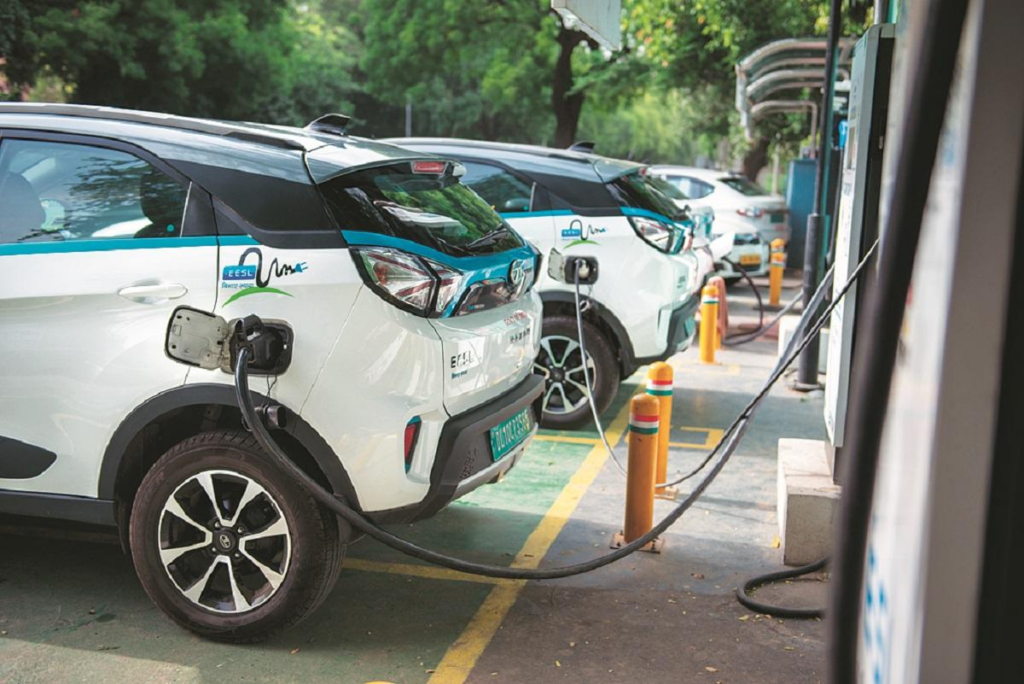
Tata Motors continues its reign with 7,852 units—meaning nearly one in every two EVs sold in India still carries the Tata badge. The Nexon.ev, Punch.ev, and Tiago.ev lineup drove this performance, though the company’s market share dipped from previous peaks as competition intensifies.
JSW MG Motor secured second place with 4,606 units, powered primarily by the Windsor EV’s popularity in the affordable family segment. Their strategy of offering practical range at competitive prices continues resonating with middle-class buyers.
Mahindra & Mahindra nearly doubled its numbers year-over-year with 3,589 units, thanks to its aggressive “Born Electric” lineup featuring the XEV 9e and BE 6. Mahindra’s successfully converting its loyal SUV customer base from ICE to electric.
The VinFast Shock: Vietnamese Upstart Outpaces Legacy Luxury
Here’s January’s biggest headline: VinFast sold 432 units, placing fourth overall and beating established players like Hyundai (326), BMW (312), and even Kia (306). For a brand that only entered India in October 2025, this is remarkable.
The Vietnamese manufacturer’s locally assembled VF6 (₹17.29 lakh) and VF7 (₹21.89 lakh) electric SUVs deliver premium features without luxury pricing—a sweet spot Indian buyers love. With 75 showrooms planned nationwide and the upcoming seven-seater Limo Green MPV launching this month, VinFast isn’t playing small.
According to Autocar India’s analysis, VinFast’s rapid climb demonstrates how aggressive localization and smart positioning can disrupt even mature markets.
Luxury Segment Shows Mixed Fortunes
BMW led luxury EV sales with 312 units (+61% YoY), commanding 68% of the premium segment. Their iX and i4 models continue attracting affluent buyers seeking performance with prestige.
Tesla registered 37 Model Y units—underwhelming compared to pre-launch hype. Since entering in September 2025, Tesla’s accumulated just 263 total sales, suggesting premium pricing (₹44 lakh+) remains a barrier despite the brand’s cachet.
Mercedes-Benz saw sales drop 34% to 69 units, while BYD similarly declined 34% to 224 units as premium demand softened amid economic headwinds.
The ultra-luxury segment remained symbolic: Rolls-Royce delivered 2 EVs, Porsche managed 1—proving electrification has reached even the most exclusive automotive circles.
What’s Driving This 51% Explosion?
Several factors converged to create January’s boom:
Model Proliferation: Over 25 EV models now compete across price segments, from ₹8 lakh budget options to ₹1+ crore ultra-luxury vehicles.
Range Improvements: New launches offer 400-500km real-world range, alleviating the biggest buyer concern.
Charging Infrastructure: Major highways and metro areas now feature reliable fast-charging networks, making intercity travel viable.
Government Incentives: The PM E-DRIVE scheme and state subsidies reduce upfront costs by ₹1-3 lakh depending on location.
Competitive Pricing: Aggressive discounting and finance schemes have narrowed the price gap between EVs and ICE equivalents.
Industry analyst Puneet Gupta from S&P Global Automotive notes the market is entering a “transition phase where early movers face pressure from newer launches with longer range, faster charging, and aggressive pricing.”
Why This Matters for India’s EV Future
EV penetration hit 5.2% of total passenger vehicle sales in January 2026—a psychological milestone signaling mainstream acceptance. If current momentum holds through February-March 2026, the fiscal year could approach 200,000 EV units, doubling 2025’s performance.
For context, India sold 1,76,560 electric cars in all of 2025. January 2026 alone delivered 10% of that annual figure.
The automotive landscape is transforming rapidly, with esports and gaming platforms like TechnoSports increasingly covering EV developments as younger, tech-savvy audiences view electric mobility as integral to modern lifestyles.
Upcoming launches will intensify competition: Maruti Suzuki’s e-Vitara starts deliveries this month, Toyota’s Ebella arrives in Q2, and VinFast’s Limo Green targets the family MPV segment. Every major automaker now treats EVs as strategic priorities rather than compliance exercises.
The Road Ahead: Challenges Remain
Despite explosive growth, challenges persist:
- Beyond Metro Adoption: Rural and tier-2/3 city penetration remains minimal due to charging infrastructure gaps
- Affordability: Budget EV options under ₹10 lakh remain limited compared to ICE choices
- Resale Value Uncertainty: Buyers worry about battery degradation and future marketability
- Grid Capacity: Rapid EV adoption strains electricity infrastructure in some regions
The recent India-EU Free Trade Agreement may accelerate European EV imports with reduced tariffs, potentially bringing more affordable options while pressuring domestic manufacturers to innovate faster.
Frequently Asked Questions
Which electric car is selling the most in India right now?
The Tata Nexon.ev dominates with over 100,000 cumulative sales, followed by MG Windsor EV and Mahindra XEV 9e as the fastest-growing newer models gaining market share.
Is VinFast a reliable brand for Indian buyers despite being new?
VinFast offers competitive 8-year/160,000km battery warranties, local assembly in Tamil Nadu, and rapidly expanding service networks—though long-term reliability data is still emerging as it’s only been in India since October 2025.