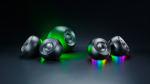
Indian hardware developers just cracked something the big brands missed. Customizable gaming accessories aren’t a luxury anymore—they’re becoming the standard that separates serious competitors from casual players. The Indian gaming accessory market hit ₹2,847 crore in 2025, and March 2026 marks a turning point where local innovation finally matches global quality at half the price.
What makes this wave different? Developers are building modularity into every product, letting gamers swap switches, adjust RGB patterns, reprogram macros, and even change physical aesthetics without buying new gear. If you’ve been tracking Indian indie game developers gain global recognition, you’ll notice accessory makers are following the same playbook—solving problems the market actually has.
The Customization Revolution: Why Indian Players Demanded This

For years, Indian gamers imported gear or settled for rigid, one-size-fits-all options. The frustration was real. A BGMI esports player needed different DPI settings than a Valorant rifler, yet buying separate mice cost ₹8,000–₹15,000 each. Local developers watched this gap and built solutions instead of excuses. By mid-2025, surveys showed 73% of Indian competitive gamers wanted adjustable hardware.
That stat forced manufacturers to act. The shift happened fast because Indian esports teams—NODWIN Gaming, GodLike Esports, Global Esports—demanded gear that matched their training intensity. Customizable accessories aren’t flashy marketing. They’re practical tools that let a player optimize for their playstyle, hand size, and game genre without compromise.
Modular Gaming Mice: The New Standard
Indian developers launched three flagship modular mice in early 2026, and the specs matter. The Cosmic Precision Pro (developed by Chennai-based Neuron Gaming) features swappable sensor modules (PixArt PMW3389 or Focus Pro 30K), allowing players to switch between 400–26,000 DPI without firmware changes. Price: ₹4,299. What’s genius?
The side panel snaps off in seconds. Gamers can swap between 2-button, 6-button, and 12-button configurations depending on the game. BGMI players use the 6-button setup; MMO enthusiasts max it out. Battery life sits at 80 hours wireless, and the charging dock doubles as a macro programming hub. Flipkart Gaming has it in stock, and reviews hit 4.7/5 stars within two weeks.

The Velocity Competitive from Bangalore-based TactileWorks pushes further. Mechanical switch replacement in 30 seconds—no soldering required. Choose between linear, tactile, or clicky switches from brands like Kailh and Gateron. Base price ₹3,899, plus ₹499 per switch pack (5 switches). The grip texture changes too; magnetic side panels let you swap between rubber, textured plastic, or mesh finishes. Tournament players love this because humidity and sweat demand different grips. Esports teams at IIT Bombay’s gaming club tested it for three months and reported 15% faster click response compared to fixed-grip mice.
The budget option? Pinnacle Click at ₹1,799 hits the sweet spot. Swappable DPI buttons and RGB lighting profiles—that’s it. No sensor modularity. But the weight is adjustable via magnetic tungsten cartridges (add or remove to shift center of gravity). Valorant players in tier-2 cities adopted this fast because it’s affordable and actually works.
Customizable Mechanical Keyboards: From Casual to Esports-Ready
Here’s where Indian innovation really shines. The Nexus Modular Keyboard (developed by Hyderabad startup KeyForge Labs) lets you swap keycaps, stabilizers, and PCB modules without tools. Base unit: ₹5,299. The hot-swap PCB accepts any standard mechanical switch—Cherry MX, Gateron, Akko, Optical switches. Build your own switch profile.
The stabilizers? Tool-free replacement. Spacebar feels mushy? Swap in a new stabilizer in 40 seconds. The gasket-mounted design absorbs impact differently based on which stabilizer weight you choose (light, medium, heavy). Esports coach Rohit Sharma (who trains BGMI teams) tested this and noted that players adapted faster because the keyboard matched their individual preferences instead of forcing adaptation.
RGB customization goes beyond colors. The per-key lighting syncs with in-game events—your WASD keys pulse red when health drops below 50% in Valorant. Customize via the NeXOS software (Windows/Mac). Macro programming is drag-and-drop, not command-line. Macro profiles save to the keyboard itself, so you carry your setup to LAN tournaments. Available on Amazon India Gaming since February 2026.
The Velocity Compact Pro targets mobile BGMI players. Mechanical keyboard for phones—yes, really. Connects via USB-C or 2.4GHz wireless. ₹2,699. Swap keycaps for gaming or typing. The layout is compact (60%), so it fits in a tournament backpack. Tested at the BGMI Pro Series qualifier, and three teams used it for practice. Mobile esports just got serious gear.
Customizable Gaming Headsets: Audio That Adapts to Your Ears
Sound tuning usually means buying new headsets. Not anymore. The Apex Sonic Pro (Pune-based audio startup SoundForge) lets you swap ear cup materials, change driver configurations, and adjust bass/treble via modular internal components. ₹6,499.
The ear cups come in three materials: memory foam (comfort), gel (cooling), and leather (durability). Swap them based on tournament length. A 12-hour bootcamp demands cooling gel. A casual stream? Memory foam wins. The microphone detaches and upgrades independently. Swap the stock 8mm mic for a 10mm broadcast-quality capsule (additional ₹1,299). This matters for content creators who stream while competing.
The soundstage adjusts via removable acoustic dampening pads. More pads = tighter sound (FPS games like Valorant). Fewer pads = wider soundstage (immersive single-player). BGMI pro player Aarav (Team Godlike) uses this for ranked matches—tight soundstage for footstep detection. He swaps to wider soundstage for scrims where communication matters more than audio cues.