MBSG
MBSG CFC
CFC PSG
PSG LYON
LYON SEV
SEV OSA
OSA NED
NED OMA
OMA NZ
NZ IND
IND NAM
NAM IRE
IRE PAK
PAK SL
SL SA
SA AUS
AUS Barcelona1
 Real Madrid2
 Udinese0
 Milan2
 Real Sociedad2
 Levante1
 Lecce0
 Juventus2
 LUL
LUL SPR75/9 (14/20 ov)
 NZ-A317
 IND-A113 & 488/8 (119 ov)
 SYL575/4 (167.3 ov)
 KHU
KHU MYMS465/7d
 CHATT424/6 (121 ov)
 DHA521
 RAJ162 & 215/5 (59.1 ov) (f/o)
 RAN402 & 5/0 (2.3 ov)
 BAR443/9d
 SIKM30/1 (15 ov)
 NAGA187
 JHK
JHK DELHI309/5 (90 ov)
 ODSA194
 SVCS13/0 (5 ov)
 BRODA259/6 (86 ov)
 J & K
J & K CHD363/2 (87 ov)
 HP
HP CGR35/1 (14 ov)
 AP231
AP231 MOW
MOW TOK
TOK BRB
BRB MIS
MIS BIK
BIK CHR
CHR MEX-W51 (12.5/20 ov, target 187)
 ARG-W186/7
 NGA148
 UGA147/9 (20 ov, target 149)
 GMB112/9
 LES109 (19.5/20 ov, target 113)
 MOZ110/7 (19/20 ov, target 110)
 ZMB109/9
 IND-W328/6
 ZIM-W207 (48.5/50 ov, target 329)
 ENG241
 Abha
Abha Al Faisaly
 Sassuolo
 Lazio
Lazio AS Roma
 Cagliari
 Torino
 Como
Como NEF
NEF ITT
ITT Sunderland0
 Leeds0
 Freiburg1
 Bayern3
Michael Carrick’s appointment as Manchester United interim head coach marks the beginning of a new tactical era at Old Trafford. The 44-year-old former midfielder, who boasts an impressive 50 percent win rate against Manchester City during his playing career, now faces the challenge of revitalizing a struggling Man United side. With immediate pledges to restore excitement and attacking verve to the team, Carrick’s tactical approach will be scrutinized from his very first match—a daunting Manchester derby encounter.
Michael Carrick’s Previous Man United Interim Spell
Before analyzing future tactics, it’s worth noting that Michael Carrick has managed Man United before, albeit briefly. In November 2021, he took charge for two Premier League matches as interim manager following Ole Gunnar Solskjaer’s departure.

His first match against Chelsea showcased his tactical pragmatism. Rather than implementing an expansive style, Carrick prioritized defensive organization, deploying a narrow 4-3-1-2 that blocked the spine of the pitch and added legs in central midfield. The result—a 1-1 draw with just 34.3% possession and three shots—demonstrated his willingness to adapt tactics based on circumstances.
This historical context suggests that while Carrick favors attacking football, he won’t hesitate to employ conservative tactics when facing elite opposition, particularly in his opening fixtures against Manchester City and Arsenal.
Michael Carrick’s Middlesbrough Blueprint
Understanding how Man United might evolve under Michael Carrick requires examining his successful tenure at Middlesbrough. When Carrick inherited a Championship side hovering dangerously close to the relegation zone in October 2022, he implemented a controlled yet attack-minded philosophy that transformed their fortunes dramatically.
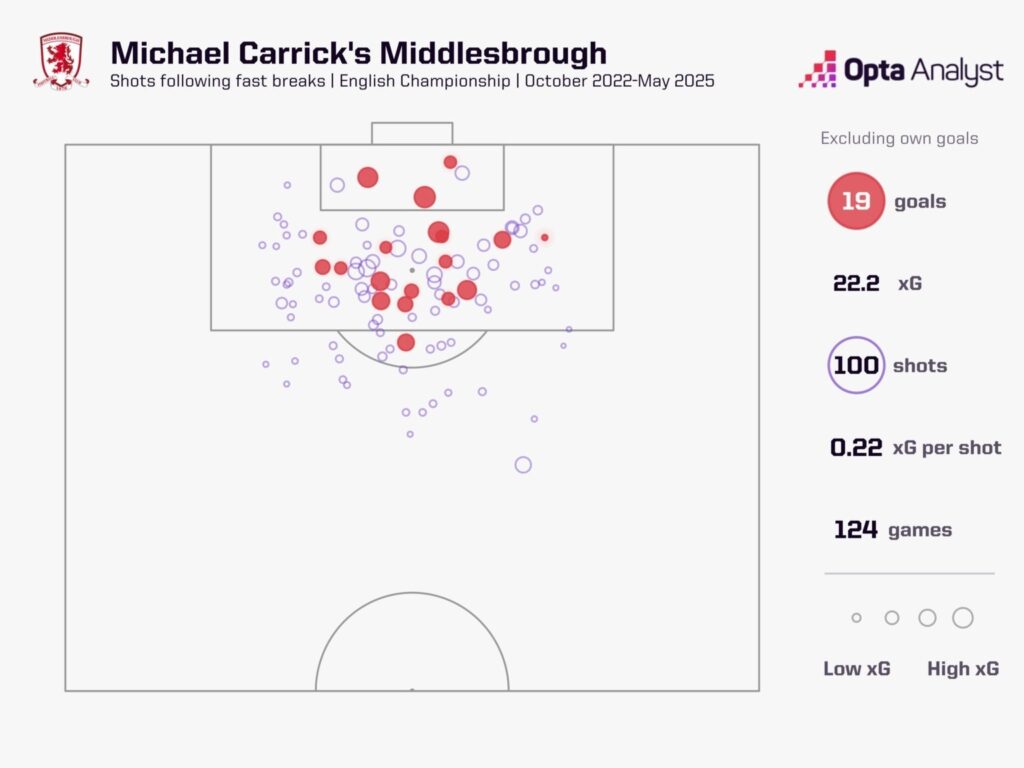
His debut campaign saw Middlesbrough reach the Championship playoffs, a remarkable achievement that showcased his managerial credentials. Over 136 matches in charge at Boro, Carrick employed a 4-2-3-1 formation in 120 games, demonstrating clear tactical preferences. This neat and tidy brand of football emphasized possession control while maintaining attacking intent, characteristics that should appeal to Man United supporters desperate for entertaining football.
Following two additional seasons on Teesside that delivered respectable top-half finishes, Carrick earned his opportunity at Old Trafford. His commitment to playing exciting football aligns perfectly with the club’s traditions and fan expectations.
“Hopefully we can play a really exciting type of football, be positive and express ourselves and bring excitement,” Carrick stated upon his appointment. “I want to be off my seat. I want to be enjoying watching the boys play. And results obviously need to come with that. I can feel my enthusiasm for it because I’m buzzing to get started and see what we can do.”
Middlesbrough Record Under Michael Carrick
| Season | Games | Formation Used | Finish | Achievement |
|---|---|---|---|---|
| 2022-23 | 34 | 4-2-3-1 (majority) | Playoffs | From relegation zone to playoffs |
| 2023-24 | 46 | 4-2-3-1 (majority) | Top half | Respectable finish |
| 2024-25 | 56 | 4-2-3-1 (majority) | Top half | Continued progress |
| Total | 136 | 120 in 4-2-3-1 | – | – |
The 4-2-3-1 Formation Question
There exists widespread assumption that Michael Carrick will immediately implement his favored 4-2-3-1 system at Man United. Following Darren Fletcher’s deployment of this formation during his brief caretaker spell, continuity would seem logical. However, examining the current squad composition reveals potential complications with this straightforward approach.
Man United’s roster presents an unusual imbalance for a traditional 4-2-3-1 setup. The club lacks a natural left-winger, which significantly impacts tactical balance unless Patrick Dorgu pushes forward from left-back to fulfill that responsibility. Conversely, the squad contains an abundance of players who excel as central attacking midfielders.
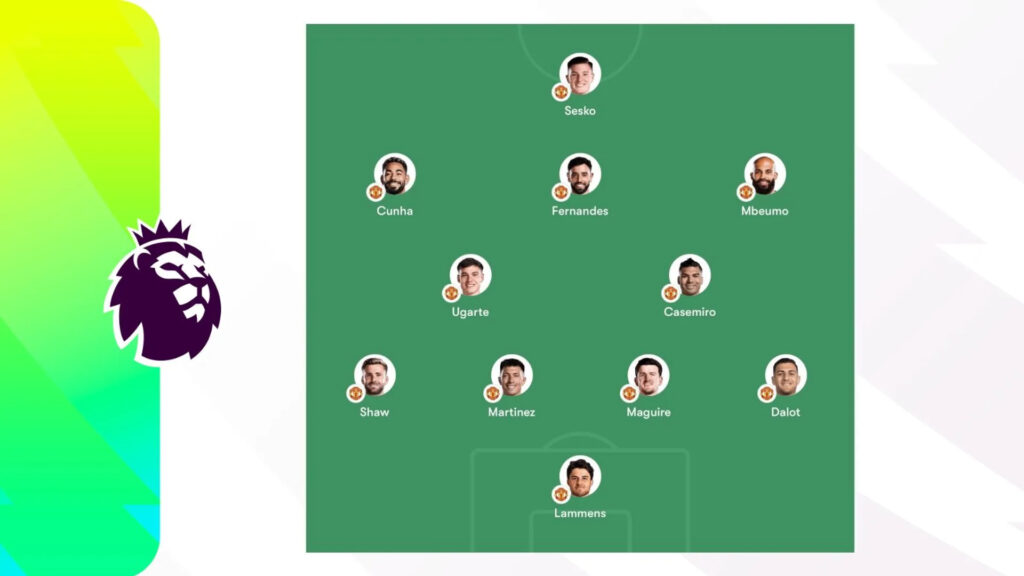
Bruno Fernandes, Matheus Cunha, Mason Mount, and Kobbie Mainoo all perform optimally in the number ten position, yet the 4-2-3-1 provides just one available spot behind the striker. This creates a selection headache that Carrick must navigate carefully.
In a conventional 4-2-3-1, Carrick would likely position Cunha on the left wing despite his preference for central areas. The Brazilian feels comfortable operating left of center but resists hugging the touchline, necessitating aggressive overlapping runs from Luke Shaw or Dorgu to provide width. This represents a tactical challenge, particularly since Shaw operated primarily as a left-sided center-back in Ruben Amorim’s back-three system and hasn’t consistently delivered attacking width recently.
For the challenging Manchester derby, Carrick’s two-man midfield pivot would probably feature his strongest defensive options: Casemiro and Manuel Ugarte. This pairing offers physical presence and ball-winning capabilities crucial against City’s technical midfielders. Fernandes, who spent most of 2025-26 operating in deeper positions, would then be expected to drop back when possession is lost, creating a narrow 4-5-1 defensive shape.
Potential 4-2-3-1 Starting XI vs Manchester City
| Position | Player | Role |
|---|---|---|
| GK | Onana | Goalkeeper |
| RB | Mazraoui | Right-back |
| CB | Maguire | Center-back |
| CB | Martinez | Center-back |
| LB | Shaw/Dorgu | Left-back |
| CDM | Casemiro | Defensive midfielder |
| CDM | Ugarte | Defensive midfielder |
| RW | Mbeumo | Right winger |
| CAM | Fernandes | Attacking midfielder |
| LW | Cunha | Left winger (tucked inside) |
| ST | Sesko | Striker |
Could Man United Deploy a Striker-Less System?
Michael Carrick’s tactical flexibility should not be underestimated. While possession control and attacking positivity represent core principles, he is not a “philosophy manager” rigidly tied to one specific formation or playing style.
Evidence of this pragmatism emerged during his first Premier League match as Man United interim manager in November 2021. Against Chelsea at Stamford Bridge, Carrick deployed a narrow 4-3-1-2 formation, prioritizing defensive solidity over attacking flair. His side registered just 34.3 percent possession and managed only three shots in a workmanlike 1-1 draw that effectively neutralized the Blues’ attacking threats.
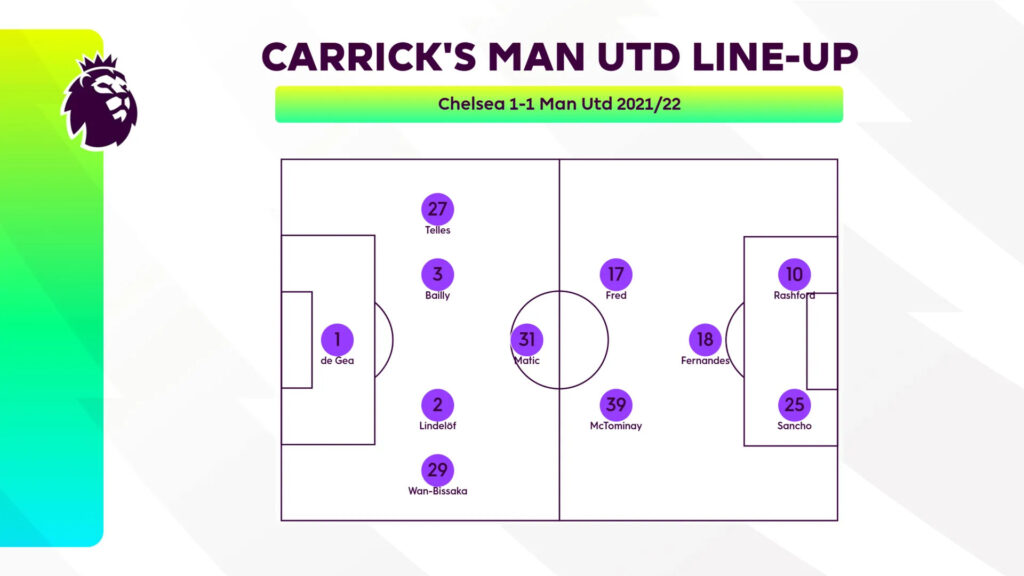
Using split forwards with Fernandes at number ten, Carrick’s priority involved blocking the spine of the pitch while adding energy in central midfield. If similar tactical thinking applies against Manchester City, he might sacrifice Benjamin Sesko from the starting lineup, deploying Cunha and Bryan Mbeumo as split strikers instead.
Both players naturally occupy half-space pockets between full-backs and central defenders, making this arrangement tactically sound. This formation would also allow Carrick to incorporate the athleticism and technical quality of Mainoo and Mount as box-to-box midfielders, adding dynamism to central areas.
Carrick could view this tactic as optimal for screening service into Manchester City’s danger men—Rayan Cherki, Phil Foden, and Erling Haaland. By flooding central zones with quality technical players, Man United could disrupt City’s rhythm and create transitional opportunities.
Alternative 4-3-1-2 Formation Analysis
Historical Context:
- Carrick used this formation in his first Man United game (November 2021 vs Chelsea)
- Result: 1-1 draw
- Possession: 34.3%
- Shots: 3
- Tactical goal: Nullify opposition threat through central compactness
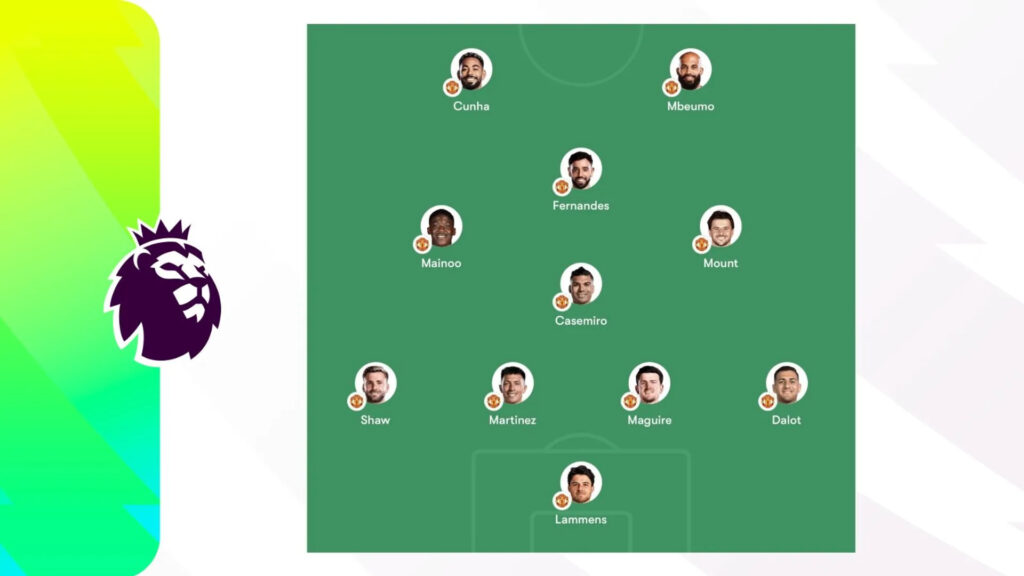
| Position | Player | Tactical Role |
|---|---|---|
| GK | Onana | Distribution from back |
| RB | Mazraoui | Conservative positioning |
| CB | Maguire | Physical presence vs Haaland |
| CB | Martinez | Ball-playing defender |
| LB | Shaw | Defensive stability |
| CM | Casemiro | Deep-lying playmaker |
| CM | Mainoo/Mount | Box-to-box midfielder |
| CM | Ugarte | Ball winner |
| CAM | Fernandes | Creative outlet |
| ST | Cunha | Split striker (left) |
| ST | Mbeumo | Split striker (right) |
Squad Composition and Tactical Challenges
One of the unique challenges facing Michael Carrick at Man United involves the squad’s unusual composition. The team lacks natural width on the left side, with no traditional left-winger currently available. This imbalance creates tactical complications regardless of which formation he selects.
Simultaneously, Man United possesses an overabundance of players who excel in central attacking positions. Bruno Fernandes, Matheus Cunha, Mason Mount, and Kobbie Mainoo all arguably perform best as central attacking midfielders, creating intense competition for limited spots.
This personnel distribution may influence Carrick’s formation choices more than his personal preferences. While he favored 4-2-3-1 at Middlesbrough, the current Man United squad might better suit a formation that accommodates multiple central attackers, such as the 4-3-2-1 or even a 4-4-2 diamond.
Patrick Dorgu’s arrival provides some flexibility, as the left-back could potentially push forward to provide width, but asking a defender to fulfill attacking responsibilities carries inherent risks against elite opposition. Carrick must find creative solutions to maximize his available personnel while maintaining tactical balance.
The Christmas Tree 4-3-2-1 Option
If Michael Carrick desires central solidity without excluding Sesko, the “Christmas Tree” 4-3-2-1 formation presents an attractive compromise. This slightly more attacking setup would see captain Fernandes moved into a number eight role, with Mount or Mainoo positioned opposite Casemiro in a midfield triangle.
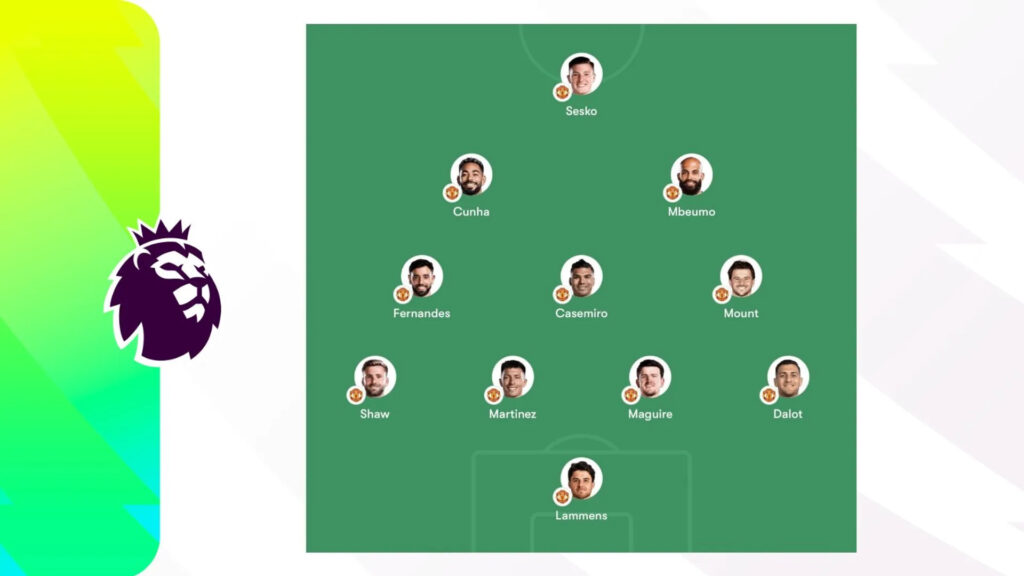
The widest of the three central midfielders must funnel out to help protect their full-backs when Manchester City’s wingers possess the ball. However, when Man United recovers possession, their three talented summer signings in attack would all occupy positions where they feel comfortable during counter-attacks.
This shape possesses excellent balance and can easily morph into a 4-2-3-1 if Fernandes or Mount/Mainoo push forward to support Sesko. The fluidity allows Man United to adjust their approach based on match situations without wholesale personnel changes.
4-3-2-1 Tactical Breakdown
Defensive Phase:
- Three-man midfield provides numerical superiority
- Wide midfielders track opposition wingers
- Compact central areas deny space
Attacking Phase:
- Fernandes and Mount/Mainoo support striker
- Full-backs provide width
- Counter-attacking opportunities maximized
Key Benefits:
- Accommodates multiple attacking midfielders
- Maintains defensive solidity
- Allows tactical flexibility without substitutions
Which Players Will Thrive Under Michael Carrick?
During Carrick’s largely successful Middlesbrough spell, his number ten consistently featured as a prominent goal-scoring figure. His most eye-catching tactical decision involved transforming striker Chuba Akpom into a dynamic number ten behind Cameron Archer during the 2022/23 season.
Revelling in making runs into the box from deep positions, Akpom scored an remarkable 29 goals in that new role, ultimately earning a transfer to Ajax. Carrick will certainly ask whoever plays number ten for Man United to break into dangerous zones regularly.
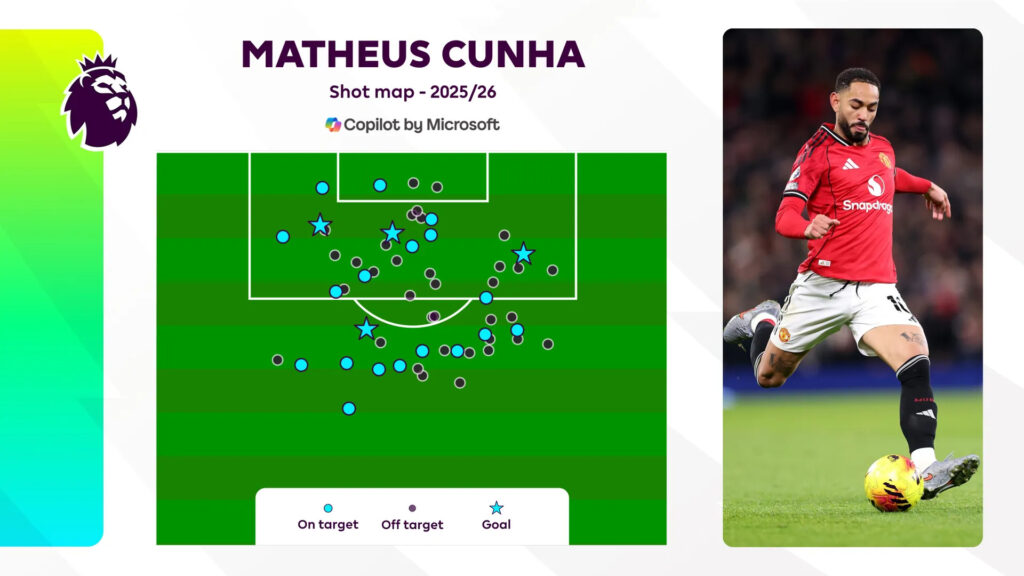
While Bruno Fernandes represents the obvious choice at number ten, that specific role would be perfectly suited for Matheus Cunha. The Brazil international loves shooting from central areas, either outside the penalty area or after making bursts into it from deep. Given Cunha’s terrific goal return at Wolverhampton Wanderers, anticipate Carrick giving him opportunities to play as number ten, potentially dropping Fernandes deeper into midfield.
Goal-Scoring Number Tens Under Carrick
| Player | Season | Club | Position | Goals | Impact |
|---|---|---|---|---|---|
| Chuba Akpom | 2022-23 | Middlesbrough | No. 10 (converted from striker) | 29 | Earned Ajax transfer |
| Potential: Cunha | 2025-26 | Man United | No. 10 | TBD | Natural fit for role |
Amad Diallo’s Potential New Role
Ivory Coast star Amad has emerged as one of Man United’s best performers this season, yet displacing Bryan Mbeumo on the right wing won’t prove easy. With exciting football paramount, Carrick will want Amad in the side at some point, creating potential for deployment as an attacking right-back.
At Middlesbrough, Carrick often deployed one adventurous full-back while asking the opposite full-back to slide across, creating a 3-2-5 shape in possession. This tactical approach would suit Shaw at left-back, freeing Amad for opportunities on the opposite flank.
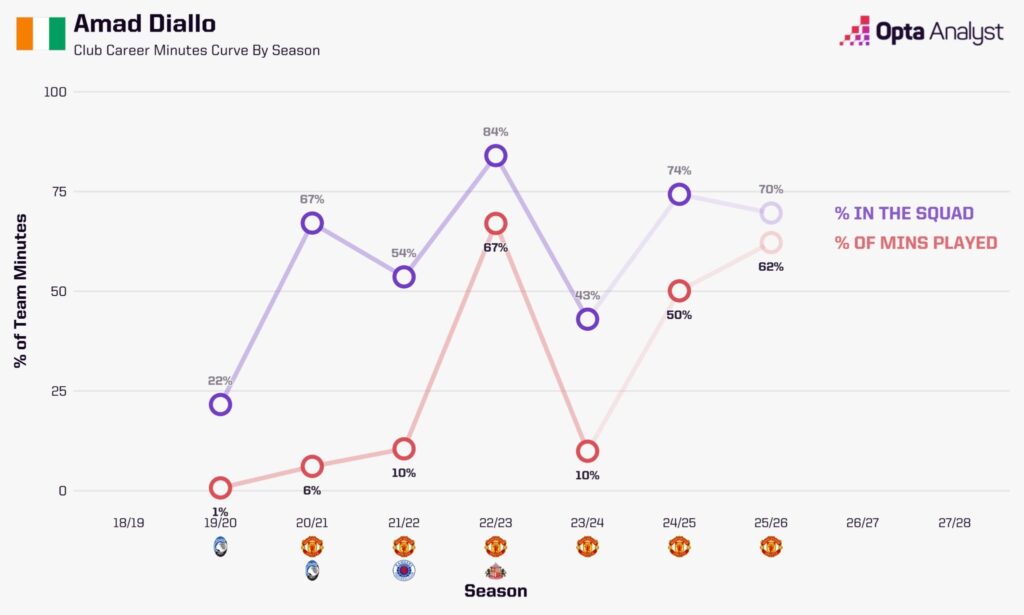
This tactical innovation could prove popular with supporters if Carrick delivers on his promise to excite fans. The asymmetrical full-back approach allows Man United to maintain defensive stability while maximizing attacking talent. Shaw’s comfort operating in a back three (from his time under Amorim) makes this transition particularly feasible.
If Carrick is as good as his word about wanting to excite Man United supporters, deploying Amad as an attacking right-back represents exactly the kind of bold tactical decision that might prove popular. In possession, a bold Man United 4-2-3-1 could transform into an attacking 3-2-5 formation, with Shaw tucking inside to form a back three alongside the two center-backs, while Amad pushes high up the pitch.
Potential 3-2-5 In-Possession Shape
System Overview: This represents Carrick’s Middlesbrough approach adapted to Man United’s personnel. One full-back (Shaw) tucks inside to form a back three, while the opposite full-back (potentially Amad in an adventurous role) pushes high to create a front five.
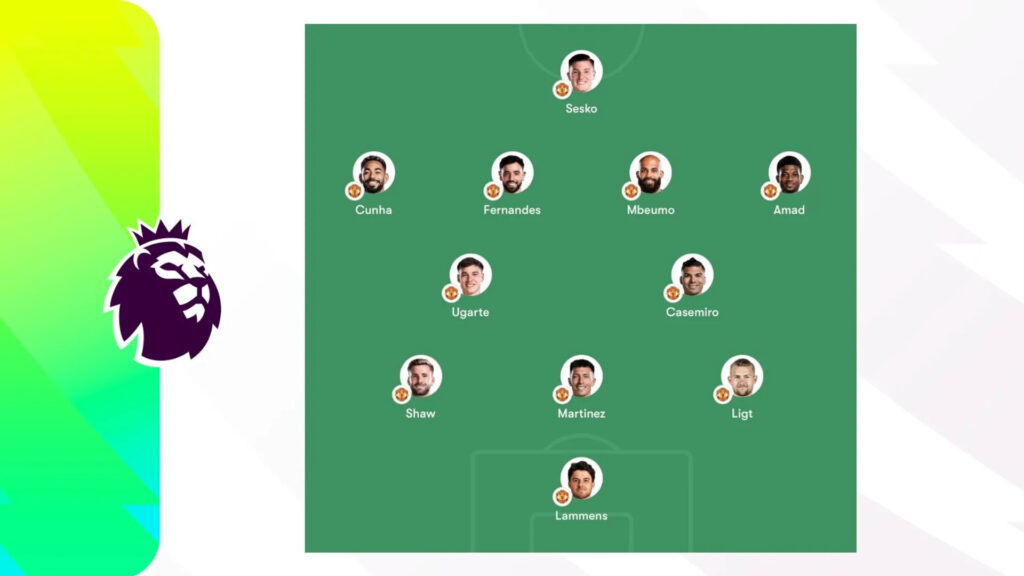
Defensive Line:
- Shaw (LCB), Maguire (CB), Martinez (RCB)
Defensive Midfield:
- Casemiro, Ugarte (double pivot)
Attacking Five:
- Amad (RW/RWB advanced), Mbeumo (RW), Fernandes (CAM), Cunha (LW), Sesko (ST)
Tactical Benefits:
- Creates numerical superiority in attacking third
- Maintains defensive security through back three and double pivot
- Allows creative players freedom in final third
- Seamless transition from 4-2-3-1 defensive shape
This system maximizes attacking personnel while maintaining defensive security through the double pivot and back three. The transformation from 4-2-3-1 to 3-2-5 occurs fluidly as Man United gains possession, creating numerical superiority in attacking zones.
Defensive Priorities for Early Fixtures
Starting with tough examinations against Manchester City and Arsenal, any experimentation with Amad at right-back will likely be postponed. With pragmatism and defensive nous essential at the outset, Carrick will surely consider recalling fit-again Harry Maguire to the starting lineup.
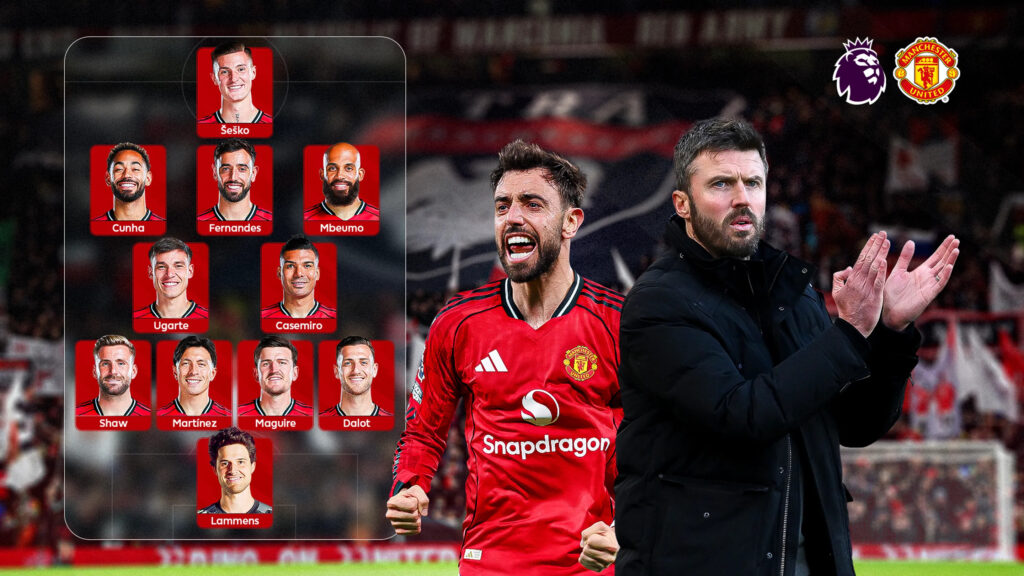
The England international and Lisandro Martinez have both proved capable of handling Erling Haaland previously. Martinez was superb in the 2024 FA Cup final victory against Manchester City, delivering a commanding defensive performance in the crucial match. The Argentinian also had Maguire alongside him in a back three during last season’s 2-1 success at the Etihad Stadium, where the duo effectively neutralized City’s attacking threats.
Carrick is not a coach who encourages high pressing, so anticipate those two center-backs at the heart of a mid-to-low defensive block in his opening two fixtures. This pragmatic approach prioritizes defensive organization while seeking opportunities to exploit spaces on the counter-attack.
Defensive Pairings vs Top Opposition
| Match | Opposition | Recommended CBs | Reasoning | Historical Success |
|---|---|---|---|---|
| Week 22 | Manchester City | Maguire & Martinez | Experience vs Haaland | 2-1 win at Etihad (2024-25), FA Cup final (2024) |
| Week 23 | Arsenal | Maguire & Martinez | Physical presence needed | Proven partnership |
| Future | Variable | Rotation options | Depends on opponent | Match-by-match assessment |
Key Defensive Principles:
- Mid-to-low defensive block
- Compact central areas
- Quick transitions to attack
- Full-backs provide width cautiously
- Experienced center-backs vs elite strikers
Manchester Derby Historical Context
Michael Carrick approaches the Manchester derby with considerable personal success against City. During his illustrious playing career, Carrick faced Manchester City 30 times, boasting an impressive 50 percent win rate. This historical success provides psychological confidence as he prepares for his first derby clash as head coach.
However, the challenge differs significantly from his playing days. As manager, Carrick must devise tactical solutions to neutralize City’s attacking threats while maximizing Man United’s offensive capabilities with limited preparation time.
The derby represents both opportunity and risk. Victory would provide the perfect platform for his interim tenure and immediately endear him to supporters. Conversely, a heavy defeat might undermine confidence before his reign properly begins. Carrick’s tactical acumen and ability to motivate players will face immediate examination.
Carrick’s Philosophy: Balancing Attack and Defense
The fundamental challenge facing Michael Carrick involves balancing his attacking philosophy with defensive realities. Man United’s supporters crave entertainment and positive football, yet pragmatism remains essential against elite opposition. Finding this equilibrium will define his early success.
Carrick’s Middlesbrough teams demonstrated his ability to adapt tactics based on opposition and circumstances. While his default preference favored controlled possession and attacking football, he showed willingness to employ more conservative approaches when necessary. This tactical flexibility should serve him well at Man United.
The squad possesses quality attacking talent capable of producing exciting football. Cunha, Mbeumo, Amad, Fernandes, and Sesko provide multiple offensive options. However, defensive vulnerabilities require addressing through tactical organization rather than solely relying on individual defensive quality.
Carrick’s mid-to-low pressing approach, combined with quick transitions, could maximize Man United’s strengths while minimizing defensive exposure. By maintaining compact defensive shape and breaking quickly when possession is won, Man United can threaten opponents without leaving themselves vulnerable to counter-attacks.