Navigating commuter congestion means picking a daily driver that combines mechanical refinement with predictable long-term costs, which leads buyers straight to the Honda Civic compact sedan lineup. Made by Honda, the Civic targets both commuters and driving enthusiasts within the compact sedan market.
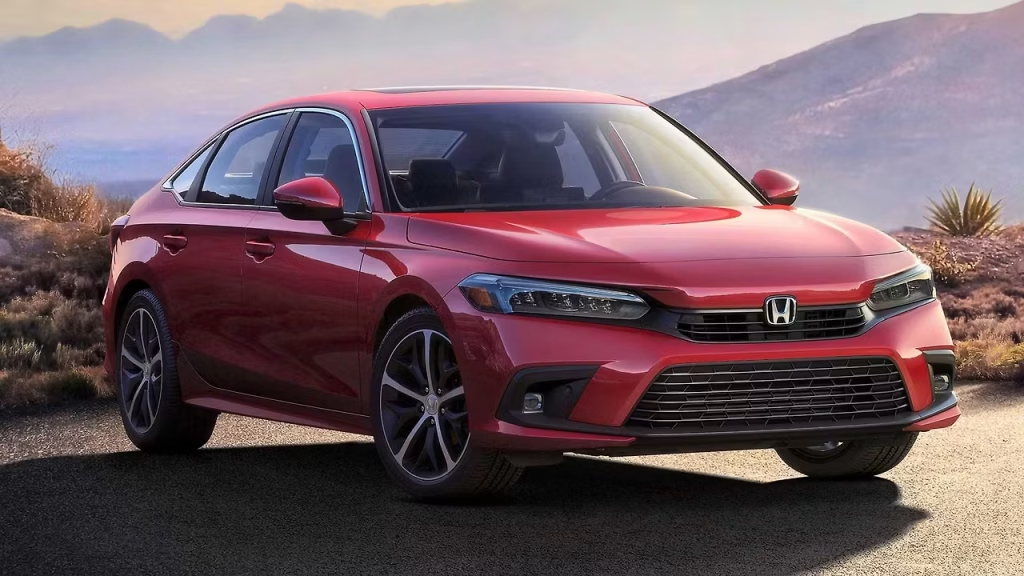
Honda Civic: Trim Level and Key Target Buyer
Here’s the thing: compact sedan buyers often find themselves weighing fuel economy against highway passing power during daily commutes. When choosing a commuter vehicle, it’s essential to consider depreciation rates, factory warranty limits, and routine service intervals across different trim levels. Prospective owners should balance upfront costs with long-term fuel efficiency and expected resale value. Ignoring these mechanical details can result in unexpected maintenance costs or disappointment with highway acceleration.
| Civic Trim Level | Starting | Engine Configuration | Key Target Buyer |
|---|---|---|---|
| LX Variant | **$24,250** | 2.0-L Naturally Aspirated | Budget-conscious commuters |
| Sport Variant | **$26,150** | 2.0-L Naturally Aspirated | Styling and wheel upgrade seekers |
| Touring Trim | **$30,550** | 1.5-L Turbocharged | Tech and comfort enthusiasts |
Honda Civic Art: Ownership friction often arises from mismatched expectations about powertrains versus the realities of stop-and-go urban driving. The high-performance models sport a 1.5-liter turbocharged 4-cylinder engine gene.
Evaluating the naturally aspirated base models shows they offer excellent mechanical simplicity and lower long-term maintenance costs for high-mileage drivers. However, they do have modest highway passing acceleration, which may require careful planning when overtaking slower traffic on single-lane roads.
Opting for the turbocharged variants eliminates power deficits, providing a more engaging driving experience for those who spend long hours on the road. Keep in mind, though, that turbocharged engines require stricter adherence to oil change schedules to avoid premature turbocharger wear over the years.
Hybrid variants offer another route, focusing on outstanding fuel economy rather than pure acceleration during lengthy daily drives. The catch with hybrids is the higher initial purchase price.
Your buying decision ultimately relies on matching your driving habits with the specific features of each trim level. If heavy stop-and-go traffic is part of your daily route, it makes sense to prioritize base reliability and simpler mechanical upkeep over turbocharged horsepower. On the other hand, if you value highway cruising comfort and quick overtaking, it might be worth stretching your budget for those turbocharged options.
When picking the ideal compact sedan, you need to weigh upfront retail costs against long-term reliability and fuel expenses. Keep an eye out for more insights on Honda Civic Art.
FAQs
Honda Civic Art: What is the starting
The confirmed
What engine powers the high-performance Honda Civic models?
High-performance models utilize a 1.5-liter turbocharged 4-cylinder engine gene
When was the current model year iteration of the Honda Civic launched?
The official launch date for the current model year iteration occurred on October 15, 2025.