PAK187/9 (39.2/50 ov, target 242)
 ENG241
 IND-W328/6
 ZIM-W181/6 (42.1/50 ov, target 329)
 NGA
NGA UGA
UGA MEX-W
MEX-W ARG-W
ARG-W CRY0
CRY0 NEW0
NEW0 HUL1
HUL1 BRE0
BRE0 LIV2
LIV2 BHA0
BHA0 MAN0
MAN0 BOU2
BOU2 CEL
CEL BET
BET AUX
AUX MNS
MNS ANG
ANG LOR
LOR OLM
OLM HAC
HAC REN
REN STR
STR TOU
TOU TRY
TRY SUN
SUN LEE
LEE SCF
SCF MUN
MUN ATH4
ATH4 GET0
GET0 INT2
INT2 FIO1
FIO1 CHU2
CHU2 PFC3
PFC3 GMB112/9
 LES109 (19.5/20 ov, target 113)
 DEN
DEN PNG
PNG LIMWn
LIMWn NW-W
NW-W NCWmn
NCWmn FsWm
FsWm BOL137/9 (20 ov)
 TITNS137/8
 NWEST22/3 (3.1/20 ov, target 181)
 NCAPE180/3
 MIS
MIS VAG104/3 (13/20 ov)
 NZ-A317
 IND-A113 & 106/2 (36 ov)
 SYL280/2 (84 ov)
 KHU
KHU BRB
BRB MOW
MOW TOK
TOK SIKM
SIKM NAGA
NAGA JHK
JHK DELHI
DELHI ODSA
ODSA SVCS
SVCS CGR
CGR AP
AP BRODA
BRODA J & K
J & K MOZ110/7 (19/20 ov, target 110)
 ZMB109/9
 UAE244/8
 NED245/7 (43.5/50 ov, target 245)
 ATA3
ATA3 FRO2
FRO2 GEN1
GEN1 VEN0
VEN0 MON0
MON0 LILL1
LILL1 KER0
KER0 MCFC0
MCFC0 TSG0
TSG0 B040
B040 NEC1
NEC1 GRO2
GRO2 PSV1
PSV1 FEY1
FEY1 Motherwell0
 Hearts1
 Atlético1
 Deportivo0
 Lazio2
 Parma1
 Lens2
Lens2 Paris FC1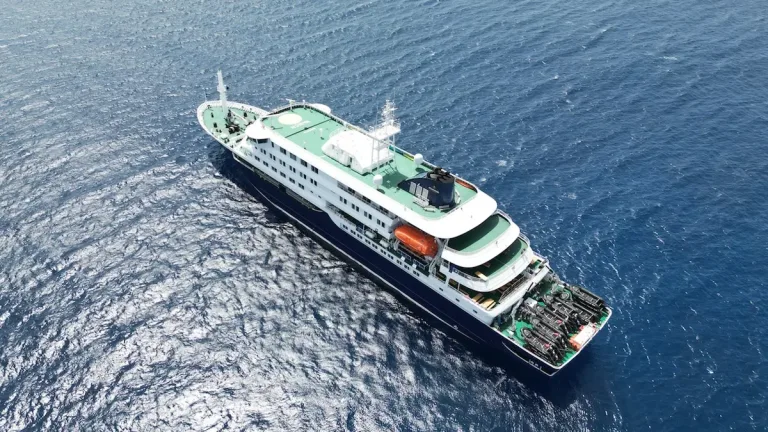
A cruise ship stranded near the coast of West Africa. A deadly virus spreading among passengers. Social media in overdrive. Sound familiar? It should — but experts say this is not Covid 2.0, and here’s exactly why.
The MV Hondius, departing from Argentina, has reported at least eight suspected cases of hantavirus — a rare rodent-borne illness that rarely, if ever, spreads person to person. The twist? This outbreak involves the Andes virus, the only known hantavirus strain with limited human-to-human transmission capability.
“It’s not the next pandemic. With adequate respiratory protection, they could very well stop all transmission from this point forward.” — Michael Osterholm, University of Minnesota’s Center for Infectious Diseases Research and Policy
What Is Hantavirus? Quick Facts
Most people had never heard of hantavirus before this outbreak — and that’s part of the problem. Here’s a snapshot of what scientists know:
| Factor | Details |
|---|---|
| Transmission | Contact with rodent droppings, urine, or saliva |
| Person-to-person | Extremely rare; only Andes virus confirmed |
| US cases (1993–2023) | 890 recorded, ~35% fatal |
| Strain on MV Hondius | Andes virus (South American origin) |
| Ship status | ~150 passengers & crew, 17 Americans onboard |
| Global risk level | Low (per WHO) |
Why the Andes Virus Is Different
The Andes virus grows to higher concentrations in the body than most hantaviruses, which may explain its rare ability to pass between people. A 2018 case in Argentina showed an infected person at a birthday party sparked an outbreak of 34 confirmed cases — but it was fully contained through isolation and contact tracing.
A cruise ship designed for Antarctic travel is, by nature, airtight and heat-retaining — a potentially ideal environment for viral spread, scientists note. Still, the key word is containment, not catastrophe. For more on global disease outbreaks, check out our coverage on TechnoSports Health.
What Needs to Happen Now
Experts agree: this demands careful handling, not panic. The roughly 150 passengers and crew need weeks of follow-up monitoring post-disembarkation, and the US being currently outside the WHO only complicates information-sharing for American scientists and researchers.
As Oxford’s Prof. Andrew Pollard put it, this outbreak is “a reminder that there are many dangerous viruses out there” — and underscores the urgent need for more hantavirus research funding, which has historically been neglected due to the perception of low risk.
FAQs
Is the hantavirus cruise ship outbreak a new pandemic threat?
No — scientists say it is a serious but containable outbreak. The Andes virus has limited spread capacity and the WHO rates overall public risk as low.