PAK221/9 (44.2/50 ov, target 242)
 ENG241
 IND-W328/6
 ZIM-W207/9 (48.4/50 ov, target 329)
 NGA
NGA UGA
UGA MEX-W
MEX-W ARG-W
ARG-W CRY0
CRY0 NEW1
NEW1 HUL1
HUL1 BRE0
BRE0 LIV2
LIV2 BHA0
BHA0 MAN0
MAN0 BOU2
BOU2 CEL
CEL BET
BET AUX
AUX MNS
MNS ANG
ANG LOR
LOR OLM
OLM HAC
HAC REN
REN STR
STR TOU
TOU TRY
TRY SUN
SUN LEE
LEE SCF
SCF MUN
MUN ATH4
ATH4 GET0
GET0 INT2
INT2 FIO1
FIO1 CHU2
CHU2 PFC3
PFC3 GMB112/9
 LES109 (19.5/20 ov, target 113)
 DEN
DEN PNG
PNG LIMWn
LIMWn NW-W
NW-W NCWmn
NCWmn FsWm
FsWm BOL137/9 (20 ov)
 TITNS137/8
 NWEST22/3 (3.1/20 ov, target 181)
 NCAPE180/3
 MIS
MIS VAG115/4 (14.3/20 ov)
 NZ-A317
 IND-A113 & 106/2 (36 ov)
 SYL280/2 (84 ov)
 KHU
KHU BRB
BRB MOW
MOW TOK
TOK SIKM
SIKM NAGA
NAGA JHK
JHK DELHI
DELHI ODSA
ODSA SVCS
SVCS CGR
CGR AP
AP BRODA
BRODA J & K
J & K MOZ110/7 (19/20 ov, target 110)
 ZMB109/9
 UAE244/8
 NED245/7 (43.5/50 ov, target 245)
 ATA3
ATA3 FRO3
FRO3 GEN1
GEN1 VEN0
VEN0 MON0
MON0 LILL1
LILL1 KER0
KER0 MCFC0
MCFC0 TSG0
TSG0 B040
B040 NEC2
NEC2 GRO2
GRO2 PSV1
PSV1 FEY1
FEY1 Motherwell0
 Hearts1
 Atlético1
 Deportivo0
 Lazio2
 Parma1
 Lens2
Lens2 Paris FC1
Things are looking especially rosy at Barcelona right now, given the progress Hansi Flick’s side are making. While any crisis at arch-rivals Real Madrid always makes life sweeter at the Camp Nou, this week has brought particular cause for celebration as Barcelona’s defensive improvements take center stage.
Barcelona capped off 2025 in impressive fashion with a 2-0 victory away to Villarreal on December 21, their eighth consecutive La Liga win. Goals from Raphinha (penalty) and Lamine Yamal secured three crucial points at the difficult Estadio de la Cerámica, with goalkeeper Joan Garcia producing several outstanding saves to preserve the clean sheet—Barcelona’s third in their last three games across all competitions.
The victory means Barca remain four points clear of their Clasico rivals at the top of La Liga heading into the new year. More significantly, it demonstrated that Flick has finally found something close to his best defensive unit after months of experimentation.
Following a run of positive results, Flick claimed in early December that his team’s defending is now on “another level.” The Catalans had won three matches in a row after a 3-0 defeat by Chelsea in the Champions League near the end of November, with victories over Atletico Madrid (3-1) and Real Betis (5-3) demonstrating their resurgence.
“I said this morning to them, the (back) line is doing really good, we’re getting pressure on the ball, we are connected. This is what we need,” Flick told a news conference. “And the (high) line, they play it on another level than maybe one month, five weeks ago.”
The German manager has now fielded the same back four in multiple consecutive games: Jules Kounde at right-back, Pau Cubarsi on the right side of central defence, Gerard Martin next to him, and Alejandro Balde as the left-back. After months of experimentation and tactical tweaking, Barcelona appear to have cracked the code on their defensive organization.
The Defensive Problem That Plagued Barcelona’s Start
Barcelona’s defence has been a problem area since the start of the season. The departure of Inigo Martinez in August played a significant role in this vulnerability, as did concerns over pressing from the front that coincided with injuries to key players such as Raphinha.

Ronald Araujo began as the main candidate to replace center-back Martinez in the starting XI, but Flick also wanted to give a proper chance at the job to everyone in the squad. Some poor displays—as well as a sense teams had begun to work out how to capitalize on Barca’s chosen system—pushed the manager to keep tweaking things.
The constant changes at the start of the campaign, trying to find solutions to Martinez’s departure, did not help the team’s on-pitch chemistry. Sources from the first-team unit believe some defenders were constantly changing roles, preventing the development of understanding and cohesion essential for a solid defensive partnership.
| Barcelona’s Defensive Evolution | Details |
|---|---|
| Key Departure | Inigo Martinez (August) |
| Initial Replacement Candidate | Ronald Araujo |
| Center-Back Partnerships Tried | 6 different combinations this season |
| Current Partnership | Pau Cubarsi and Gerard Martin |
| Consecutive Games with Same Back Four | 4 matches |
| First Clean Sheet in Six Games | 2-0 vs Osasuna (Saturday) |
| La Liga Lead Over Real Madrid | 4 points |
| Average Squad Age | 25.3 years (youngest in La Liga) |
The Gerard Martin Solution
Martin, normally a left-back, was first tried out alongside Cubarsi in central defence in the 4-0 home win over Athletic Club on November 22, and has done well. It is a timely development given Araujo’s leave of absence and the fact Andreas Christensen is not seen as part of the club’s long-term future.
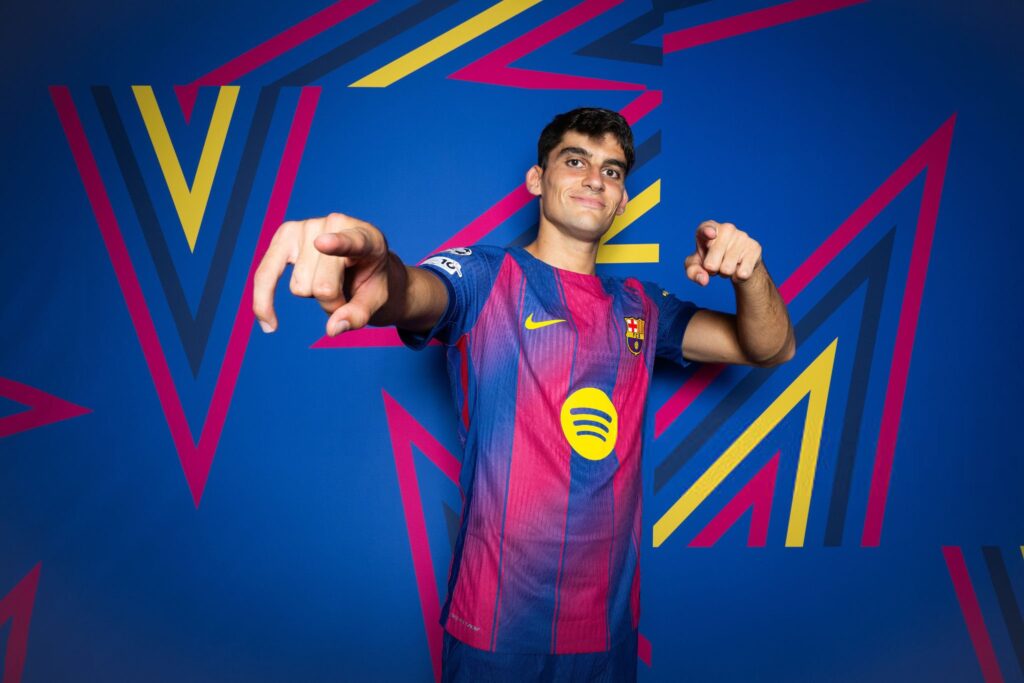
The 29-year-old Denmark international is on course to be out of contract at the end of a season in which he has so far started only three of the 17 league games and been on the bench 12 times. He has not been offered a renewal, making the emergence of viable alternatives like Martin even more crucial.
In December 2025, the situation became even more critical when Christensen suffered a partial ACL tear during a training session. While he will avoid surgery, he is expected to be out for at least four months. Combined with Araujo’s leave of absence, this leaves Flick with only three senior center-back options: Cubarsi, Martin, and Eric Garcia.
The defensive shortage has prompted Barcelona to accelerate their plans for January reinforcements, with sporting director Deco already working on identifying a left-sided center-back. Barcelona are monitoring Nottingham Forest’s Murillo as an ideal fit for Flick’s tactical demands, though any move would more likely come in summer rather than January.
Barcelona’s coaching staff knew they needed to find a solution at center-back. Now they have finally been able to give a run to Cubarsi and Martin—the sixth partnership tried there already this season.
Cubarsi and Martin were partnered for the first time in that Athletic game last month but have quickly built something special. Their developing understanding and communication have provided the defensive stability that eluded Barcelona for the season’s opening months.
Barcelona are always going to concede chances playing the system Flick wants. But the team are now dealing better with the defensive demands that come with that high line and intense, front-foot pressing. The partnership has brought consistency that allows the entire defensive structure to function more effectively.
The Settled Back Four
The current back four represents Flick’s most successful defensive configuration:
| Position | Player | Role |
|---|---|---|
| Right-Back | Jules Kounde | Provides width and recovery pace |
| Right Center-Back | Pau Cubarsi | Ball-playing defender, intelligent positioning |
| Left Center-Back | Gerard Martin | Converted left-back, physical presence |
| Left-Back | Alejandro Balde | Pace and attacking threat down left flank |
This quartet has now played together in four consecutive matches, allowing them to develop the understanding and automaticity that comes from consistent selection. The stability has had ripple effects throughout the team, with midfielders and attackers better able to commit to Flick’s high-pressing system knowing the defensive structure behind them is reliable.
Eric Garcia’s Defensive Midfield Revolution
Recent matches have also brought a key change in the middle of the pitch that has significantly enhanced Barcelona’s defensive solidity.
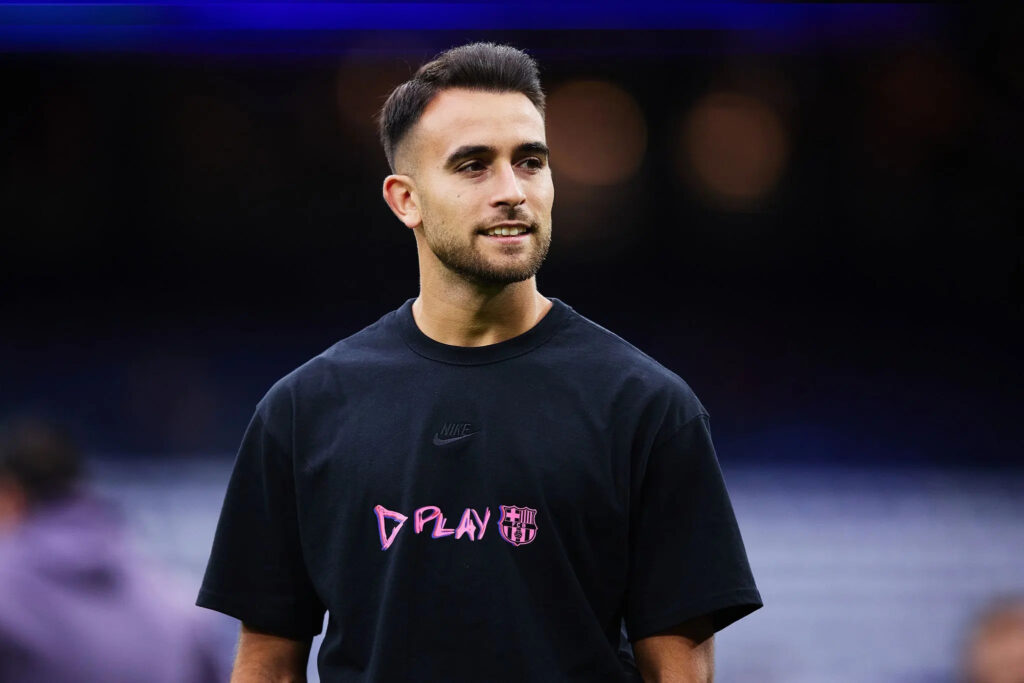
Frenkie de Jong has been fully fit for the past two games, but Flick has preferred Eric Garcia as his holding midfielder. After what we saw from the 24-year-old Spaniard on Saturday, this is not going to change anytime soon.
Garcia has not just completed his redemption arc with Barca—having spent the 2023-24 season out on loan and been close to a permanent transfer multiple times since—he is now one of Flick’s most trusted lieutenants and a fan favourite. The Camp Nou crowd has been chanting his name in every game since the club finally returned to playing at their traditional home stadium last month.
He had evolved into a Swiss army knife of a player, having operated at center-back and both full-back spots this season, but now he might have found a place of his own in holding midfield.
Garcia brings a significant defensive upgrade to that role, with his aggression in duels and a superior reading of the game that helps intercept counter-attacks. His transformation will have come as a surprise to many, but Barcelona need him more than ever in this crucial position.
| Eric Garcia’s Impact | Details |
|---|---|
| Age | 24 years old |
| Previous Season | Out on loan (2023-24) |
| Transfer Status | Previously close to permanent exit multiple times |
| Current Role | Holding midfielder (preferred over Frenkie de Jong) |
| Positions Played This Season | Center-back, both full-backs, holding midfield |
| Fan Reception | Name chanted at Camp Nou every game |
| Recent Injury | Broken nose (playing in protective mask) |
| Key Strengths | Aggression in duels, game reading, interceptions |
Flick is a great fan of De Jong’s game, but sources from the backroom staff say they have concluded that, right now, the team are benefiting more from having Garcia on the pitch. They acknowledge that the Dutchman is the better option of the two in possession, but highlight Garcia’s off-the-ball skill set as key.
The La Masia-trained former Manchester City man’s link-up play with Pedri has been excellent over the past few games, while, behind the scenes, attackers such as Lamine Yamal have expressed how much they’ve enjoyed playing with him operating as a shield behind them.
“It is just how the situation is now,” Flick said in his pre-match press conference on Friday before the Osasuna win. “Eric has been so good, especially with the back line we’ve been using. For how we play now, Eric has been fantastic. I don’t know what will happen in the future.:
“Every player will need to improve and get better, that’s normal in a team. Eric is very good on defence, but also adds a lot in the build-up.”
There is still a lot of the season to go, and opportunities will surely arise for De Jong again, but Flick is a big advocate of making the best out of the good runs of form players go through (take last season’s Marc Casado as an example). He simply can’t drop Garcia right now.
The Osasuna Victory: Evidence of Progress
Saturday’s match against Osasuna provided further evidence of Barcelona’s defensive transformation. Pedri was outstanding once again, the best player on the pitch. His performance confirmed he has fully recovered from the hamstring injury suffered against Real Madrid in October.
It was a good day at the office for Raphinha, too. The two second-half goals he scored were further proof of how crucial he is to this team.
“He is a very big part of what we want to do,” Flick said of the Brazilian in his post-match news conference. “Osasuna defended very deep and it was hard to find the spaces, so in those games when you find any little space to attack, you need players like him to capitalise up front—like he did on the first goal.”
Osasuna took a conservative approach at the Camp Nou, possibly taking into account the improved version of themselves Barca have been showing recently. They defended in a low block, waiting for their chance on the counter.
How Opponents Are Adapting to Barcelona’s Improvements
It was a similar setup to the one German side Eintracht Frankfurt adopted when they visited in the Champions League last week, before eventually losing 2-1, and potentially this is a sign of how things have changed around Flick’s side.
Interestingly, Barcelona have developed a habit of conceding first this season—the Frankfurt victory was their seventh comeback of the campaign and their fourth consecutive comeback win. When asked why Barca keep going behind, Flick admitted: “To answer this is not easy. For one side, I’m really happy how we come back. It shows a lot of our attitude and our mentality. But sometimes it would also be good to start well and score the first goal!“
Not so long ago, teams would clearly counter-press Barcelona, aware of their struggles in the build-up. The last side who tried this were Real Betis just over a week ago, and by half-time they were 4-1 down on their own pitch, with Barca eventually winning that match 5-3.
| Recent Results Showing Defensive Improvement | Details |
|---|---|
| vs Osasuna (Home) | 2-0 win, first clean sheet in 6 games |
| vs Eintracht Frankfurt (Champions League) | 2-1 win, low-block opponent, 4th consecutive comeback |
| vs Real Betis (Away) | 5-3 win, 4-1 at half-time |
| vs Atletico Madrid | 3-1 win, part of 3-match winning run |
| vs Athletic Club | 4-0 win (Martin’s debut at center-back) |
| Current La Liga Position | 1st place, 4 points clear of Real Madrid |
Let’s see how opponents plan their approach in the future, but as Barcelona have welcomed key players back from injury, they have been more able to dominate matches like they did en route to the title last season.
The shift in how teams approach Barcelona speaks volumes about the progress Flick has made. Opponents now respect Barcelona’s defensive organization enough to sit deep and counter-attack rather than attempting to press high and exploit perceived weaknesses in the build-up.
The Systemic Approach: Making High-Risk Football Work
Barcelona are always going to concede chances playing the system Flick wants. His philosophy demands a high defensive line and intense, front-foot pressing that inherently creates spaces for opponents to exploit. The key has been finding personnel who can execute these demands effectively.
Flick has remained steadfast in defending his tactical approach despite criticism after the 3-0 defeat to Chelsea. “When we lose and when we concede three goals, it’s easy to say it wasn’t a good game or that it wasn’t the Barça we’d like to see,” he said. “Ultimately, some people don’t understand what we need to play with that high defensive line. It’s our own style; it’s not just about the defenders. The forwards and midfielders also initiate the press. That’s what I need from the players.”
He was particularly emphatic about the shared responsibility: “The blame seems to fall on the defense, but that’s not fair. If we don’t all press effectively, we’ll have problems, I want to make that clear.”
The combination of the settled back four and Garcia’s protective presence in midfield has allowed Barcelona to better manage the risks inherent in Flick’s approach. Defenders are no longer constantly changing roles and positions, allowing them to develop the understanding needed to cover for each other when the high line is breached.
Garcia’s superior reading of the game helps intercept counter-attacks before they develop into dangerous situations, while his aggression in duels wins back possession quickly when Barcelona lose the ball high up the pitch. These qualities make him ideally suited to the holding midfielder role in Flick’s system, even if De Jong offers more technical quality in possession.
Has Hansi Flick finally fixed Barcelona’s defence? The evidence from recent weeks suggests he has found a formula that works. The settled back four of Kounde, Cubarsi, Martin, and Balde has brought the consistency and understanding that eluded Barcelona for months. Gerard Martin’s successful conversion from left-back to center-back has solved a crucial personnel problem.
Equally important has been Eric Garcia’s emergence as the preferred holding midfielder ahead of Frenkie de Jong. His defensive qualities, game reading, and ability to shield the back line have proven more valuable to this system than De Jong’s superior technical ability in possession.
The first clean sheet in six games against Osasuna, combined with dominant performances like the 5-3 victory at Real Betis, demonstrate that Barcelona have turned a corner defensively. Opponents are now adjusting their tactics, sitting deeper and attempting to counter-attack rather than pressing high and exploiting Barcelona’s build-up vulnerabilities.
Four points clear at the top of La Liga with a defensive structure that finally looks solid, Barcelona appear to have overcome the problems that threatened to derail their season. Flick’s willingness to experiment until finding the right combination has paid off, and Barcelona now possess the defensive foundation needed to compete for major honours.
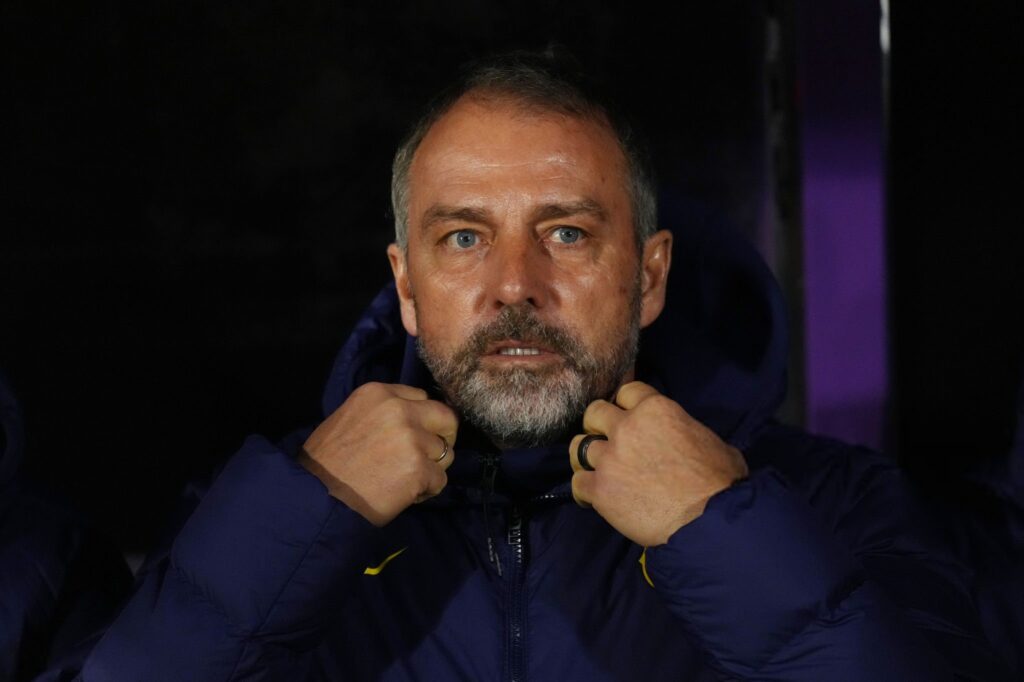
The season still has a long way to go, and maintaining this defensive solidity while managing injuries and fixture congestion will be crucial. But for now, Barcelona can celebrate finally finding defensive solutions that allow Flick’s high-risk, high-reward football to flourish.
Read More: Bruno Fernandes Injury: Who Could Step Up at Man United During Captain’s Absence?