NZ113/3 (14.4 ov)
 IND
 NAM321/6
 IRE208/5 (37.3/50 ov, target 322)
 MEX-W
 ARG-W
 ARS
 EVE
 COV
 FUL
 OFC
 NEU
 NEOM
 ABH
 RAC
 ESP
 KHO
 ETT
 NAP
 ROMA
 MOZ19
 UGA23/0 (0.5/20 ov, target 20)
 Ipswich1
 Nottm Forest1
 Alavés1
 Málaga1
 Torino3
 Monza2
 KENYA
 QAT
 SWD-W
 EPR-W
 TTN-W
 WPR-W
 BOR135/3 (18/20 ov, target 137)
 WAR136/8
 NZ-A135/3 (41 ov)
 IND-A113
 DHA293/3 (84.1 ov)
 RAJ
 MYMS299/4 (87 ov)
 CHATT
 RAN320/5 (80 ov)
 BAR
 SYL
 KHU
 UAE
 NED
 PAK
 ENG
 IND-W
 ZIM-W
 GMB
 LES
 ZMB
 NGA
 AFG170/3 (34.3/50 ov, target 170)
 ZIM169
 CHE
 TOT
 Brest1
 Nice2
 Stuttgart2
 Gladbach3
 Al Ahli4
 Al Khaleej1
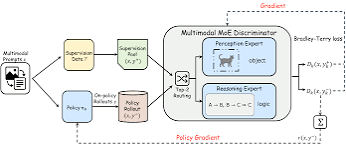
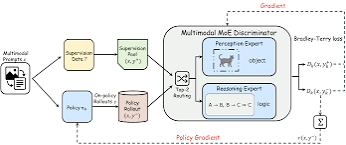
Researchers reportedly introduced group variance policy optimization in an arXiv paper by Kaichen Zhang, Yuzhong Hong, Junwei Bao, Hongfei Jiang, Yang Song, Dingqian Hong, and Hui Xiong. The method targets instability in large language model post-training, where policy-gradient updates can become unreliable because they depend on importance sampling. The paper’s details remain unconfirmed, with reports about it circulating online.
Overview: Why LLM Post-Training Becomes Unstable
Post-training is the stage where a pre-trained LLM is adapted for reasoning, instruction following, or specialised tasks. Methods such as Group Relative Policy Optimization (GRPO) compare several outputs generated for the same prompt, then use reward differences to update the model. The problem is that importance sampling can amplify mismatches between the distribution used to generate responses and the distribution used during optimisation.
A few high-weight samples can dominate an update, making training less predictable and increasing the risk of inefficient compute use. This matters to developers building reasoning models because a less stable training loop can require more tuning, monitoring, and hardware time. The same engineering concern appears in wider AI infrastructure work, from the Cognition Releases SWE-2: story on coding models to research systems designed for repeatable evaluation. Better optimisation does not remove the need for strong data and reward design, but it can change how efficiently those ingredients are used.
What the Paper Changes
GVPO++ reportedly integrates the analytical solution of a KL-constrained reward-maximisation problem into its gradient-weighting scheme. In simpler terms, it attempts to shape each update using the relationship between reward differences inside a group of responses, rather than relying solely on a conventional importance-sampling correction. The paper reportedly describes the gradient as corresponding to a mean-squared-error relationship between the central distance of implicit rewards and the central distance of actual rewards.
That framing gives researchers a way to interpret the update as an alignment problem: the model’s internal reward signal should track the reward signal supplied by the training process. The reported advantages are specific. It reportedly has a unique optimal solution for the KL-constrained objective, and it allows flexible sampling distributions without requiring importance sampling. The reported evaluation used open-weights architectures including Llama-3-70B and Mistral-8x22B. GVPO++ is reported to improve training efficiency by more than 25% against standard PPO baselines, although the available evidence does not establish whether that figure applies equally across models, tasks, or hardware configurations. Implementation code and algorithmic details were reportedly released through GitHub repositories around the third quarter of 2026. Developers evaluating the work should inspect those repositories, configuration files, reward functions, and benchmark scripts before treating the efficiency figure as a general production result.
Context: How GVPO++ Compares With Other Training Routes
According to arXiv, the research positions GVPO++ as an answer to limitations associated with importance-sampling-heavy post-training. PPO remains a familiar baseline with a large body of implementation experience, but its training process can be computationally demanding and sensitive to hyperparameter choices.
GRPO-style methods use group-level comparisons and can be attractive for reasoning tasks because they do not require a separate value model in the same way as traditional PPO implementations. Their downside is that sampling and update behaviour can still become unstable when response distributions shift. On-policy distillation offers another route: a teacher generates fresh examples for a student, keeping the training data close to the teacher’s current policy. Its downside is teacher cost, since geneMotorola Image Post and NASH Group Exhibit links concern different technology areas, but they illustrate why model claims should be separated from implementation evidence and product messaging.
| Method | Main strength | Main downside |
|---|---|---|
| PPO | Mature optimisation baseline | Can require careful stability control |
| GRPO | Uses group comparisons for reward updates | Sampling shifts can affect training behaviour |
| On-policy distillation | Keeps examples close to a teacher policy | Teacher inference can be expensive |
| GVPO++ | Reportedly avoids importance sampling in its stated formulation | Broader benchmark evidence remains limited |
What’s Next for LLM Training
The next test is replication. Teams should run the released implementation across multiple prompts, reward functions, sampling distributions, and hardware setups instead of accepting a single efficiency claim as universal. If a team needs the most established baseline, PPO remains the safer comparison point.
If it wants group-level reasoning optimisation and can validate the implementation, GVPO++ is the more interesting candidate. The research could matter most if its variance controls remain effective beyond Llama-3-70B and Mistral-8x22B. The practical verdict is clear: choose GVPO++ for controlled experiments where lower variance and flexible sampling are priorities, but retain PPO and GRPO as reference systems until independent evaluations confirm the reported gains. Understanding Group Variance Policy Optimization fully means staying ahead of these developments.
FAQs
What is group variance policy optimization?
It is a post-training method for LLMs that reportedly uses group-level reward comparisons and a KL-constrained optimisation formulation to calculate gradient weights.
Which models were used in the evaluation?
The reported baseline evaluation included Llama-3-70B and Mistral-8x22B.
Does GVPO++ use importance sampling?
The method is designed to support flexible sampling distributions without requiring importance sampling in its stated formulation.
How much faster is GVPO++ than PPO?
The supplied research details report training-efficiency gains exceeding 25% against standard PPO baselines, but the result requires broader independent testing.
Should developers replace PPO immediately?
No. Teams should reproduce the published experiments and compare PPO, GRPO, and GVPO++ under matching tasks, rewards, sampling settings, and hardware. GVPO++ is worth testing where unstable policy updates are the bottleneck, but reproducible benchmarks—not a single efficiency figure—should decide its place in production training. Source: arXiv
Was this article helpful?
Your feedback directly improves future articles on this site.