
 SA329 (82.3 ov)
 AUS
AUS ROMA1
ROMA1 CAG1
CAG1 TOR0
TOR0 COMO0
COMO0 ALS3
ALS3 HIL1
HIL1 BRD1
BRD1 PET0
PET0 FLE0
FLE0 ARS0
ARS0 BAN
BAN WI
WI IND-W
IND-W ZIM-W
ZIM-W GOA
GOA SC Delhi
 Milan
Milan Bologna
 Parma
Parma Udinese
 Venezia
 Inter Milan
 Genoa
Genoa Juventus
 Monza
Monza Napoli
 SAS2
SAS2 LAZ6
LAZ6 AFG177
 ZIM140 (19.1/20 ov, target 178)
 ABH0
ABH0 ALF1
ALF1 PAK110
 SL114/2 (18.1/50 ov, target 111)
 SIKM184
 NAGA187 & 46/4 (34 ov)
 JHK131/4 (47 ov)
 DELHI515/5d
 ODSA194
 SVCS13/0 (5 ov)
 BRODA616
 J & K6/0 (4 ov)
 CHD685/5d
 HP49/0 (14 ov)
 CGR216/8 (95 ov)
 AP231
AP231 HYD193/2 (54 ov)
 PNJB431
 KNTKA297/7 (95 ov)
 TPURA194
 KER101/6 (35 ov)
 BENG350
 MAHA278/9 (100 ov)
 GUJ223
 MNPR364
 ARP111 & 95/2 (36 ov)
 UAE
UAE OMA
OMA ENG
ENG AUCK
AUCK CANT
CANT CD
CD ND
ND DEN
DEN QAT
QAT KENYA
KENYA KUW
KUW NAM316/7
 IRE253 (44.5/50 ov, target 317)
 NZ198/3
 IND199/4 (13.2/20 ov, target 199)
 NED371/5
 JAB113 (19.3/20 ov, target 133)
 KAY132/9
 EXC1
EXC1 ADO1
ADO1 SES2
SES2 ESP3
ESP3 BEN1
BEN1 CAT0
CAT0 SHO0
SHO0 ALH1
ALH1 UDC0
UDC0 ALM0
ALM0 ALC0
ALC0 LPA0
LPA0 TORD2
TORD2 MIR0
MIR0 Gamba Osaka
 Buriram
 Kashima
 Pohang Steelers
 Sevilla2
 Osasuna0
 PSG2
PSG2 Lyon0
Lyon0 Mohun Bagan1
 Chennaiyin0
 SAA2
SAA2 EST0
EST0
Recent advancements in artificial intelligence have really changed the way we approach medical diagnosis, but some challenges still linger. Traditional methods often put too much emphasis on accuracy at the expense of cost, leading to a lot of unnecessary testing and resource strain.
A paper titled “Graph Dx: A Cost-Aware Knowledge-Enhanced Multi-Agent Framework for Sequential Diagnosis,” which was published on arXiv in July 2026, introduces a fresh approach in this area. This innovative framework uses a multi-agent strategy to enhance sequential diagnosis while keeping an eye on resource costs.
Graph Dx: A Structured Framework
Before frameworks like Graph Dx came along, diagnostic systems mainly depended on large language models (LLMs) packed with extensive medical knowledge. Unfortunately, these systems often struggled with a significant gap in knowledge reasoning, especially when dealing with cost constraints. This often led to unnecessary testing, which only increased both financial and computational burdens. Clearly, there was a strong need for a solution that could balance diagnostic accuracy with cost-effectiveness.
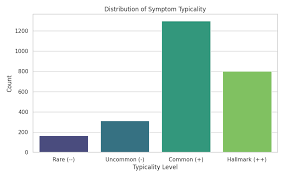
Graph Dx steps in as a game-changer, presenting a structured framework aimed at optimizing sequential diagnosis through cost-aware methods. The system builds on two main innovations. For starters, it sets up an automated pipeline that utilizes LLMs to create Medical Diagnosis Knowledge Graphs (MDKGs).
These graphs include quantized typicality, action-centric topology, and dual-objective attributes designed to boost both diagnostic relevance and cost sensitivity. On top of that, Graph Dx introduces three collaborative agents: the Perception Agent, the Reasoning Agent, and the Decision Agent. The Perception and Decision Agents handle language understanding and generation, while the Reasoning Agent zeroes in on deterministic evidence scoring and cost-aware planning based on the MDKG.
The impact of Graph Dx is significant. By integrating these innovations, it makes strides toward more efficient and effective medical diagnosis.
Comparison of Traditional LLM
Here’s a side-by-side comparison of traditional LLM approaches versus the newly proposed framework:
| Feature | Traditional LLM Approaches | This Framework |
|---|---|---|
| Cost Awareness | Often disregarded, leading to excessive testing | Incorporates cost-sensitive planning |
| Knowledge Reasoning | Limited systematic reasoning under constraints | Enhanced reasoning through MDKGs |
| Agent Collaboration | Single-agent systems | Three collaborative agents for improved performance |
| Diagnostic Accuracy | Variable, often overly reliant on data | Improved accuracy with structured knowledge |
The introduction of this model marks a crucial moment in medical diagnostics. By emphasizing cost-aware methods and using a multi-agent framework, it addresses many shortcomings of traditional approaches.
Its ability to improve diagnostic processes while still maintaining accuracy makes it a valuable addition to clinical settings. As healthcare evolves to meet demands for efficiency and cost-effectiveness, solutions like this will be key in shaping the future of medical diagnosis.
So, if you want to boost your diagnostic capabilities while keeping costs in check, think about using frameworks like this one. They effectively balance the complexities of medical decision-making and practical resource management.
FAQs
What is Graph Dx?
Graph Dx is a multi-agent framework designed for sequential medical diagnosis, focusing on balancing diagnostic accuracy with cost awareness.
How does Graph Dx improve upon traditional LLM approaches?
It incorporates knowledge-enhanced Medical Diagnosis Knowledge Graphs (MDKGs) and employs three collaborative agents for better reasoning and decision-making under cost constraints.
What are the key components of the Graph Dx framework?
The framework includes an automated pipeline for MDKG construction, a perception agent, a Reasoning Agent, and a Decision Agent, all working collaboratively to enhance diagnostic processes.
Where can I find more information about Graph Dx?
You can read the full details of the research paper here.
Why is cost awareness important in medical diagnosis?
Cost awareness minimizes unnecessary testing and optimizes resource allocation, making healthcare more efficient and sustainable.


