PSG
PSG LYON
LYON SEV
SEV OSA
OSA NED
NED OMA
OMA NZ
NZ IND
IND NAM
NAM IRE
IRE PAK
PAK SL
SL SA
SA AUS
AUS Abha
Abha Al Faisaly
 MBSG1
MBSG1 CFC0
CFC0 Barcelona1
 Real Madrid2
 Udinese0
 Milan2
 Real Sociedad2
 Levante1
 NZ-A317
 IND-A113 & 488/8 (119 ov)
 SYL575/4 (167.3 ov)
 KHU
KHU MYMS465/7d
 CHATT424/6 (121 ov)
 DHA521
 RAJ162 & 215/5 (59.1 ov) (f/o)
 RAN402 & 5/0 (2.3 ov)
 BAR443/9d
 SIKM30/1 (15 ov)
 NAGA187
 JHK
JHK DELHI309/5 (90 ov)
 ODSA194
 SVCS13/0 (5 ov)
 BRODA259/6 (86 ov)
 J & K
J & K CHD363/2 (87 ov)
 HP
HP CGR35/1 (14 ov)
 AP231
AP231 HYD
HYD PNJB289/6 (90 ov)
 BAN
BAN WI
WI BRB
BRB MIS
MIS BIK
BIK CHR
CHR MEX-W51 (12.5/20 ov, target 187)
 ARG-W186/7
 NGA148
 UGA147/9 (20 ov, target 149)
 GMB112/9
 LES109 (19.5/20 ov, target 113)
 MOZ110/7 (19/20 ov, target 110)
 ZMB109/9
 IND-W328/6
 ZIM-W207 (48.5/50 ov, target 329)
 ENG241
 KBH0
KBH0 OBK0
OBK0 UAI0
UAI0 VSC0
VSC0 Sassuolo
 Lazio
Lazio AS Roma
 Cagliari
 Torino
 Como
Como QAD
QAD ALS
ALS AQAJ
AQAJ PAK
PAK Lecce0
 Juventus2
 Sunderland0
 Leeds0
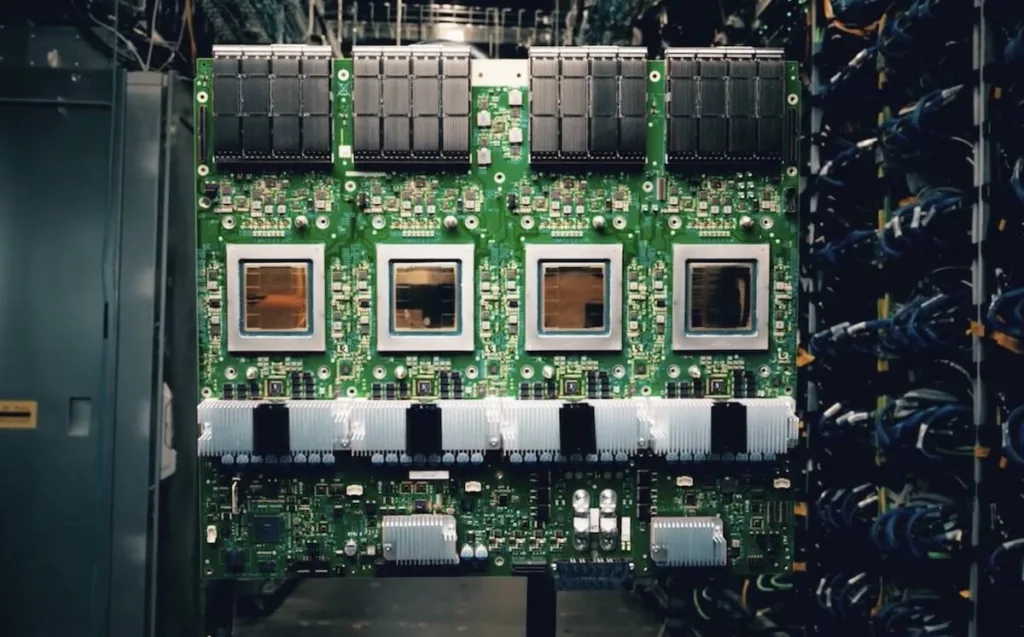
Google is challenging Nvidia’s AI chip dominance with Ironwood, its seventh-generation Tensor Processing Unit launching publicly in coming weeks. More than four times faster than its predecessor, this custom silicon powers everything from training massive models to running real-time AI agents. Anthropic plans to use up to 1 million Ironwood TPUs for Claude, validating Google’s decade-long investment in custom AI hardware.
Table of Contents
Google Ironwood TPU: Key Specifications
| Feature | Details |
|---|---|
| Public Launch | Coming weeks (announced Nov 6, 2025) |
| Generation | 7th-gen TPU (TPU v5p) |
| Performance | 4x faster than predecessor, 42.5 exaFLOPS/pod |
| Pod Sizes | 256-chip or 9,216-chip clusters |
| Power Efficiency | 2x performance/watt vs Trillium |
| Major Customer | Anthropic (1M TPU deployment for Claude) |
| Competition | Nvidia GB300 NVL72 (118x performance advantage) |
| Capital Investment | $93B forecast (up from $85B) |
Direct Challenge to Nvidia’s Dominance
Ironwood can deliver up to 42.5 exaFLOPS per pod, reportedly a 118-fold performance advantage over Nvidia’s GB300 NVL72 cluster, which reaches just 0.36 exaFLOPS. This dramatic leap positions Google’s custom silicon as a serious alternative for AI companies currently dependent on Nvidia’s GPUs.
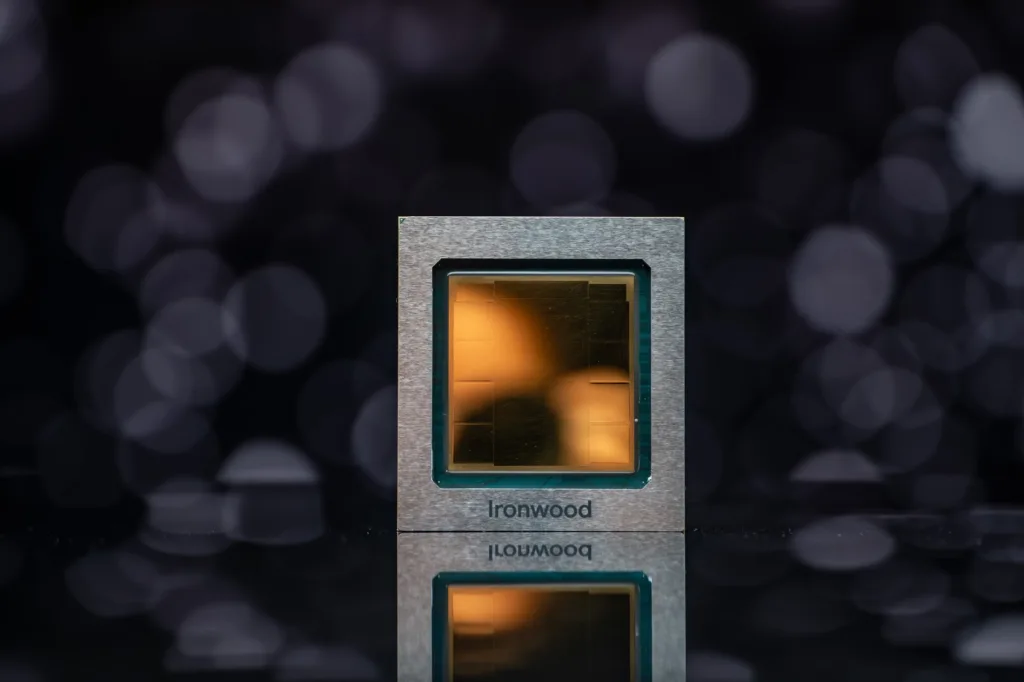
Originally unveiled in April for testing, Ironwood now enters general availability as Google’s first TPU optimized specifically for inference—running AI models—rather than training. This strategic focus targets the segment Google believes will dominate AI compute spending.
Ten-Year Investment Pays Off
TPUs have been in the works for a decade, and Ironwood represents the culmination of massive capital commitments. Google raised its capital spending forecast to $93 billion from $85 billion to meet soaring demand for AI infrastructure, with this investment now materializing in hardware like Ironwood.
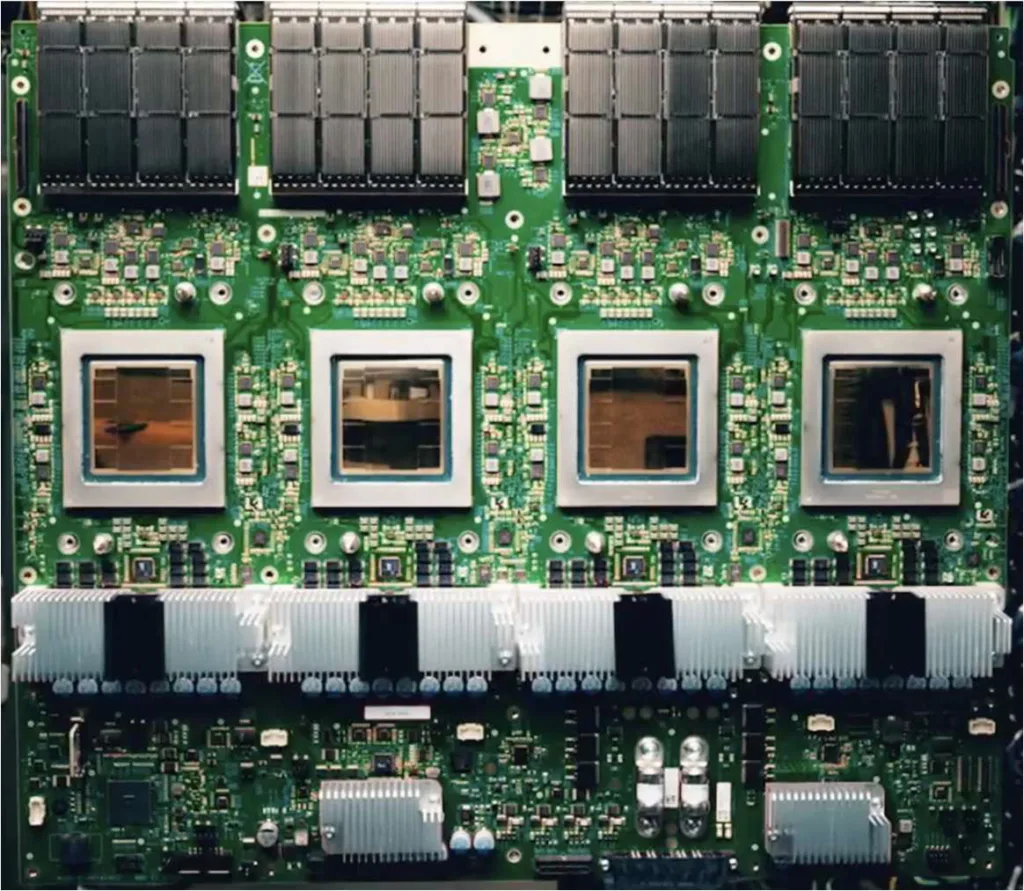
Each pod can connect up to 9,216 TPUs, eliminating “data bottlenecks for the most demanding models” and enabling customers to run and scale the largest, most data-intensive models in existence.
Cloud Revenue Growth Drives Expansion
Google reported third-quarter cloud revenue of $15.15 billion, a 34% increase, though still trailing Azure’s 40% growth and AWS’s 20% expansion. However, Google signed more billion-dollar cloud deals in the first nine months of 2025 than in the previous two years combined, signaling accelerating enterprise adoption.
CEO Sundar Pichai emphasized substantial demand for AI infrastructure products, including TPU-based and GPU-based solutions, as key drivers of growth over the past year.
Big Tech’s Custom Silicon Race
Nvidia’s market position rests largely on two assumptions: that custom silicon is too costly for enterprises to build in-house, and that GPU supply remains constrained. With Google’s rollout of Ironwood, both are now being challenged.
Amazon scales Trainium and Inferentia processors, Microsoft integrates custom chips into Azure, and Meta expands its AI accelerator program—all attempting to reduce dependence on Nvidia’s ecosystem.
Energy Efficiency Breakthrough
Each Ironwood pod consumes approximately 10 megawatts of power, but Google claims it delivers twice the performance per watt compared to Trillium TPUs and is 30 times more efficient than the first Cloud TPU introduced nearly a decade ago.
For more AI hardware news and cloud computing updates, visit TechnoSports. Learn about Google Cloud’s AI solutions on their official platform.