SCP1
SCP1 ACV2
ACV2 Mohun Bagan
 Chennaiyin
 PSG
PSG Lyon
Lyon Sevilla
 Osasuna
 NED
NED OMA
OMA NZ
NZ IND
IND NAM
NAM IRE
IRE PAK
PAK SL
SL SA
SA AUS
AUS BAR1
BAR1 RMA2
RMA2 UDI0
UDI0 MIL2
MIL2 RSO2
RSO2 LEV1
LEV1 LEC0
LEC0 JUV2
JUV2 LIMWn
LIMWn NW-W
NW-W NCWmn
NCWmn FsWm
FsWm BRB
BRB MOW
MOW NZ-A317
 IND-A113 & 188/2 (51 ov)
 SYL280/2 (84 ov)
 KHU
KHU MYMS465/7d
 CHATT134/2 (40 ov)
 DHA521
 RAJ103/6 (26 ov)
 RAN402
 BAR179/3 (56.1 ov)
 LUL
LUL SPR
SPR TOK
TOK MIS
MIS MEX-W51 (12.5/20 ov, target 187)
 ARG-W186/7
 NGA148
 UGA147/9 (20 ov, target 149)
 GMB112/9
 LES109 (19.5/20 ov, target 113)
 MOZ110/7 (19/20 ov, target 110)
 ZMB109/9
 IND-W328/6
 ZIM-W207 (48.5/50 ov, target 329)
 ENG241
 LAFC
LAFC LA
LA Neftchi Fergana
 Al Ittihad
 Besiktas
 Istanbul BB
 Caykur Rizespor
 Trabzonspor
 Al Ahli
 Al-Gharafa
 SUN0
SUN0 LEE0
LEE0 SCF1
SCF1 MUN3
MUN3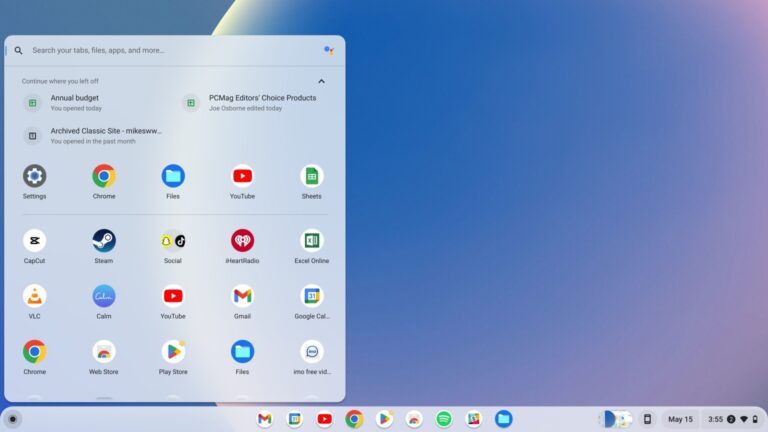
ChromeOS is officially dying. Court documents revealed in Google’s antitrust case confirm that the company plans to completely phase out ChromeOS by 2034, replacing it with an Android-based desktop operating system codenamed “Aluminium OS.”
The timeline is far slower than expected, with full commercial availability delayed until 2028 and legacy device support required through 2033 to honor Google’s 10-year support commitments.
The Aluminium OS Timeline: Slower Than Anyone Expected
| Milestone | Year | Details | Impact |
|---|---|---|---|
| Commercial Trusted Testers | 2026 | Early “Aluminium OS” release | Limited availability, likely consumer-focused |
| Full Release | 2028 | Enterprise & education rollout | Replaces ChromeOS for new devices |
| ChromeOS Maintenance Mode | 2028-2033 | Legacy device support only | No new ChromeOS Chromebooks sold |
| Complete ChromeOS Phase-Out | 2034 | End of all ChromeOS support | Android becomes sole Google desktop OS |
| Android Desktop Unification | Post-2034 | Single OS for phones, tablets, laptops, desktops | Google’s unified platform vision realized |
What Court Documents Revealed
According to legal filings surfaced by The Verge, Google’s lawyers explicitly stated that “the timeline to phase out ChromeOS is 2034.” This revelation came during antitrust proceedings where Google successfully argued it should retain Chrome browser ownership specifically because it needs Chrome to support ChromeOS through its decade-long support commitments.
The documents describe “Aluminium OS” as:
“ChromeOS built on the Android stack that will leverage Android’s pre-existing stack.”
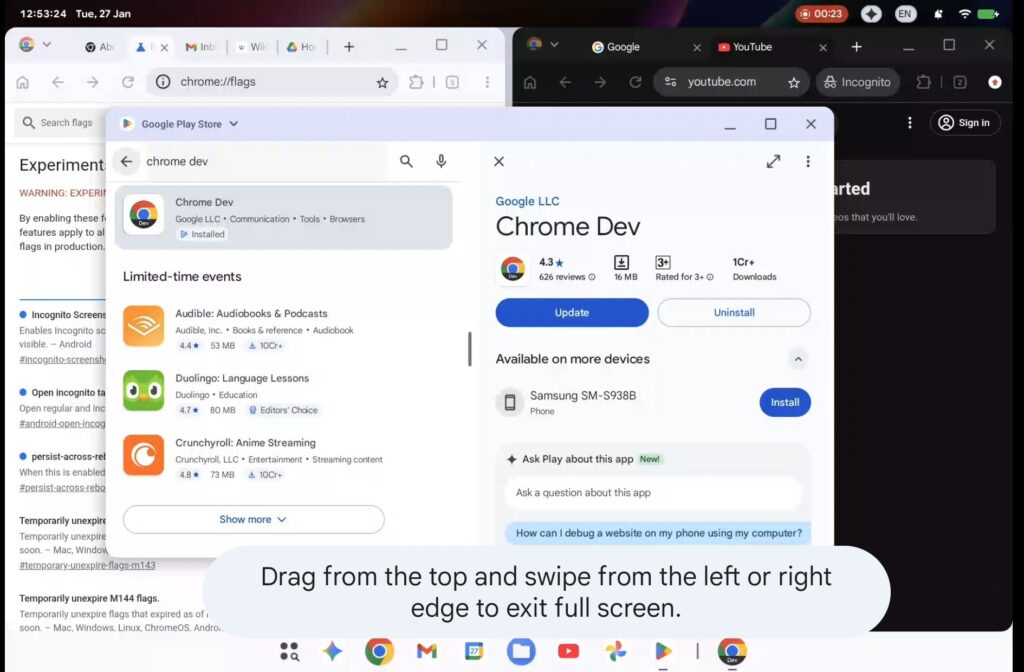
This confirms that Aluminium OS isn’t a fork or hybrid—it’s Android with a desktop UI, using Android’s kernel, app framework, and ecosystem while presenting a traditional desktop interface with windowing, keyboard/mouse optimization, and desktop-class Chrome browser integration.
For tech enthusiasts following Google’s platform strategy on TechnoSports, this represents the most significant OS consolidation since Microsoft unified Windows across devices—but with far more radical implications for hardware compatibility and software ecosystems.
Why the Delay? Hardware Incompatibility
Google’s lawyers revealed a critical technical limitation: most existing Chromebooks cannot run Aluminium OS. The lack of hardware compatibility requires Google to maintain ChromeOS “at least through 2033 to meet its 10-year support commitment to existing users.”
This explains the protracted timeline:
- 2026: Small-scale “commercial trusted tester” release (likely consumer devices only)
- 2028: Full commercial release including enterprise and education sectors
- 2028-2033: Dual-OS period where ChromeOS receives security updates for legacy devices while all new Chromebooks ship with Aluminium OS
- 2034: ChromeOS support officially ends, Android becomes Google’s only desktop platform
The hardware compatibility gap suggests fundamental architectural differences—likely related to x86 vs ARM processors, bootloader requirements, or driver ecosystem maturity—that prevent simple software updates from migrating existing Chromebooks to Android.
What This Means for Chromebook Buyers
If you’re buying a Chromebook in 2026-2027:
- Verify whether it’s Android-compatible or ChromeOS-only
- ChromeOS-only devices will receive support through 2033 max, then become obsolete
- Android-compatible Chromebooks (post-2028 models) will transition to Aluminium OS seamlessly
For education and enterprise customers:
- Large-scale deployment decisions should wait until 2028 when Aluminium OS reaches “full release” maturity
- Existing ChromeOS device fleets will function normally through 2033 but won’t receive feature updates post-2028
- Budget planning should account for potential hardware refresh cycles if current Chromebooks can’t upgrade to Android
For students and budget laptop shoppers following affordable computing options on TechnoSports, this creates uncertainty—is buying a ChromeOS device in 2026-2027 a smart investment, or should you wait for Android-based Chromebooks with longer support horizons?
Why Google is Killing ChromeOS
Ecosystem Fragmentation: Maintaining two separate operating systems (Android for phones/tablets, ChromeOS for laptops) creates duplicated development effort, split app ecosystems, and consumer confusion.
Android Maturity: Years of desktop UI development—windowed multitasking, external display support, keyboard/mouse optimization, Chrome Extensions compatibility—mean Android is finally ready to replace ChromeOS without functional compromises.
Market Positioning: Apple’s unified ecosystem (iOS/iPadOS share core code) and Microsoft’s Windows-across-devices strategy put pressure on Google to consolidate platforms for seamless cross-device experiences.
Developer Incentives: A single platform means Android app developers automatically support desktop/laptop form factors without separate ChromeOS optimization work, accelerating app availability.
Android Desktop: What We Know So Far
Leaked screenshots and court document illustrations show:
Desktop-Class UI:
- Traditional taskbar with app icons
- Windowed multitasking with minimize/maximize/close buttons
- Desktop-style status bar with system tray
- File manager with desktop folder organization
Chrome Browser Integration:
- Full Chrome Extensions support
- Desktop-optimized tab management
- Keyboard shortcuts matching traditional desktop Chrome
Android App Compatibility:
- All existing Android apps run in resizable windows
- Play Store remains the primary app distribution platform
- Google Workspace apps (Docs, Sheets, Meet) optimized for desktop form factors
Gaming Implications:
- Android game library accessible on laptops/desktops
- Potential for emulator-free mobile game streaming
- Controller support for gaming handhelds and cloud gaming devices
For mobile gamers and esports enthusiasts on TechnoSports, this could revolutionize how Android games are experienced—PUBG Mobile, Genshin Impact, and Call of Duty Mobile on laptop screens with keyboard/mouse controls becomes native functionality rather than requiring third-party emulators.
The Antitrust Angle: Why ChromeOS Saved Chrome
Ironically, ChromeOS’s existence helped Google avoid being forced to sell Chrome browser during antitrust proceedings. Google successfully argued that:
- Selling Chrome would orphan ChromeOS, harming existing users
- Supporting ChromeOS through 2033 requires Chrome browser ownership
- The transition to Aluminium OS (Android-based) needs Chrome integration during the 2026-2034 migration period
Court documents also reveal that devices running “ChromeOS or a successor to ChromeOS” are excluded from bans preventing Google from requiring pre-installation of Google apps on Android devices. This legal carve-out ensures Aluminium OS can ship with mandatory Google Search, Play Store, and other services without violating antitrust settlements.
What About Linux on Chromebooks?
ChromeOS’s beloved Linux development environment (Crostini) faces uncertain future. While Android supports Linux app execution through projects like Termux, the seamless ChromeOS integration—where Linux apps appear alongside Chrome and Android apps in a unified launcher—may not survive the Aluminium OS transition.
Developer communities heavily reliant on Chromebooks for affordable Linux development workstations should prepare for potential workflow disruptions or evaluate alternative platforms before 2034.
Microsoft and Apple’s Response
Microsoft must be celebrating—ChromeOS captured significant education market share with affordable, easy-to-manage devices. If the 2026-2028 Aluminium OS transition creates confusion or compatibility issues, schools might return to Windows 11 SE devices.
Apple gains ammunition for its “unified ecosystem” messaging—iOS, iPadOS, and macOS already share core technologies, while Google is only now attempting what Apple achieved years ago with Catalyst and SwiftUI cross-platform frameworks.
The Verdict: End of an Era, Beginning of Uncertainty
ChromeOS, launched in 2011, transformed education computing and proved web-based operating systems viable. Its death by 2034 marks the end of Google’s experiment with browser-centric computing and the triumph of Android’s app-first philosophy.
But the eight-year transition timeline (2026-2034) creates a messy middle period:
- Consumers confused about which devices are future-proof
- Enterprise customers hesitant to deploy during platform migration
- Developers unsure whether to optimize for ChromeOS or wait for Aluminium OS maturity
- Existing Chromebook owners facing device obsolescence despite “10-year support” promises
For an industry that values platform stability, Google’s Aluminium OS transition represents the kind of multi-year uncertainty that benefits competitors. Whether Android’s desktop gamble pays off won’t be clear until 2028’s “full release”—and by then, Microsoft and Apple will have had years to respond.
Follow Google’s OS consolidation strategy at TechnoSports—your source for Android news, ChromeOS coverage, and desktop computing analysis.
Information sourced from court documents revealed in Google’s antitrust case and reported by 9to5Google and The Verge on February 3, 2026.