SAS1
 FIO0
 TRA2
 NEF2
 GEN1
 ALA0
 ATA
 PAR
 LOR
 BRE
 NEW
 EVE
 DEP
 OSA
 WI-A
 LIONS
 Galatasaray
 Stuttgart
 Shakhtar
 Sporting
 Atlético
 Bayern
 NED183/3 (36/50 ov, target 183)
 OMA182
 Athletic2
 Real Sociedad1
 Juventus2
 Napoli0
 Marseille2
 Toulouse0
 NZ-A424
 IND-A346 & 32/0 (11 ov)
 QLD280
 VIC307 & 136/6 (66 ov)
 SYL218 & 218
 CHATT210 & 126/1 (37 ov, target 227)
 MYMS108 & 315/9 (91 ov) (f/o)
 KHU288
 DHA
 BAR266/8 (70 ov)
 RAN256
 RAJ231 & 110/3 (27 ov)
 ASSAM135
 KNTKA180/2 (36 ov)
 MEGHA
 NAGA244/8 (67 ov)
 TPURA219/7 (74.3 ov)
 SAU
 BENG143
 MAHA21/2 (8 ov)
 ODSA
 JHK37/3 (25 ov)
 CHD
 TN320/4 (86 ov)
 NZ
 IND
 UAE
 TOK
 MOW
 BIK
 JAB
 LUL
 POA
 DOLPH
 WPR
 CD
 AUCK
 AFG81/3 (8.1/20 ov, target 80)
 ZIM79
 NAM131/5 (21.2/50 ov, target 130)
 IRE129
 MS-W109 (18.1 ov)
 PS-W124/9
 KAL0
 IRAK0
 VLL2
 LEG1
 MJA0
 KFF0
 ADQ0
 BRN0
 COM0
 REM0
 DEF0
 LAF0
 LIN0
 ITU0
 BUR0
 UAI0
 Barcelona
 Aston Villa
 Elche0
 Valencia1
 Lecce1
 Genoa2
 Liverpool0
 Arsenal1
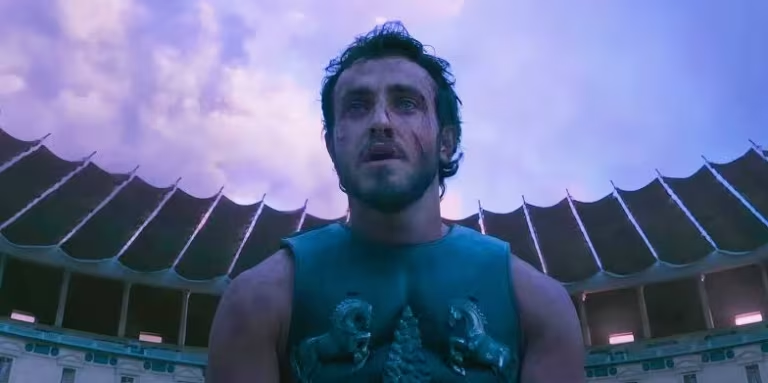
The Gladiator 2 ending explained shows how director Ridley Scott brings Lucius Verus’s decades-long arc to a close through symbolic imagery and brutal combat. Lucius is a historical figure reimagined as a fictional gladiator champion seeking vengeance. In the final sequence, a familiar gesture links his journey to his grandfather’s imperial vision.
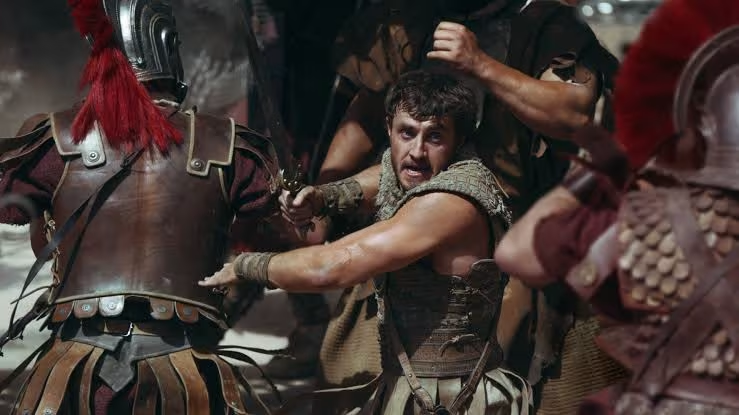
The Before State: A Fractured Lineage
The film arrived in theatres on November 22, 2024, bringing the long-awaited franchise return. At first, Lucius Verus lives under the alias Hanno, keeping his bloodline from public view. That separation leaves a fractured lineage waiting to be reclaimed.
The Catalyst: Arena Politics and Heritage
Political schemes soon unsettle Rome’s fragile peace, and the protagonist has to abandon his anonymity. Colosseum fights serve as spectacle, but they’re also strategic moves against rival factions. Pedro Pascal and Denzel Washington round out the supporting cast, heightening these institutional conflicts and testing Lucius’s loyalty. According to Screenrant, the climax settles questions about imperial succession by tying political power to personal sacrifice, not dynastic inheritance.
The Aftermath: How the Ending Explained Shapes Franchise Trajectory
The final sequence skips prolonged dialogue and favors decisive action and symbolic closure. Sword fights and arena victories give way to a quiet moment: a familiar helping hand brings the film to a close.
That gesture bridges the generations and confirms that personal honor ultimately matters more than imperial ambition. Paramount Pictures and Scott Free Productions’ collaboration earned approximately $460 million worldwide during its initial theatrical window. Later streaming distribution on Paramount+ extended the film’s commercial lifecycle beyond traditional cinema windows.
| Narrative Element | Prequel Foundation | Sequel Execution |
|---|---|---|
| Protagonist Status | Enslaved soldier | Hidden imperial heir |
| Central Conflict | Revenge against corrupt general | Institutional reform vs autocracy |
| Key Supporting Cast | Varied provincial fighters | Pascal and Washington as political architects |
| Financial Milestone | Record domestic openings | $460 million global cumulative revenue |
| Distribution Strategy | Extended theatrical exclusivity | Rapid transition to Paramount+ streaming |
Viewers examining the film’s structure may spot parallels with our Dead-End Ending Explained: report on breaking cycles of violence. For another look at institutional conflict, see our Diplomat Season Explained guide to bureaucratic maneuvering. Industry analysts following release schedules can also consult our November 2026 Explained market overview. The ending explained framework shows how modern sequels increasingly favor systemic resolutions over individual character victories.
This chapter shows how legacy properties can move beyond personal vendettas to explore broader social change. Tracking award season? Production design and sound mixing could draw strong campaign support. The cinematic universe seems headed toward serialized political drama, not standalone arena spectacles.
What specific historical figures inspired the expanded Roman Senate scenes?
The screenplay draws on multiple documented senatorial debates from late second-century Roman records to provide context for the fictional political landscape.
Why did the filmmakers replace traditional victory speeches with silent gestures?
Director Ridley Scott favored the visual storytelling traditions of classical epic cinema, using thematic continuity rather than exposition.
How does the Paramount+ streaming rollout compare to traditional theatrical windows?
The platform’s rollout brought forward digital availability, reaching secondary audience segments who prefer watching at home to attending crowded theatres.
The sequel turns historical tragedy into a structured commentary on institutional reform. Source: ScreenrantWhat themes are explored in Gladiator 2 regarding political commentary?
Gladiator 2 turns historical tragedy into a structured commentary on institutional reform, shifting the focus from personal vendettas to broader social change. Through its historical narrative, the film also appears to address contemporary political issues.
###
How does the film’s approach to victory speeches differ from traditional methods?
Led by director Ridley Scott, the filmmakers replace traditional victory speeches with silent gestures to foreground visual storytelling. This choice follows classical epic cinema traditions and gives thematic continuity and emotional resonance room to develop without verbal exposition.
FAQs
What Does The Ending Of Gladiator 2 Mean?
The ending of Gladiator 2 leaves viewers questioning the fate of the main characters, particularly focusing on the symbolic significance of the final scenes. The conclusion emphasizes themes of legacy, honor, and the cyclical nature of power.
Whose Hand Is Shown At The End Of Gladiator 2?
The hand shown at the end of Gladiator 2 belongs to a key character, symbolizing their connection to the past and the continuity of the story. This moment serves as a poignant reminder of the sacrifices made and the impact of the characters’ actions.
Read Next
- Aasif Khan Bigg Boss Eviction: Panchayat Actor Leaves House Amidst Controversy
- Fauzi movie: Prabhas’ Period Action Epic Gets New Release Date, Cast, Story and Latest Update
- Drishyam The Conclusion Box Office: Ajay Devgn’s Thriller Hits Rs 364.60 Crore and Heads Toward a Rs 370 Crore Finish
Was this article helpful?
Your feedback directly improves future articles on this site.