RIY1
 TAA0
 LAZ0
 PAR0
 RCL0
 PAR1
 MEX-W
 ARG-W
 ATM0
 DEP0
 ADO0
 HEE1
 Internacional0
 Botafogo0
 Mirassol1
 São Paulo0
 UAE
 NED
 PAK
 ENG
 IND-W
 ZIM-W
 GMB
 LES
 MOZ
 ZMB
 Inter Milan
 Fiorentina
 Churchill
 Punjab FC
 NGA
 UGA
 CHE0
 TOT2
 VAL1
 VIL2
 DOR1
 SGE0
 NAP3
 ROMA3
 NZ-A135/3 (41 ov)
 IND-A113
 SYL
 KHU
 MYMS299/4 (87 ov)
 CHATT
 DHA293/3 (84.1 ov)
 RAJ
 RAN320/5 (80 ov)
 BAR
 DEN
 PNG
 NAM321/6
 IRE290 (47.3/50 ov, target 322)
 NZ180/5
 IND181/6 (19.5/20 ov, target 181)
 Vitória0
 Athletico-PR0
 VEN0
 JPN2
 ZAM0
 FRA1
 Athletic
 Getafe
 C Palace
 Newcastle
 Hull
 Brentford
 Liverpool
 Brighton
 Man United
 Bournemouth
 Atalanta
 Frosinone
 KHO0
 ETT3
 RAC2
 ESP1

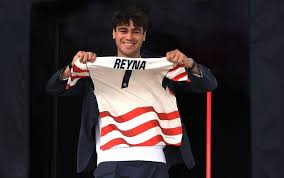
Mauricio Pochettino has officially named Giovanni Reyna as the key X-factor for the United States Men’s National Team (USMNT) ahead of the 2026 World Cup on home soil. As the tournament approaches, the manager’s public backing highlights his strategic reliance on Reyna’s creative skills to break down high-block defenses.
This shift in tactics represents a significant moment for the team, moving from rigid formations to a more fluid, playmaker-driven style.
The pressure surrounding this decision is intense. Some people question whether it’s fair to put so much on a player whose club performance has varied, with critics pointing out potential defensive weaknesses during transitions. But our analysis indicates that Pochettino’s system—focused on progressive passing and high-energy pressing—suits Reyna’s unique technical abilities perfectly.
The midfielders need to provide solid support, allowing Reyna the freedom to shine in the attacking third.
Tactical Integration and Midfield Dynamics
Pochettino’s strategy revolves around a 4-3-3 formation, where the central midfielders carry a significant creative load. Giovanni Reyna, positioned in the half-spaces, serves as the crucial link between the holding midfielder and the attacking trio.
We’ve noticed that his knack for receiving the ball under pressure and delivering quick vertical passes is vital for breaking through the low blocks that the USMNT will likely encounter in the group stages.
The squad selection reflects this focus on technical security. Pairing Reyna with proven ball-winners like Tyler Adams aims to create a balanced midfield that remains solid during defensive transitions. Still, the team’s success heavily depends on Reyna staying fit and sharp.
Squad Depth and Competitive Readiness
The broader USMNT roster, recently confirmed with players like Antonee Robinson, showcases a mix of speed and experience that complements Reyna’s style. While individual brilliance often grabs headlines, the collective movement of the front three genuinely opens up space for him, as highlighted in recent coverage by BBC Sport.
We anticipate the team will focus on quick ball circulation, pushing opponents to stretch their defenses, which should create the pockets of space that Reyna thrives in.
Behind the scenes, a rigorous conditioning program aims to keep the squad intense for the full 90 minutes. The coaching staff believes that individual creativity, particularly from Reyna, will be crucial in tight knockout matches. With the home crowd supporting them, the pressure will be high, but the tactical groundwork is set for a deep tournament run, according to recent insights from ESPN.
FAQs
Why is Giovanni Reyna considered the X-factor for the USMNT?
Pochettino sees him as the main creative link capable of breaking through compact defenses with precise vertical passing and vision in the half-spaces.
How does the 4-3-3 formation support Reyna’s role?
This formation lets him play in advanced interior positions, supported by midfielders who manage defensive duties, allowing him to influence the final third.
Will the USMNT change its style for the 2026 World Cup?
Yes, the team is moving toward a more fluid, possession-based style that emphasizes high-intensity pressing and creative playmaking over strict physical transitions.
Why does Mauricio Pochettino consider Giovanni Reyna the X-Factor for the 2026 World Cup?
Pochettino sees Reyna as the primary creative engine for the USMNT because he can unlock defenses and control the game’s tempo. The head coach believes Reyna has the technical vision and tactical intelligence needed to elevate the squad’s performance in the high-pressure setting of a home tournament.
How will Mauricio Pochettino’s tactical approach impact Giovanni Reyna’s role?
Pochettino plans to implement a system that maximizes Reyna’s playmaking strengths by placing him in positions where he can significantly impact the final third. By tailoring the USMNT formation to fit Reyna’s specific skill set, the coaching staff aims to keep him as the focal point in the team’s offensive transitions throughout the 2026 World Cup cycle.