SA329 (82.3 ov)
 AUS
AUS ROMA2
ROMA2 CAG1
CAG1 TOR1
TOR1 COMO0
COMO0 BRD1
BRD1 PET0
PET0 FLE0
FLE0 ARS0
ARS0 BAN
BAN WI
WI IND-W
IND-W ZIM-W
ZIM-W GOA
GOA SC Delhi
 Milan
Milan Bologna
 Parma
Parma Udinese
 Venezia
 Inter Milan
 Genoa
Genoa Juventus
 Monza
Monza Napoli
 SAS2
SAS2 LAZ6
LAZ6 AFG177
 ZIM140 (19.1/20 ov, target 178)
 ABH0
ABH0 ALF1
ALF1 PAK110
 SL114/2 (18.1/50 ov, target 111)
 SIKM184
 NAGA187 & 46/4 (34 ov)
 JHK131/4 (47 ov)
 DELHI515/5d
 ODSA194
 SVCS13/0 (5 ov)
 BRODA616
 J & K6/0 (4 ov)
 CHD685/5d
 HP49/0 (14 ov)
 CGR216/8 (95 ov)
 AP231
AP231 HYD193/2 (54 ov)
 PNJB431
 KNTKA297/7 (95 ov)
 TPURA194
 KER101/6 (35 ov)
 BENG350
 MAHA278/9 (100 ov)
 GUJ223
 MNPR364
 ARP111 & 95/2 (36 ov)
 UAE
UAE OMA
OMA ENG
ENG AUCK
AUCK CANT
CANT CD
CD ND
ND DEN
DEN QAT
QAT KENYA
KENYA KUW
KUW NAM316/7
 IRE253 (44.5/50 ov, target 317)
 NZ198/3
 IND199/4 (13.2/20 ov, target 199)
 NED371/5
 JAB113 (19.3/20 ov, target 133)
 KAY132/9
 EXC1
EXC1 ADO1
ADO1 SES3
SES3 ESP3
ESP3 UDC0
UDC0 ALM0
ALM0 ALC0
ALC0 LPA1
LPA1 TORD2
TORD2 MIR0
MIR0 CDL0
CDL0 MAJ0
MAJ0 GSCF0
GSCF0 CLE1
CLE1 LLA0
LLA0 PON1
PON1 Gamba Osaka
 Buriram
 Kashima
 Pohang Steelers
 Sevilla2
 Osasuna0
 PSG2
PSG2 Lyon0
Lyon0 Mohun Bagan1
 Chennaiyin0
 ALS3
ALS3 HIL1
HIL1
Factories, warehouses, and industrial sites are getting smarter and more automated, but that also means safety and security must evolve at the same speed. To tackle this challenge, Fujisoft, a global IT solutions provider, has built a next‑generation AI‑powered physical security system on the AMD Embedded+ platform, blending real‑time object detection, flexible detection zones, and instant alerts into a single, deployable unit.
For a broader, official‑style look at how AI and embedded hardware are transforming industrial safety, you can refer to the Artificial intelligence – Wikipedia page Artificial intelligence – Wikipedia.
Fujisoft’s AI Physical Security System
What Makes This Security System “Smart”?
Traditional security setups often suffer from two big problems: too many false alarms and rigid, hard‑to‑adjust detection zones. Fujisoft’s new AI system fixes both with a more “intelligent” approach.
- AI‑based person and object detection: Instead of simply reacting to movement, the system uses models running on the AMD Embedded+ platform to classify humans, vehicles, and key objects, which makes intrusion detection far more accurate and context‑aware.
- Automatic detection area configuration: One standout feature is that users can define the detection area just by placing four stop signs at the corners of the target zone; the system then auto‑configures the area, cutting the need for manual camera‑by‑camera setup.
- Real‑time monitoring and alerts: The system provides continuous live‑feed analysis, with instant visual and audible alerts whenever a hazard, unauthorized entry, or safety violation is detected, letting site managers respond quickly.
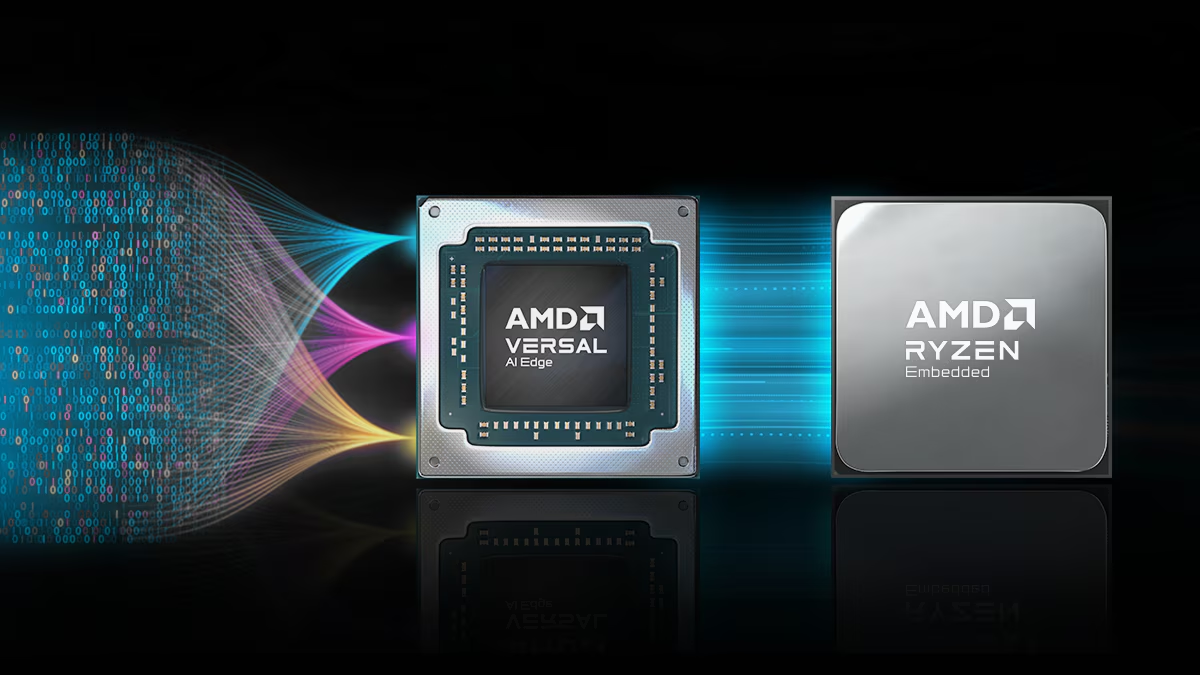
Inside the box, AMD Ryzen AI Software and Vitis AI tools help Fujisoft tune and deploy models efficiently, while the integration of x86 processing and FPGA‑style adaptability lets the hardware adapt to different sensor types and workloads without a full redesign.
Why AMD Embedded+ Is The Right Fit?
The choice of AMD Embedded+ as the backbone of this solution plays a big role in its compactness and efficiency.
- Single‑board, hybrid architecture: By putting Ryzen Embedded processors and Versal adaptive SoCs on one PCB, AMD reduces design complexity and BOM cost, helping Fujisoft get to market faster.
- Flexible, field‑programmable I/O: The FPGA‑style side of the Versal SoC lets the system connect to a wide range of cameras, sensors, and industrial I/Os without needing extra interface adapters.
- AI‑ready software ecosystem: Sample applications, development tools, and early‑access support from AMD mean Fujisoft’s team can focus on AI logic instead of low‑level integration, accelerating the whole development cycle.
A Fujisoft manager, Naoya Yanagitsubo, noted that combining adaptive hardware and x86 processing in one platform perfectly aligns with Fujisoft’s strengths in both hardware and software, letting them build a more accurate, flexible, and long‑term deployable solution.
System‑Features Table
FAQs
Q: What kind of security problem does Fujisoft’s AI system solve differently?
Q: How does the AMD Embedded+ platform help Fujisoft build this solution faster?
A: By integrating Ryzen Embedded processors and Versal adaptive SoCs on one board, plus providing AI development tools and samples, AMD reduces design complexity and speeds up both hardware and AI‑model integration.