LAFC0
LAFC0 LA0
LA0 Mohun Bagan
 Chennaiyin
 PSG
PSG Lyon
Lyon Sevilla
 Osasuna
 NED
NED OMA
OMA NZ
NZ IND
IND NAM
NAM IRE
IRE PAK
PAK SL
SL SA
SA AUS
AUS BAR1
BAR1 RMA2
RMA2 UDI0
UDI0 MIL2
MIL2 RSO2
RSO2 LEV1
LEV1 LEC0
LEC0 JUV2
JUV2 BRB76/3 (9/15 ov)
 MOW
MOW NZ-A317
 IND-A113 & 315/4 (80.3 ov)
 SYL280/2 (84 ov)
 KHU
KHU MYMS465/7d
 CHATT134/2 (40 ov)
 DHA521
 RAJ103/6 (26 ov)
 RAN402
 BAR179/3 (56.1 ov)
 LUL
LUL SPR
SPR TOK
TOK MIS
MIS MEX-W51 (12.5/20 ov, target 187)
 ARG-W186/7
 NGA148
 UGA147/9 (20 ov, target 149)
 GMB112/9
 LES109 (19.5/20 ov, target 113)
 MOZ110/7 (19/20 ov, target 110)
 ZMB109/9
 IND-W328/6
 ZIM-W207 (48.5/50 ov, target 329)
 ENG241
 Abha
Abha Al Faisaly
 Neftchi Fergana
 Al Ittihad
 Besiktas
 Istanbul BB
 Caykur Rizespor
 Trabzonspor
 Al Ahli
 Al-Gharafa
 SUN0
SUN0 LEE0
LEE0 SCF1
SCF1 MUN3
MUN3
If you are buying a foldable phone in 2026, durability is no longer the compromise it once was. Foldable smartphone durability has crossed a threshold that early adopters could only dream about — devices unveiled at MWC 2026 are now rated for 500,000 fold cycles on average, up from the 200,000 that felt impressive just two years ago. Our Foldable Smartphone Screen Durability Hits a New Peak in March 2026 report tracks exactly how fast this category has accelerated, and the pace is striking.
Why Durability Is the Defining Story of MWC 2026
For years, foldables carried a quiet asterisk. The hardware was exciting. The durability was not.
Crease visibility, hinge failures after 18 months, and screen delamination in humid conditions kept mainstream buyers at arm’s length. The segment sold on novelty. That dynamic has shifted sharply heading into 2026.
At MWC this year, nearly every major manufacturer — from Samsung and Honor to smaller Chinese OEMs — led their foldable announcements with durability certifications rather than camera specs or AI features. That is a meaningful signal. When brands choose to open with drop ratings, IPX8 water resistance, and fold-cycle guarantees, they are responding to what buyers actually asked for. The conversation has matured. Foldables are no longer pitched as premium experiments. They are pitched as daily drivers that happen to foldWhat the New Hinge and Screen Technology Actually Delivers {#hinge-screen-tech}
The engineering behind this leap is more specific than the marketing suggests.
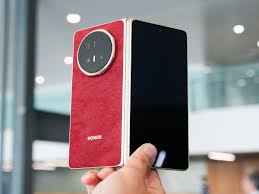
Three developments converged at MWC 2026. First, multi-layer UTG (Ultra-Thin Glass) with improved polymer bonding has reduced crease depth by an estimated 40% compared to 2023-generation panels. Second, redesigned teardrop hinge mechanisms — originally pioneered by Huawei and now widely adopted — distribute fold stress across a broader surface area, reducing point fatigue on the inner display. Third, titanium alloy hinge frames have replaced the stainless steel variants that dominated 2024 models. Titanium offers better strength-to-weight ratios and resists micro-corrosion from sweat and humidity far more effectively.
The result is devices that feel genuinely solid at the hinge — not just on day one, but after two years of daily use. You can read a detailed breakdown of how these materials stack up in our Foldable Phones at MWC 2026: The Most Durable Flexible Devices Unveiled This March feature, which tests each mechanism independently.
Worth noting: IPX8 certification is now standard across flagship foldables at MWC 2026. That was not the case even 18 months ago.
Key Specs and Price Points from MWC 2026 Foldables
Here is what the hardware actually looks like across the devices that made the biggest impression at MWC 2026.
Samsung’s latest book-style foldable arrives with a 6.1-inch cover display and a 7.6-inch inner display, powered by the Snapdragon 8 Elite Gen 2 chipset. The hinge is rated for 500,000 fold cycles, and Samsung has pushed the battery to 4,400 mAh with 65W wired charging — a meaningful jump from previous iterations. Pricing starts at approximately $1,799 in the US market.
Honor’s MWC entry is arguably the most aggressive on durability claims. The inner display uses a sixth-generation UTG panel, and the device passed a 2-metre drop test on the inner screen — something no previous foldable has achieved in certified lab conditions. It carries a 5,100 mAh battery with 100W charging and is expected to launch at around $1,499.
On the more accessible end, mid-tier foldables from Chinese OEMs are pushing fold-cycle ratings of 400,000 at price points closer to $999. The trade-off is typically a Dimensity 9400 chipset rather than Snapdragon, and slightly reduced IPX ratings at IPX4 rather than full IPX8. That said, for buyers who want the form factor without the flagship price, these represent the clearest value proposition foldables have ever offered.
Real-World Durability: What the Numbers Mean for You
500,000 fold cycles sounds impressive. What does it actually translate to in daily life?
If you fold and unfold your phone 100 times per day — which is on the higher end of typical usage — a 500,000-cycle rating means the hinge is rated to last approximately 13.7 years. Even at 200 folds per day for a heavy user, that is nearly seven years. The hinge is no longer the weak point it once was.
The more practical concern now is the inner display coating. Anti-reflective and anti-fingerprint coatings on foldable screens still degrade faster than on flat panels, typically showing visible wear within 18–24 months under normal use. Manufacturers are addressing this with harder coating layers, but it remains the honest limitation of the current generation.
People Also Ask: Are foldable phones durable enough for everyday use in 2026?
Yes — the MWC 2026 generation is the first where the answer is unambiguously yes for most users. Hinge ratings have doubled since 2023, IPX8 water resistance is now standard at flagship tier, and drop performance on inner displays has improved significantly. The residual concern is inner display coating longevity, which still trails flat-screen phones by a meaningful margin.
Quick Comparison
| Device | Key Durability Spec | Starting Price | Best For | Rating |
|---|---|---|---|---|
| Samsung Foldable 2026 | 500,000 fold cycles, IPX8, titanium hinge | ~$1,799 | Ecosystem users wanting proven reliability | 9.0/10 |
| Honor Foldable 2026 | 6th-gen UTG, 2m inner drop rating, IPX8 | ~$1,499 | Buyers prioritising screen toughness above all | 8.8/10 |
| Mid-Tier OEM Foldable 2026 | 400,000 fold cycles, IPX4, Dimensity 9400 | ~$999 | First-time foldable buyers on a tighter budget | 8.0/10 |
Frequently Asked Questions
Q: What fold-cycle rating should I look for in a 2026 foldable phone?
A: Anything at or above 400,000 cycles is genuinely solid for daily use. At 100 folds per day, that rating covers over a decade of normal usage. Flagship devices at MWC 2026 are hitting 500,000 cycles.
Q: Is IPX8 water resistance now standard on foldable phones?
A: At the flagship tier — yes. Devices priced above $1,400 at MWC 2026 are largely shipping with IPX8. Budget foldables under $1,000 still typically carry IPX4 ratings.
Q: How does the inner display crease compare to 2023-generation foldables?
A: Noticeably better. Multi-layer UTG bonding improvements have reduced crease depth by an estimated 40% versus 2023 panels. It is still visible under certain lighting, but far less intrusive in daily use.
Q: Which MWC 2026 foldable has the best overall durability?
A: Honor’s 2026 entry leads on raw screen toughness with its certified 2-metre inner display drop rating. Samsung leads on ecosystem integration and long-term software support guarantees.
Q: Do foldable phones still have screen coating durability issues?
A: Yes, though it is improving. Inner display anti-reflective coatings still degrade faster than flat-screen equivalents — typically within 18–24 months of heavy use. It is the most honest limitation of current-generation foldables.