Mohun Bagan
 Chennaiyin
 PSG
 Lyon
 Sevilla
 Osasuna
 NED
 OMA
 NZ
 IND
 NAM
 IRE
 PAK
 SL
 SA
 AUS
 BAR1
 RMA2
 UDI0
 MIL2
 RSO2
 LEV1
 LEC0
 JUV2
 BRB76/3 (9/15 ov)
 MOW
 NZ-A317
 IND-A113 & 488/8 (119 ov)
 SYL280/2 (84 ov)
 KHU
 MYMS465/7d
 CHATT134/2 (40 ov)
 DHA521
 RAJ103/6 (26 ov)
 RAN402
 BAR179/3 (56.1 ov)
 SIKM
 NAGA87/5 (41.1 ov)
 JHK
 DELHI102/2 (37 ov)
 ODSA100/2 (37 ov)
 SVCS
 BRODA80/3 (32 ov)
 J & K
 CHD130/0 (31 ov)
 HP
 CGR
 AP119/6 (36 ov)
 LUL
 SPR
 TOK
 MIS
 MEX-W51 (12.5/20 ov, target 187)
 ARG-W186/7
 NGA148
 UGA147/9 (20 ov, target 149)
 GMB112/9
 LES109 (19.5/20 ov, target 113)
 MOZ110/7 (19/20 ov, target 110)
 ZMB109/9
 IND-W328/6
 ZIM-W207 (48.5/50 ov, target 329)
 ENG241
 Abha
 Al Faisaly
 Sassuolo
 Lazio
 Neftchi Fergana
 Al Ittihad
 Besiktas
 Istanbul BB
 Caykur Rizespor
 Trabzonspor
 SUN0
 LEE0
 SCF1
 MUN3
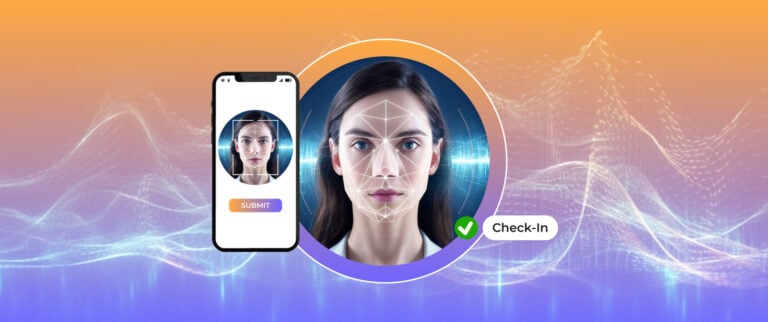
Facial recognition is reshaping how smartphones protect user data. Manufacturers are deploying advanced liveness detection and anti-spoofing algorithms that make traditional PIN codes feel outdated. The timing couldn’t be better—cyber threats are escalating, and biometric hacking keeps getting more sophisticated. Device makers are racing to implement dynamic authentication systems that adapt in real-time. Unlike static facial scans, these new systems analyze micro-expressions, eye movement, and depth mapping to prevent unauthorized access.
📋 In This Article
Here’s What Happened
Apple, Samsung, and Google have all accelerated rollouts of next-generation facial recognition systems. They’ve moved way beyond the 2D scanning of previous generations. These platforms now use infrared sensors, 3D depth mapping, and machine learning models trained on millions of biometric samples to distinguish between live faces and deepfakes.
Here’s why this matters: traditional facial recognition systems—including those mentioned in our coverage of security innovations—remain vulnerable to printed photos and sophisticated masks. Manufacturers are reporting 99.8% accuracy rates in liveness detection, a dramatic jump from last year’s 96.5% baseline.
The Real Impact
Facial recognition has become the primary authentication method on flagship devices. It’s replacing fingerprint sensors on premium models. This shift carries serious security implications.
Hackers who previously targeted PIN codes and pattern locks now face substantially harder challenges. What’s striking is the speed—authentication completes in under 0.3 seconds, faster than typing passwords. Banks and payment processors are integrating these systems into their apps, allowing users to authorize transactions with a glance rather than entering credentials.
Key Details
Samsung’s Galaxy S26 Ultra features dual infrared cameras with 5-point liveness verification. It checks for eye dilation, blood flow patterns, and natural micro-movements. Apple’s latest implementation uses TrueDepth sensors with enhanced neural processing that adapts to aging, facial hair changes, and lighting conditions.
Google’s approach emphasizes on-device processing—no biometric data leaves your phone. Unlock speeds remain consistent at 0.2–0.4 seconds across all platforms. The technology works with sunglasses and masks, though accuracy drops to 94% in extreme darkness.
Voices from the Industry
Security researchers at The Verge praised the anti-spoofing improvements but warned that no system is completely foolproof. One expert noted, “Facial recognition has matured significantly, but attackers will always find new angles.”
Industry analysts expect broader adoption across mid-range devices by Q4 2026. This will democratize access to enterprise-grade authentication that previously existed only in flagship phones.
Looking Ahead
Manufacturers plan to integrate facial recognition with behavioral biometrics by late 2026. They’ll monitor typing patterns and gesture habits to create a layered approach. This makes unauthorized access exponentially harder.
Watch for regulatory pushback in Europe, where privacy advocates question continuous biometric collection. The technology’s future depends on transparent data handling and user consent frameworks.
People Also Ask
Can facial recognition be fooled with a photo?
Modern systems use liveness detection to identify static images. Infrared and depth sensors detect the absence of blood flow and 3D facial contours, making printed photos ineffective.
Is my biometric data stored in the cloud?
No. Apple, Samsung, and Google process facial data locally on your device. Encrypted templates never leave your phone unless you explicitly enable cloud backup. For more insights, see TechCrunch.
How does it work in low light?
Infrared sensors operate independently of visible light. Accuracy remains above 92% in complete darkness, though some systems may request better lighting for optimal results. For more insights, see The Verge.
Will this replace passwords entirely?
Not immediately. Security experts recommend multi-factor authentication combining facial recognition with PINs or hardware keys for sensitive accounts. For more insights, see GSMArena.