In an exclusive conversation with TechnoSports, Chitranshu Mahant, Co-Founder and CEO of Primebook India, opens up about the thinking behind PrimeOS, why Android was the right foundation for India’s next generation of laptop users, and where agentic AI is taking personal computing over the next few years.
When Chitranshu Mahant and Aman Verma founded Primebook in 2017, laptop penetration in India sat at roughly 4% despite a nearly 250-million-strong youth population hungry for access to technology. Rather than building another budget Windows laptop, the IIT Delhi alumni took a different bet entirely: an Android-based laptop, running on an operating system built entirely in-house.
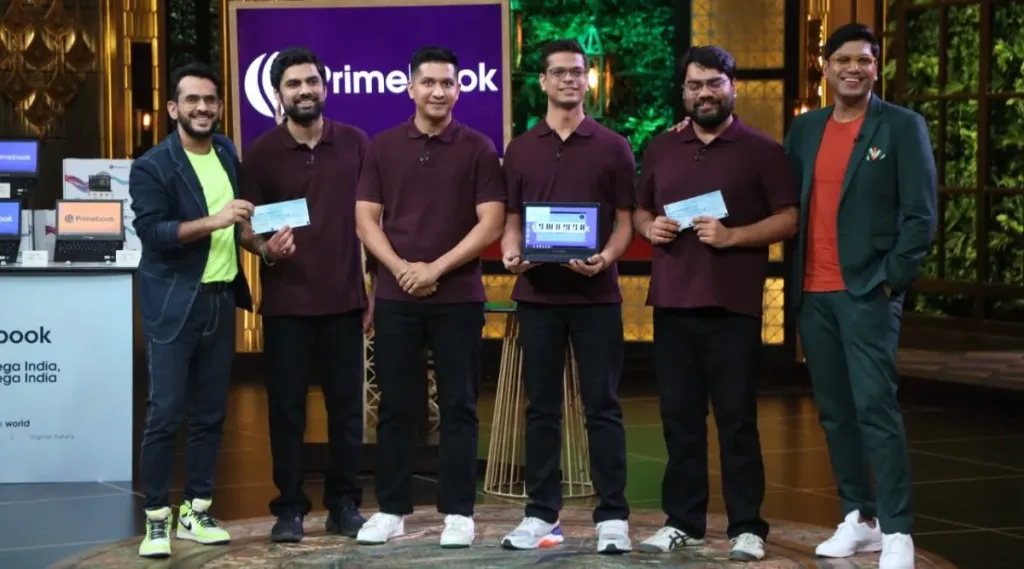
That bet has since evolved into PrimeOS, India’s first Android-based laptop operating system, a Shark Tank India Season 2 investment from boAt’s Aman Gupta, and a product lineup — the Primebook 2 Neo, Pro, and Max — that has crossed 100,000 users and expanded into international markets across South Asia and Africa. Along the way, Primebook has picked up recognition from DeviceNext, Flipkart, and the Startup Mahakumbh, and secured DSIR approval as an in-house R&D unit.
We sat down with Mahant to talk about the market gap that started it all, why Primebook chose Android over Windows or ChromeOS, how AI is reshaping the very idea of an operating system, and what’s next for the company as it pushes into detachables, digital note-taking devices, and global markets including the US, UK, and Middle East.
“The Opportunity Wasn’t Simply to Build Another Laptop”
TechnoSports: Primebook introduced India’s first Android-based laptop powered by PrimeOS. What gap in the market did you identify that traditional laptop manufacturers were overlooking?
Chitranshu Mahant: When we started out, we saw that India has nearly 250 million hungry and ambitious youth, yet laptop penetration remained at around 4%. That’s typically because a legacy operating system fundamentally constrains most laptops under ₹30,000. Slow performance, poor battery life, and limited app compatibility make daily computing tasks extremely difficult and unreliable for users. That’s why we wanted to redesign the entire computing stack from scratch.
The opportunity wasn’t simply to build another laptop. It was to rethink how computing should work for a generation that has grown up with smartphones. When we started looking closely at the market, we realised there was a disconnect between how people used technology every day and how traditional laptops were designed. Most young users were already comfortable navigating Android, accessing learning platforms, collaborating through apps, and managing large parts of their daily lives on mobile devices. But the moment they moved to a laptop, they were expected to learn an entirely different system.
We felt the conversation in the industry had become heavily centred around specifications, while not enough attention was being paid to the experience of using a computer. PrimeOS was built to deliver a modern, reliable, and flexible personal computing experience to ambitious Indian youth, enabling them to extract the utmost value per rupee and grow using technology.
By combining the familiarity of Android with a desktop environment, we wanted to make computing feel intuitive from the very first interaction while still supporting productivity, multitasking, and creativity. Our focus has always been to build technology around the way people naturally work, rather than expecting people to adapt to technology.

Why Android, Not Windows or ChromeOS
TechnoSports: Why did Primebook choose to build on Android instead of following the conventional Windows or ChromeOS route?
Chitranshu Mahant: The decision wasn’t simply about choosing Android. It was about questioning whether the traditional model of personal computing still reflects how the next generation actually learns, works, and creates.
Conventional laptop operating systems were designed in an enterprise-first era, where users were expected to learn the system, navigate complex interfaces, and adapt to predefined workflows. That approach made sense for the way computers were originally used.
But India’s digital journey has been very different. For millions of young users, the smartphone, not the personal computer, was their first experience of computing. They are accustomed to technology that feels intuitive, app-driven, and adapts to the way they naturally interact with it.
We believed the laptop should evolve in the same direction. Building on Android gave us the flexibility of an open-source foundation while allowing us to reimagine the experience for productivity, multitasking, and keyboard-first computing. More importantly, it allowed us to build an operating system around how people actually use technology today, rather than how computers were designed to be used decades ago.
Ultimately, our decision wasn’t about taking a different path for the sake of differentiation. It was about recognising that personal computing has evolved, and operating systems need to evolve with it.
The AI-Native Operating System: Enter PrimeAGNT
TechnoSports: AI is rapidly changing personal computing. How do you see AI-powered and agentic computing transforming the laptop experience over the next five years?
Chitranshu Mahant: We are entering a phase where AI is becoming part of the operating system rather than remaining confined to individual applications. For years, using a laptop has meant navigating interfaces, switching between apps, and manually completing a sequence of tasks. Over the next five years, I believe computing will become increasingly outcome-driven. Instead of focusing on which application to use or which steps to follow, users will simply define what they want to accomplish, while the system coordinates the workflow across applications.
This also changes the role of software itself. Applications will remain important, but they will increasingly become the execution layer rather than the primary interface. The operating system will orchestrate how applications, cloud services, and AI models work together to fulfil a user’s intent.
That is the direction we are exploring with PrimeAGNT. We believe the next evolution of AI is not simply making computers more intelligent but making them capable of execution.
TechnoSports: How is PrimeOS evolving to compete with established operating systems, and what new features can users expect?
Chitranshu Mahant: We don’t approach PrimeOS by asking how many features we can add. We begin by asking how computing itself is changing and what value per rupee we can offer to our users through our entire computing stack.
Users today expect their devices to understand context, simplify everyday tasks, and help them move through work more efficiently. That expectation is shaping how we continue to develop the platform.
AI will play an increasingly important role in this evolution. With PrimeAGNT, we are building an operating system that can better understand intent and assist users across different workflows instead of limiting AI to isolated applications. Alongside this, capabilities like Cloud PC allow users to access more powerful computing environments whenever their requirements grow, without having to pay lakhs upfront.
Going forward, our focus will remain on making the platform more intelligent and futuristic without making it more complicated. Every improvement is meant to help users achieve more while keeping the experience simple and familiar.

Make in India: Beyond Assembly, Toward Ownership
TechnoSports: India has become a major electronics manufacturing hub. How is Primebook leveraging the Make in India ecosystem?
Chitranshu Mahant: I think the biggest shift in the Make in India ecosystem is that Indian technology companies are no longer limited to assembling hardware. As manufacturing capabilities have matured and initiatives like the PLI scheme have strengthened the ecosystem, startups can now move further up the value chain by designing products, building intellectual property, and owning more of the technology that powers them.
That is how we’ve approached Primebook. We see Make in India not just as an opportunity to manufacture laptops locally, but to build an integrated computing platform from India. That means investing across the stack, from hardware and PrimeOS to in-built applications and value-added services like Operator AI and Cloud PC, all designed around how Indian users naturally learn, work, create, and explore. I believe the next phase of Indian technology will be defined not just by devices made in India, but by computing platforms conceived, built, and continuously evolved from India.
TechnoSports: The government is promoting AI, semiconductor manufacturing, and digital education. How do these initiatives create opportunities for startups like Primebook?
Chitranshu Mahant: I think these initiatives are important because they’re strengthening multiple parts of India’s technology ecosystem simultaneously. AI is accelerating new computing experiences, semiconductor and electronics initiatives are strengthening domestic technology capabilities, while digital education is expanding the adoption of personal computing. Together, they create an environment where deep-tech startups can innovate with much greater confidence.
It also reinforces the importance of long-term research and product development. As more companies invest in indigenous technology and in-house R&D, we’ll see greater ownership of core intellectual property rather than just applications built on global platforms. At Primebook, that belief has shaped our own journey, reflected in our continued investment in PrimeOS, Operator AI, and our recognition as a DSIR-approved in-house R&D unit.
Ultimately, I believe the opportunity for Indian startups is no longer just to participate in global technology trends, but to help define them by building products and platforms that originate from India.
Serving the First-Time Buyer
TechnoSports: With students and first-time laptop buyers being your core audience, what are the biggest challenges they face that Primebook aims to solve?
Chitranshu Mahant: One of the biggest challenges is that expectations from personal computing have evolved much faster than the devices themselves. Students and first-time laptop buyers expect their laptop to be a dependable companion for everyday computing, while continuing to support their evolving needs as they move from learning and skill development to work and career opportunities.
That requires thinking beyond hardware alone. At Primebook, we’ve built a computing ecosystem comprising PrimeOS, in-built applications, and value-added services like Cloud PC and Operator AI, ensuring the experience evolves alongside users as their needs change, rather than remaining limited to the capabilities of the device on the day they bought it.
From Deterministic to Adaptive Software
TechnoSports: Many people believe AI could replace traditional software workflows. How is Primebook preparing for this transition?
Chitranshu Mahant: I don’t think AI replaces traditional software workflows. I think it marks the transition from deterministic software to adaptive software, and from static workflows to dynamic workflows. Traditionally, software follows a predetermined workflow. AI changes that by allowing the workflow to adapt dynamically based on the user’s intent, context, and changing requirements.
That is how we’re preparing for this transition at Primebook. We believe operating systems will increasingly need to coordinate these adaptive workflows across applications and services, instead of simply running them independently.
It’s the direction we’re taking with PrimeOS, building an AI-native computing experience where software becomes more intelligent, connected, and adaptive to how people actually work.
TechnoSports: Cybersecurity and data privacy are becoming increasingly important. How does Primebook ensure user data remains secure?
Chitranshu Mahant: I think security and data privacy are no longer just technical considerations or compliance requirements. They have become fundamental to building a sustainable technology business. As AI becomes more deeply integrated into personal computing, users aren’t just sharing more data, they’re increasingly trusting technology with their workflows, decisions, and everyday digital experiences. That raises the bar for how technology companies need to think about trust.
For us, security begins at the operating system level. Because we build PrimeOS ourselves, we have greater visibility and control over how different parts of the platform work together. That allows us to continuously strengthen security while delivering a consistent and trusted user experience.
As AI capabilities continue to evolve, so will expectations around privacy. Our responsibility is to ensure every new capability is introduced with transparency, user control, and trust built into its design. Ultimately, technology evolves quickly, but enduring technology businesses are built on user confidence.
Lessons From Africa, South Asia, and Shark Tank
TechnoSports: Primebook has expanded into Africa and South Asia. What lessons have you learned from these international markets?
Chitranshu Mahant: One of our biggest learnings has been that building for India prepares you remarkably well for emerging markets. India’s diversity in users, digital maturity, and purchasing behaviour forces you to build products that are adaptable from the outset. We’ve found that many of those learnings translate naturally across markets in Asia and Africa. In many ways, solving for India also means solving for a much larger global audience.
We’ve also realised that local context isn’t limited to the product. Strong after-sales support, tailored to the realities of each market, is just as important as customer acquisition in building long-term trust. Equally important are partnerships with trusted local e-commerce marketplaces and enterprise channels, which play a critical role in helping an emerging Indian technology brand establish credibility and scale internationally.
TechnoSports: Shark Tank India gave Primebook national visibility. Beyond funding, how did that experience change the company’s growth trajectory?
Chitranshu Mahant: Shark Tank India was an important milestone because it accelerated conversations that would otherwise have taken years. While the investment was valuable, the larger impact came from introducing Primebook to a much wider audience and giving us an opportunity to explain why we believed computing needed a different approach.
The visibility helped build credibility not only with consumers, but also with partners, educational institutions, and investors. It opened doors for discussions that might have been difficult for a young deeptech startup to initiate independently. Perhaps the biggest outcome was validation. It reinforced that there was genuine interest in an innovative, India-built computing platform and encouraged us to continue investing in the long-term vision rather than pursuing short-term opportunities.
From that point onwards, our focus remained unchanged. We continued refining the product, listening to users, and strengthening the ecosystem around Primebook. The visibility created momentum, but sustaining that momentum has depended entirely on the experience we continue to deliver.
Standing Apart From Global Brands
TechnoSports: Competition in the laptop segment is intense. What differentiates Primebook from global brands?
Chitranshu Mahant: We have never approached this as a race to match another brand feature for feature. Our aim has always been to build a vertically integrated computing ecosystem. At the foundation is PrimeOS, India’s first laptop operating system, purpose-built for laptops with an Android-first architecture. On top of that, we’ve built a hybrid computing ecosystem that combines web applications, the Android app library, native Linux support, and Cloud PC for Windows access, allowing users to access the right computing environment from a single device.
The next layer is AI-native computing. With PrimeAGNT, we’re moving beyond AI assistants to an Operator AI capable of end-to-end workflow automation, cross-application task execution, and background task execution. Combined with optimised hardware that delivers faster boot times, longer battery life, faster UFS storage, and zero bloatware, we believe this full-stack approach creates a computing experience that’s fundamentally different from the traditional laptop model.
TechnoSports: What role do you see Indian startups playing in building an indigenous computing ecosystem?
Chitranshu Mahant: I think Indian startups have a unique role because they aren’t constrained by legacy assumptions. They have the opportunity to rethink computing from first principles and build technology around how today’s users actually learn, work, and create, rather than simply extending models designed decades ago.
That naturally encourages a full-stack approach. When you rethink the user experience from the ground up, you quickly realise that meaningful innovation doesn’t come from changing just one layer. Hardware, software, AI, and services need to evolve together because they’re all part of the same computing experience.
It’s how indigenous computing ecosystems are built. Not by replicating existing technology, but by creating new computing platforms that originate in India and are capable of competing globally.

Bridging the Digital Divide Through AI
TechnoSports: How do you envision the future of AI-powered education, and what role can computing devices play in bridging the digital divide?
Chitranshu Mahant: AI has the potential to make learning more flexible and personalised than it has ever been before.
Every student learns differently. Some understand concepts through examples, others through practice or visual explanations. AI can support these different learning styles by making educational experiences more adaptive and responsive to individual needs.
However, AI alone cannot bridge the digital divide. Students also need access to devices that allow them to explore ideas, create projects, collaborate with others, and build practical skills. Computing remains the foundation that brings all these experiences together.
As education becomes increasingly digital, the conversation should move beyond connectivity and focus on meaningful participation. The objective is not simply to give students access to technology, but to ensure they can use it confidently to learn, create, and prepare for future opportunities.
What’s Next: Detachables, Digital Note-Taking Tabs, and Global Expansion
TechnoSports: Looking ahead, what are Primebook’s biggest priorities over the next two to three years? Can users expect new devices, AI-first features, or expansion into new product categories?
Chitranshu Mahant: Over the next few years, our priority is to continue strengthening the computing ecosystem we have been building. At the platform level, we will keep evolving PrimeOS to become more intelligent, context-aware, and capable of supporting increasingly outcome-driven experiences. AI will continue to become a deeper part of the operating system, enabling users to interact with technology in more natural ways.
Alongside this, users can expect continued innovation across our product portfolio, including new form factors like detachable laptops and digital note-taking tabs, designed to support different use cases while remaining part of the same integrated ecosystem.
Expansion is another important focus. As we strengthen our presence in India, we are also taking Primebook to global markets like the Middle East, USA, and UK, where we see similar opportunities to enhance personal computing. Ultimately, our ambition extends beyond launching new devices. We are working towards building a sovereign computing platform that brings together hardware, software, and intelligent services into one cohesive experience, while continuing to evolve alongside the needs of its users.
About Chitranshu Mahant
Chitranshu Mahant is the Co-Founder and CEO of Primebook India, an IIT Delhi alumnus (2015), and the Technology Convener for the Delhi Chapter of CII (Confederation of Indian Industry). He was awarded Visionary & Trusted Entrepreneur of the Year 2025 at The Great Indian Entrepreneurship, Business & Start-up Awards & Conference, and has represented Primebook at global platforms including Global Sources Hong Kong and the Elevate Dubai Expo. His insights on digital inclusion and the future of computing have been featured in The Economic Times, ABP Live, Express Computer, and other leading publications, and he has spoken at forums including SHIVIR 2025, the MarTech Summit by Exchange4Media, and the DeviceNext Summit.
Buy Primebook laptops from Amazon India: https://link.amazon/B0chM82o7