SA329 (82.3 ov)
 AUS
AUS BAN
BAN WI
WI IND-W
IND-W ZIM-W
ZIM-W GOA
GOA SC Delhi
 Milan
Milan Bologna
 Parma
Parma Udinese
 Venezia
 Inter Milan
 Genoa
Genoa Juventus
 Monza
Monza Napoli
 ROMA4
ROMA4 CAG2
CAG2 TOR1
TOR1 COMO3
COMO3 SAS2
SAS2 LAZ6
LAZ6 AFG177
 ZIM140 (19.1/20 ov, target 178)
 AUCK
AUCK CANT
CANT CD
CD ND
ND SIKM184
 NAGA187 & 46/4 (34 ov)
 JHK131/4 (47 ov)
 DELHI515/5d
 ODSA194
 SVCS13/0 (5 ov)
 BRODA616
 J & K6/0 (4 ov)
 CHD685/5d
 HP49/0 (14 ov)
 CGR216/8 (95 ov)
 AP231
AP231 HYD193/2 (54 ov)
 PNJB431
 KNTKA297/7 (95 ov)
 TPURA194
 KER101/6 (35 ov)
 BENG350
 UAE
UAE OMA
OMA ENG
ENG SL
SL DEN
DEN QAT
QAT KENYA
KENYA KUW
KUW POA
POA SPR
SPR BRB
BRB VAG
VAG PAK110
 NAM316/7
 IRE253 (44.5/50 ov, target 317)
 NZ198/3
 IND199/4 (13.2/20 ov, target 199)
 NED371/5
 JAB113 (19.3/20 ov, target 133)
 KAY132/9
 Gamba Osaka
 Buriram
 Kashima
 Pohang Steelers
 ABH0
ABH0 ALF1
ALF1 Sevilla2
 Osasuna0
 PSG2
PSG2 Lyon0
Lyon0
Reverse swing usually belongs to the 35th over, yet Jasprit Bumrah’s most damaging deliveries often arrive before the ball is 20 overs old. That inversion of convention is why analysts now treat his bowling as a separate data set.
For an Indian attack built around early wickets, that early reverse is the difference between a probing spell and a match-turning one.
As of September 2026, the conversation around his workload and longevity makes this analysis more urgent than ever.
Why Bumrah’s Reverse Swing Breaks Convention
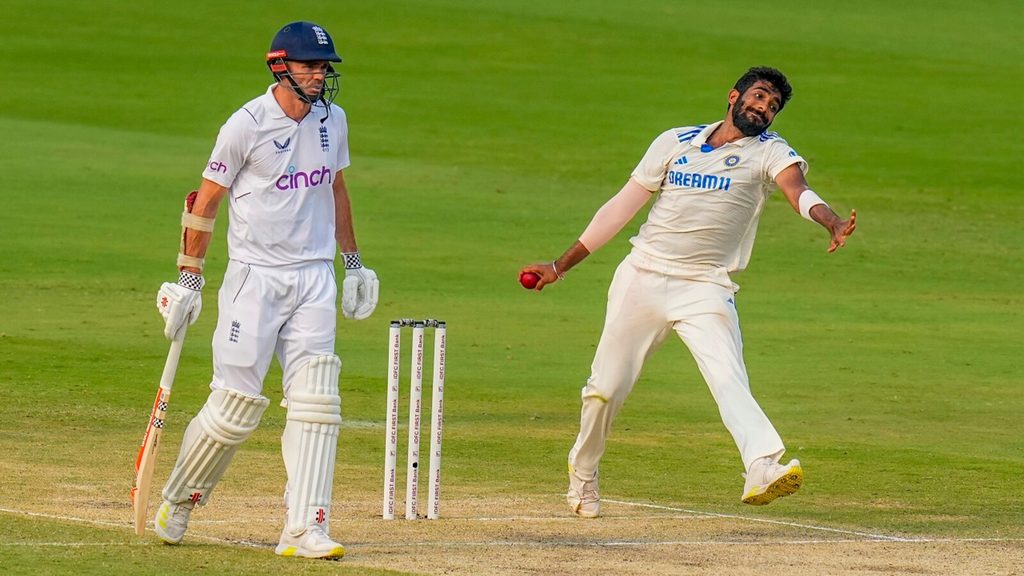
Most reverse-swing specialists rely on a battered ball and a drying pitch. Bumrah compresses that timeline. His unusually high release point, combined with a wrist position that keeps the seam upright, lets him generate late movement even when the ball is relatively new.
That combination is widely regarded as among the most difficult skills in the game. The result is a bowler who targets the stumps earlier than the textbook allows. Where others wait for the 40th over, Bumrah’s threat peaks in the middle overs, forcing captains to rethink field placements and batting line-ups around his spells. Full coverage via BBC Sport.
The Metrics That Matter
Advanced tracking data highlights three variables that define his reverse swing:
- Release point height: Bumrah’s delivery point is reportedly higher than the average fast bowler’s, which steepens the angle into the batter and makes late deviation harder to read.
- Seam stability: High-speed cameras show the seam staying upright through the flight, a prerequisite for meaningful reverse movement.
- Pace preservation: Reverse swing is most dangerous when the ball still arrives quickly; Bumrah’s ability to hold speed late in a spell separates him from slower swing bowlers.
These metrics combine into what analysts call a two-way threat — the ball can move either way, and the batter must commit early. That uncertainty, not raw pace, is the true foundation of his success.
FAQs
How does Jasprit Bumrah generate reverse swing using advanced biomechanics?
Jasprit Bumrah generates devastating reverse swing through his unique hyper-extended bowling arm action and explosive wrist position at the point of delivery. The fast bowler applies precise seam orientation and differential air pressure across the cricket ball to make the leather dart sharply inward at extreme speeds. Advanced tracking metrics show that Jasprit Bumrah achieves an unusually late deviation, giving batsmen practically no time to adjust their defensive strokes.
What specific data metrics do analysts use to evaluate Jasprit Bumrah deliveries?
Cricket analysts evaluate Jasprit Bumrah deliveries by measuring release angle, seam position, rotational RPM, and post-bounce deviation using high-speed optical tracking systems. These sophisticated metrics allow researchers to quantify how much lateral movement the elite pacer extracts compared to league averages. Consequently, coaching staff can assess exactly how Jasprit Bumrah exploits deteriorating pitch conditions during the later stages of a test match.
Was this article helpful?
Your feedback directly improves future articles on this site.