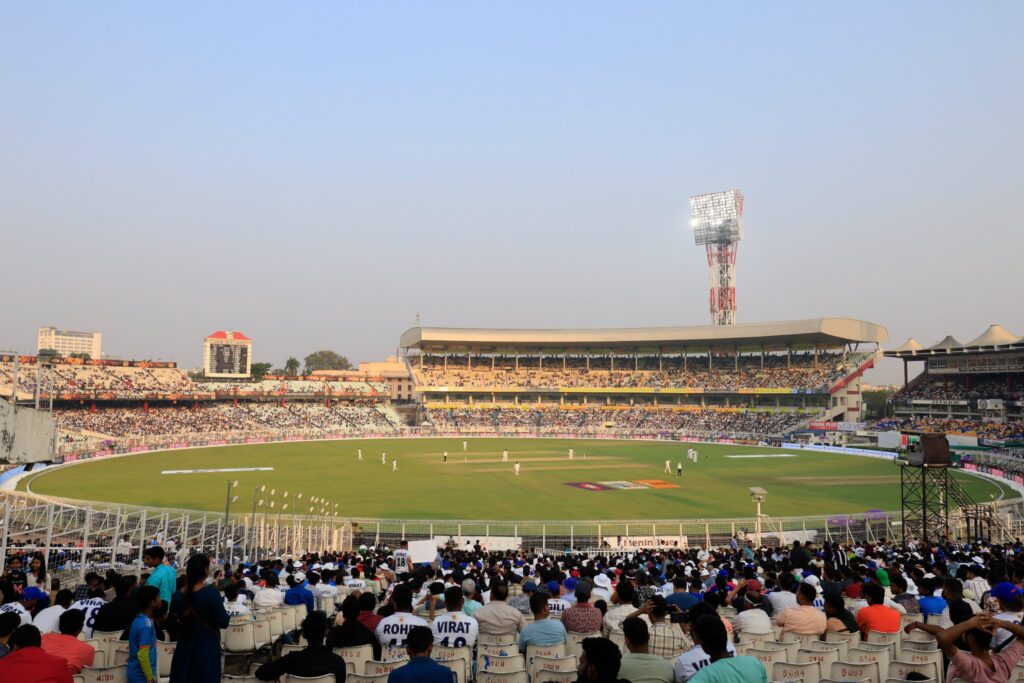
The International Cricket Council has officially rated the Eden Gardens pitch for the first Test between India and South Africa as ‘satisfactory’, sparing the iconic Kolkata venue from any sanctions despite widespread criticism of the surface. The decision by ICC match referee Richie Richardson comes after the match concluded within three days, with South Africa securing a memorable 30-run victory.
Table of Contents
ICC Pitch Rating System Explained
The ‘satisfactory’ rating sits at the second level of the ICC’s four-tier pitch rating system, positioned between ‘very good’ and ‘unsatisfactory’. This classification means Eden Gardens receives no demerit points and can continue hosting international cricket without any restrictions. The decision becomes particularly significant when contrasted with recent pitch ratings around the world.
Just days before the Eden Gardens verdict, the Melbourne Cricket Ground received an ‘unsatisfactory’ rating and one demerit point following the Boxing Day Ashes Test that finished in just two days. That rating has placed the MCG under scrutiny and raised questions about consistency in the ICC’s pitch assessment process.
Under ICC regulations, venues accumulate demerit points for substandard pitches. If a ground accumulates six demerit points within a five-year rolling period, it faces a 12-month suspension from hosting international cricket. Reaching 12 demerit points triggers a 24-month ban, making these assessments crucial for venues’ international futures.
| Rating Level | Description | Demerit Points |
|---|---|---|
| Very Good | Balanced surface with consistent bounce and natural wear | 0 points |
| Satisfactory | Acceptable playing conditions with fair contest | 0 points |
| Unsatisfactory | Excessive advantage to bowlers or batters | 1 demerit point |
| Unfit | Dangerous or completely unsuitable for international cricket | 3 demerit points |
Match Summary: South Africa’s Historic Victory
The Kolkata Test ended dramatically on Day Three as India collapsed for just 93 runs while chasing a modest target of 124. South Africa’s victory marked their first Test win against India on Indian soil since 2010, ending a 13-year drought at Eden Gardens specifically.
South Africa batted first and were dismissed for 159, a total that looked challenging on a pitch already showing signs of uneven bounce. India responded with 189, gaining a slender 30-run lead. The Proteas then posted 153 in their second innings, setting India what appeared to be a gettable target on paper.
However, the pitch’s deteriorating nature made batting increasingly difficult. Sharp turn from the opening day became more pronounced as the match progressed, while inconsistent bounce created additional challenges. India’s chase never gained momentum, with wickets falling regularly as South Africa’s spinners and seamers exploited the conditions expertly.
Simon Harmer emerged as the match’s standout bowler, claiming four wickets in each innings to finish with figures of 8 wickets in the match. His offspin proved devastating on the turning track, tormenting India’s batters with sharp turn and bounce. Marco Jansen’s left-arm pace also troubled batsmen throughout, particularly when the ball kept low or kicked awkwardly.
Jasprit Bumrah provided the lone bright spot for India’s bowling attack, taking 5 for 27 in South Africa’s first innings on the opening day. His spell showcased his ability to extract every possible advantage from challenging conditions, though it ultimately proved insufficient for India’s cause.
| Match Details | Statistics |
|---|---|
| Venue | Eden Gardens, Kolkata |
| Dates | November 14-16, 2025 |
| Result | South Africa won by 30 runs |
| Match Duration | 3 days (8 sessions) |
| Total Wickets | 40 wickets fell |
| Highest Score | India 189 (1st innings) |
| Lowest Score | India 93 (2nd innings) |
| Top Scorer | Temba Bavuma 55* (South Africa) |
Pitch Characteristics and Criticism
The Eden Gardens surface attracted immediate criticism from the opening ball. Uneven bounce manifested from the first over, with deliveries either staying low or jumping unexpectedly. As the match progressed, sharp turn became increasingly prevalent, weaponizing both seamers and spinners in equal measure.
The dusty nature of the pitch meant natural wear accelerated rapidly. By the second day, significant rough patches had developed outside both right-handers’ and left-handers’ off stumps, providing spinners with natural targets. The deterioration continued at pace, making batting progressively more treacherous.
Critics pointed to the fact that no team reached 200 runs in any innings as evidence of excessive assistance to bowlers. The match’s only half-century came from South Africa captain Temba Bavuma, whose unbeaten 55 off 136 balls in the second innings demonstrated immense skill and concentration. That a single fifty represented the match’s highest individual score underscored the difficulty batters faced.
Twenty-six wickets fell in the first two days alone, prompting debates about whether the pitch provided a fair contest between bat and ball. Social media erupted with commentary from fans and former players questioning the surface’s suitability for Test cricket. Some argued that while challenging pitches are part of cricket’s charm, this particular track crossed into excessive territory.
The stark contrast with the second Test at Guwahati intensified scrutiny. That match was played on a significantly better surface that received a ‘very good’ rating from the ICC, yet South Africa still dominated, winning by 408 runs to seal a 2-0 series victory. This suggested the extreme nature of the Kolkata pitch may have been unnecessary and potentially counter-productive to India’s interests.
Gautam Gambhir’s Controversial Defense
India head coach Gautam Gambhir sparked further controversy with his post-match defense of the Eden Gardens pitch. Speaking at the press conference, Gambhir stated: “This was exactly the pitch we were looking for.” His comments immediately drew criticism, with many questioning whether India had indeed requested such an extreme surface.

Former India coach Amit Kotak later suggested that Gambhir’s claim was made primarily to protect Eden Gardens curator Sujan Mukherjee from criticism. Kotak indicated that India’s team management was likely surprised by the uneven bounce and had certainly not specifically asked for such challenging conditions.
This narrative gained credibility when examining India’s performance. The home team appeared unprepared for the pitch’s extreme characteristics, suggesting they had not anticipated its behavior. Had India genuinely requested these conditions, their batting and game plans would presumably have been better suited to the circumstances.
The controversy highlighted the delicate balance Indian cricket faces. Traditionally, India has prepared spinning tracks at home to leverage their strong spin-bowling resources. However, excessively turning pitches can backfire if opposition spinners adapt better than expected or if the home batters struggle more than anticipated—precisely what transpired in Kolkata.
Comparison with MCG Rating Creates Questions
The Eden Gardens verdict has sparked debate about consistency in ICC pitch assessments, particularly when compared to the Melbourne Cricket Ground’s recent rating. The MCG received an ‘unsatisfactory’ grade and one demerit point after the Boxing Day Ashes Test concluded in two days.
| Comparison: Eden Gardens vs MCG | Eden Gardens | Melbourne Cricket Ground |
|---|---|---|
| Match Duration | 3 days (8 sessions) | 2 days (5 sessions) |
| Total Wickets | 40 wickets | 36 wickets |
| Highest Individual Score | 55 not out | 46 |
| Half-Centuries | 1 fifty | 0 fifties |
| ICC Rating | Satisfactory | Unsatisfactory |
| Demerit Points | 0 points | 1 point |
Both matches ended quickly with batting collapses dominating proceedings. The MCG saw 20 wickets fall on the opening day and 16 on the second, while Eden Gardens witnessed 26 wickets in the first two days. Neither venue produced multiple half-centuries, indicating severe batting challenges at both locations.
Match referee Jeff Crowe stated that the MCG pitch “was too much in favour of the bowlers,” explaining that 36 wickets falling in 142 overs without any batter reaching fifty justified the ‘unsatisfactory’ rating. Similar statistics applied to Eden Gardens, where 40 wickets fell with only one fifty scored.
The contrasting verdicts have prompted questions about whether different standards are being applied to different venues or matches. Some observers suggest that Eden Gardens benefited from the fact that its match lasted three days rather than two, crossing the threshold into acceptability. Others point to possible inconsistencies in how match referees interpret the ICC’s guidelines.
Cricket administrators and fans alike have called for greater clarity and consistency in pitch rating criteria. The perception that similar conditions receive different verdicts based on location or other factors undermines confidence in the system’s objectivity and fairness.
Implications for Eden Gardens
The ‘satisfactory’ rating represents a significant outcome for Eden Gardens, one of cricket’s most historic and beloved venues. With zero demerit points awarded, the ground maintains its unblemished record and can continue hosting India’s marquee matches without restriction.
For curator Sujan Mukherjee, the verdict provides vindication despite the criticism his pitch attracted. While the surface clearly favored bowlers and deteriorated rapidly, the ICC’s assessment confirms it remained within acceptable parameters for international cricket. This distinction matters greatly for his professional reputation and the venue’s standing.
However, the controversy serves as a warning for future pitch preparations at Eden Gardens. The Board of Control for Cricket in India and ground officials will likely review their approach to ensure subsequent surfaces provide better balance between bat and ball. Indian cricket benefits when home Tests produce gripping contests over extended periods, not rapid conclusions that shortchange spectators.
The timing of this Test added another dimension to the situation. As India’s first Test defeat at Eden Gardens in 13 years, the loss itself generated headlines and disappointment. The pitch controversy amplified those negative narratives, creating an association between the venue and this disappointing result that officials would prefer to avoid repeating.
South Africa’s Perspective and Performance
From South Africa’s viewpoint, the pitch conditions proved less relevant than their execution and game awareness. The Proteas demonstrated superior skills in navigating the challenging surface, with both their batters and bowlers adapting more effectively than their hosts.
Temba Bavuma’s unbeaten 55 stood as testament to the possibility of compiling runs even in difficult circumstances. His innings consumed 136 deliveries, showcasing the patience, technique, and concentration required. While other batters from both sides perished playing aggressive shots or defensive errors, Bavuma remained resolute.
Simon Harmer’s eight-wicket match haul highlighted how quality spin bowling could dominate on such surfaces. The offspinner consistently hit the right areas, extracting maximum turn and bounce while maintaining control. His performance vindicated South Africa’s decision to include him in the playing eleven and demonstrated that challenging pitches reward skill rather than merely creating lottery conditions.
Marco Jansen’s contributions with both bat and ball illustrated South Africa’s all-round superiority. His left-arm pace troubled batters throughout, while useful lower-order runs in both innings added valuable contributions when his team needed them most.
Ultimately, South Africa’s victory owed as much to preparation, adaptability, and execution as to the pitch conditions. They played smarter cricket, made better decisions under pressure, and maintained composure when wickets fell around them. These qualities deserved recognition alongside any discussion of the playing surface.
The Broader Pitch Rating Debate
The Eden Gardens situation fits into a larger conversation about pitch standards in international cricket. Recent years have seen increased ICC involvement in monitoring and rating surfaces, reflecting concerns about the balance between bat and ball across different conditions and locations.
Test cricket’s appeal relies partly on variety—different pitches around the world creating unique challenges that test players’ comprehensive skill sets. Bouncy Australian tracks differ fundamentally from turning Indian surfaces, while seaming English conditions present entirely separate challenges. This diversity enriches the game’s strategic complexity.
However, pitches must still permit fair contests. Excessively bowler-friendly surfaces that produce two-day finishes disappoint spectators, broadcasters, and stakeholders who expect five-day competitions. They also risk reducing Test cricket to a lottery rather than a genuine examination of batting, bowling, and strategic excellence.
Finding the right balance remains contentious. Some traditional cricket nations favor result-oriented pitches that guarantee outcomes rather than dreary draws. Others argue that modern batting techniques have improved to the point where pitches must offer significant assistance to bowlers. Still others maintain that truly great Test matches emerge from balanced surfaces that reward quality execution from both disciplines.
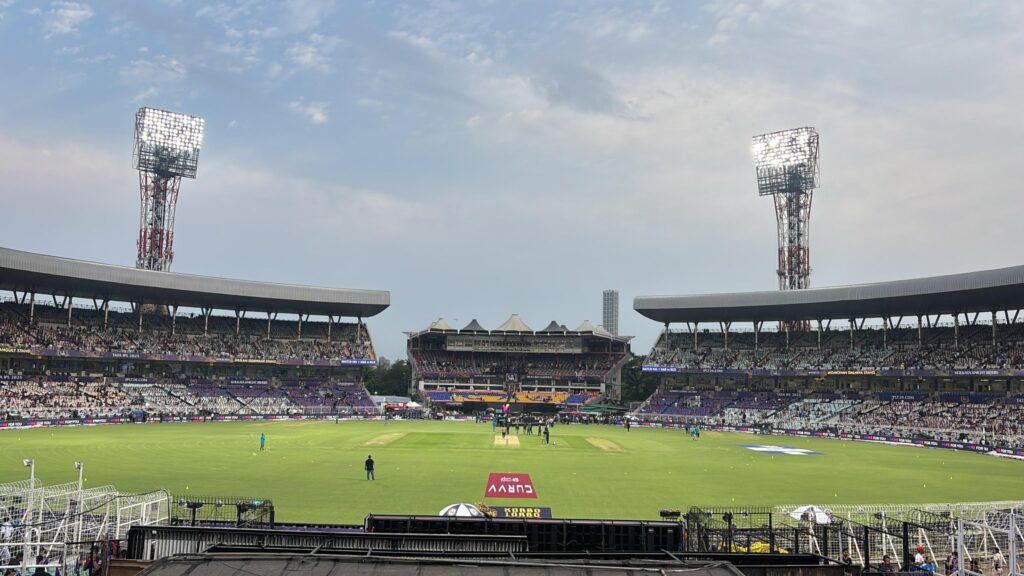
The ICC’s rating system attempts to navigate these competing perspectives by establishing objective criteria for acceptable standards. Yet as the Eden Gardens-MCG comparison illustrates, applying these criteria consistently across different contexts and venues presents ongoing challenges that the governing body continues addressing.
Read More: PSG Dominate Globe Soccer Awards 2025: Seven Trophies Crown Historic Season
FAQs
What rating did the ICC give to the Eden Gardens pitch?
The ICC rated the Eden Gardens pitch ‘satisfactory’, which is the second level in their four-tier system. This means the venue receives no demerit points and avoids any sanctions.
Why was there controversy about the pitch?
The Test ended in three days with 40 wickets falling and only one half-century scored. The pitch showed uneven bounce from the first over and excessive turn, leading to criticism about whether it offered a fair contest.
How does this compare to the MCG pitch rating?
The MCG received an ‘unsatisfactory’ rating and one demerit point after their Boxing Day Test ended in two days. This has raised questions about consistency, as both pitches produced similar bowling-dominated results.
What happens if a venue gets demerit points?
Accumulating six demerit points within five years results in a 12-month suspension from hosting international cricket. Reaching 12 points triggers a 24-month ban.
What did Gautam Gambhir say about the pitch?
Gambhir defended the pitch saying “This was exactly the pitch we were looking for,” though reports suggest he made this statement to protect the curator rather than reflecting India’s actual preparation plans.