

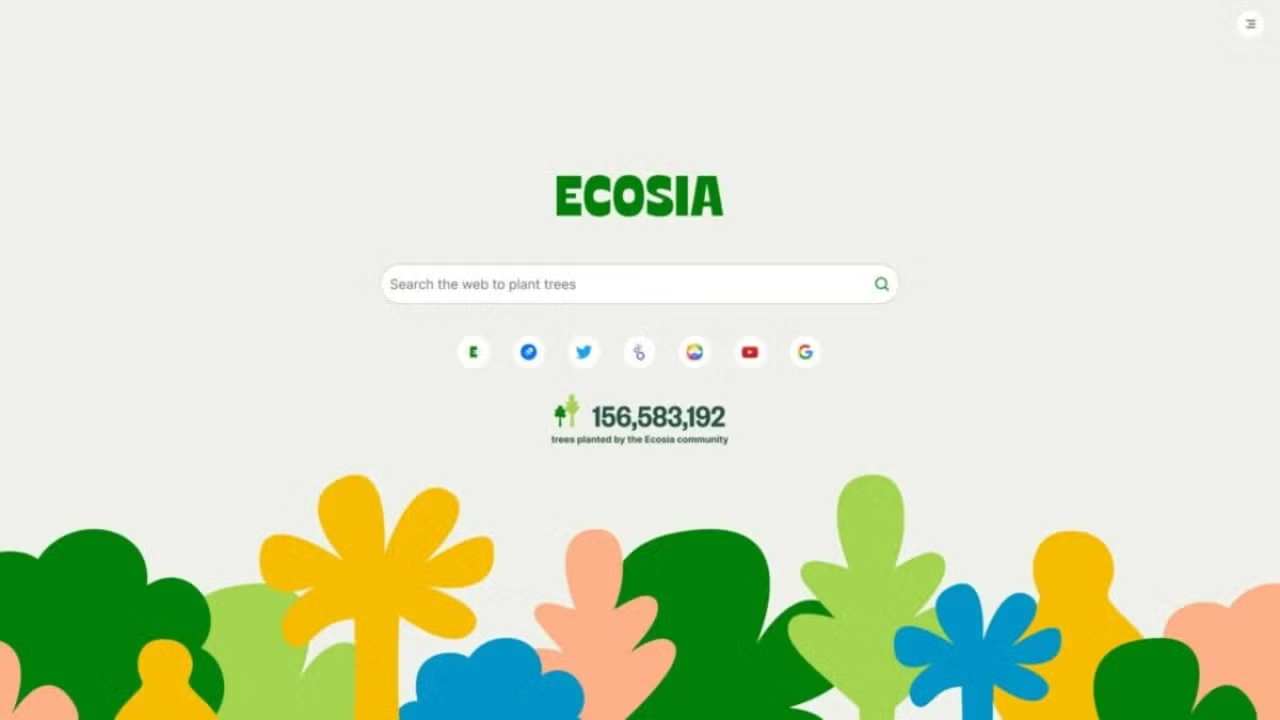
Ecosia announced its Linux-focused web browser on August 20, 2026, in a direct challenge to Big Tech’s hold on desktop browsing. Installation demands just 500 MB of disk storage, and the browser is available completely free of charge — a low barrier for users tired of data-hungry defaults.
The announcement landed quietly, but the implications are loud. For years, Linux users have watched Chrome, Edge, and proprietary engines dominate their desktops. Ecosia’s entry offers something different: a browser whose ad revenue funds tree-planting projects worldwide.
Key Details: Specs, Beta, and the Tree-Planting Pitch
The browser is reported to require a minimum of 4 GB of RAM for stable multitasking, according to Ecosia. It is optimized for standard x86_64 processor architectures common in modern Linux hardware. That means most laptops and desktops running Ubuntu, Fedora, or Arch can run it without upgrades.
The public beta launched on September 1, 2026, barely two weeks after the official announcement. CEO Christian Kroll stated that the project aims to redirect ad revenue toward planting trees globally. That model is the core differentiator — every search and every ad view becomes a small environmental contribution. Here’s the thing: the free 500 MB install footprint keeps it light, while the 4 GB RAM floor ensures smooth multitasking for typical workflows.
| Browser | Cost | Data Model | Environmental Angle |
|---|---|---|---|
| Ecosia Linux | Free | Ad-funded | Tree planting |
| Chrome | Free | Ad-funded | None |
| Brave | Free | Ad-funded | None |
| Firefox | Free | Non-profit | None |
Context: The Battle Against Big Tech’s Browser Grip
Big Tech’s browser dominance isn’t just about market share — it’s about data control. Chrome’s tracking, Edge’s integration pressure, and proprietary engines have pushed privacy-conscious users toward alternatives. Ecosia’s Linux browser enters a space where Mozilla Firefox and Brave already compete, but few options tie revenue to environmental causes.
The timing matters. Linux gaming and desktop adoption have grown steadily, with platforms like the Epic Games Store Linux support expanding the ecosystem. Hardware makers are paying attention too — our review of the System76 Thelio Mira found the Linux desktop experience more polished than ever. Ecosia isn’t trying to out-engineer Chrome overnight. It’s betting that a values-driven browser can carve a loyal niche. That’s a realistic ambition, but the downside is clear: without Chrome-scale engineering resources, performance and extension compatibility may lag.
What’s Next: The Road Ahead
The beta period will reveal whether Ecosia can handle the pressure. Early adopters on lightweight setups — including Raspberry Pi: Optimizing Linux users — will test its limits.
Security will also be scrutinized, especially as Linux VPS Security Evolves alongside AI-driven threats. If the beta holds, expect a stable release later this year. Ecosia’s tree-planting revenue model could attract advertisers who value sustainability over reach. The real test is whether users actually switch their default browser — and whether Ecosia’s servers can handle the load.
Ecosia’s Linux browser is a small project with a big idea: prove that browsing can be free, private, and environmentally positive without Big Tech‘s machinery. It won’t dethrone Chrome, but it doesn’t need to.
For Linux users who want their clicks to plant trees, this is the first credible option in years.
What features does the Ecosia Linux browser offer?
The Ecosia Linux browser reportedly includes a tree-planting ad model, a user-friendly interface, and a minimum requirement of 4 GB RAM for optimal performance. It aims to provide a sustainable browsing experience while challenging traditional Big Tech browsers.
How does the tree-planting model work in the Ecosia Linux browser?
The tree-planting model in the Ecosia Linux browser generates funds through ads. For every search made, revenue is directed towards planting trees, allowing users to contribute to environmental sustainability simply by browsing the web.
Related Articles
- AI Found a Root Bug in Linux That Everyone Missed for 15 Years
- NVIDIA GeForce NOW Expands: Linux & Fire TV Apps Coming in 2026
- Meta Safety Claims Ruled Deceptive: Landmark Jury Verdict Shakes Big Tech
Was this article helpful?
Your feedback directly improves future articles on this site.


