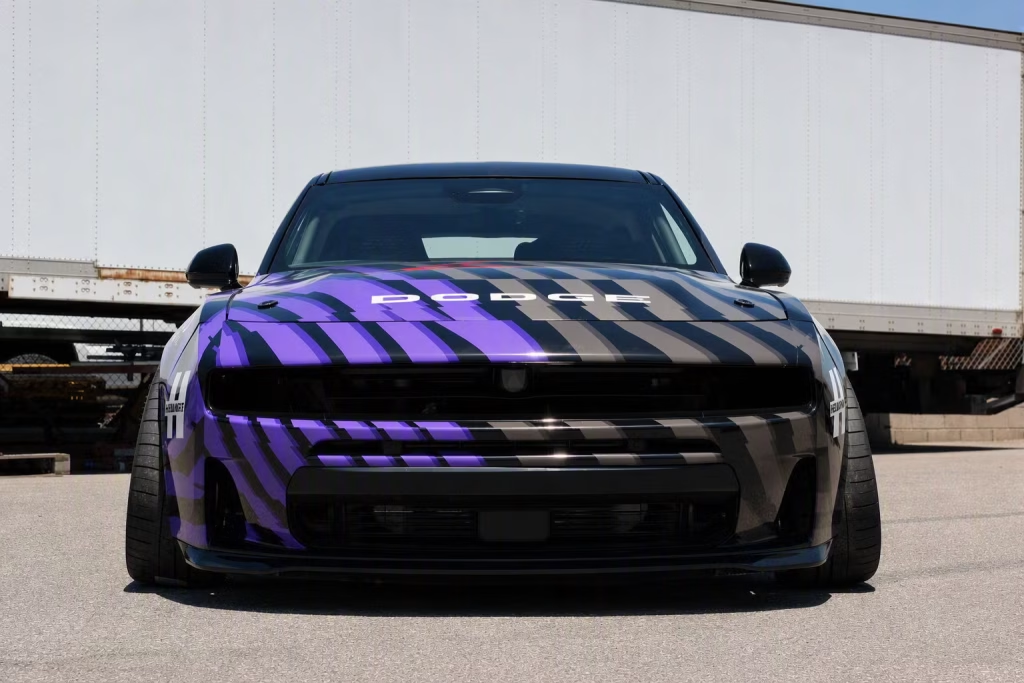
Drift-spec Dodge Chargers built around 750 horsepower and a manual transmission solve a very specific problem: they make “hard use” feel like it’s still supposed to involve driver skill, not just software and torque. That matters because the drift scene—and the wider enthusiast world—has been drifting toward automatics and electronics, even when drivers want control, feedback, and clutch-work drama.
1) The problem: modern drift builds trade engagement for convenience
If you’re trying to learn or refine car control, an all-automatic approach can blur the connection between inputs and outcomes. In drift, tiny timing mistakes at the throttle and clutch directly affect balance, wheel speed match, and the next line correction. When power arrives via fewer driver actions, the learning curve changes—and the car becomes more “a device” than “a partner.”
Worth noting: the standout thing about these Chargers is that they keep the mechanical conversation going. As first reported by Car and Driver, the drift-spec cars are set up to deliver 750 horsepower and come with manual transmissions—a combo that immediately raises the engagement level for anyone who wants to feel the drivetrain rather than just manage settings.
2) Root cause: drifting needs repeatable driver control, not just power
Here’s the thing: power alone doesn’t guarantee consistent initiation, mid-corner angle, or exit stability. Drift is a choreography of throttle modulation, gear selection, and weight transfer—especially when the car transitions from loading the front to carrying angle with the rear. When drivetrains are overly automated, drivers can end up relying on traction management instead of mastering technique.
These drift-spec Dodge Chargers are built around the opposite philosophy. They’re not just “fast”; they’re designed to keep the driver’s hands central to the process, which is why manual matters as much as 750 hp.
3) Candidate solutions (with trade-offs) if you want drift feel and control
Different paths exist to get drift-capable behavior, but each has a cost. The comparison below frames what enthusiasts typically choose when they want control, responsiveness, and repeatability.
| Option | What it gives you | Trade-off |
|---|---|---|
| Manual high-power build (these Charger drift cars) | Direct clutch/gear control, stronger driver involvement | Requires skill to manage power in long sessions |
| Auto with advanced traction | Easier launches and lower skill barrier | Can mask drivetrain feedback and timing errors |
| Manual “tuned-down” power | Easier learning and less stress on components | May limit how far you can scale performance quickly |
Dodge Charger Drift Cars: That’s the diagnostic reality: you can chase ease, chase raw power, or chase control. The manual route is the one that most directly tackles the “engagement gap,” but it demands commitment. Stay tuned for more on these drift.
4) The ranked list: what makes these drift-spec Dodge Chargers stand out
Below are the reasons these 750 hp, manual drift-spec Dodge Chargers are grabbing attention—and why they matter beyond headlines.
- 750 horsepower for real drift authority
Drift initiation and sustained angle both benefit from strong power reserves. According to Car and Driver, these cars are rated at 750 hp, giving enough punch for consistent throttle-based angle maintenance.
- Manual transmission keeps driver inputs meaningful
A manual doesn’t just change how you shift—it changes how you manage momentum, engine braking, and wheel speed during transitions. With a manual gearbox, drivers can tune the car with clutch work rather than relying purely on electronics.
- Driver-skill learning curve stays intact
If your goal is progressing from “holding angle” to “controlling line,” learning depends on feedback. Manual setups make errors clearer because the drivetrain reacts immediately to timing and technique.
- Thesis-aligned with mechanical sympathy
Drift culture has always respected mechanical involvement: clutch, gear, and throttle are part of the language. A manual, high-output Charger keeps that language audible rather than muted.
- Better sense of traction boundaries (for those who want it)
When torque arrives through a driver-controlled gearbox, you can read the car’s grip without the system smoothing everything out. That can help drivers learn where traction actually breaks.
- More consistent “feel” across sessions
Electronics can behave differently depending on settings and conditions. A manual build can still vary, but it often feels more stable to the driver because the core drivetrain response starts with mechanical command.
- A Charger platform that can wear a drift skin
Car culture audiences often associate drift builds with specialist chassis. The Charger brings mainstream muscle identity into a motorsport-like direction—making the story more relatable for enthusiasts.
- Manual plus power reduces the “set it and forget it” temptation
Worth noting: when a car demands clutch discipline, drivers can’t coast on convenience. That pressure can be a feature—if you want to improve technique, not just lap.
- It challenges the “automatic is always easier” assumption
The drift world has many valid uses for automatics, especially at events with high throughput. But if your priority is control and feedback, a manual changes the whole ownership experience.
- It makes content and coaching more about technique
Manual drift cars are easier to teach in terms of inputs: throttle timing, gear selection, and clutch transitions. That makes the car better suited for skill-building communities.
- The combination is rarer than it looks on social feeds
High-horsepower drift cars exist, but pairing that output with a manual transmission is much less common—so it stands out as a deliberate choice, not an accident of spec.
- Parts and maintenance logic stays traditional
Enthusiasts often prefer setups they understand mechanically. A manual drivetrain can be simpler to interpret during tuning and diagnostics compared with highly complex auto strategies.
Conclusion: if you want maximum engagement, choose manual—especially at 750 hp
Here’s the recommendation: if your real goal is drift practice that teaches input discipline, choose a manual, high-power build like these 750 hp Charger drift cars. If you prioritize low-effort fun or entry-level consistency, automatics can be more forgiving—but they’ll never replace the direct cause-and-effect that a manual delivers when you’re learning car control.
FAQs
Are these Dodge Chargers production cars or dedicated drift machines?
They’re presented as drift-spec vehicles tied to a Charger platform concept, not standard showroom builds. The key point for buyers and builders is the intent: 750 horsepower and a manual transmission are configured for driver involvement rather than everyday commuting.
Why does a manual transmission matter in a drift-spec Dodge Charger?
In drift, gear selection and clutch timing influence drivetrain response, engine braking, and how quickly the car transitions between loading states. A manual keeps those variables under the driver’s control, which helps technique-based improvement.
What does “750 horsepower” mean for drift performance?
It’s enough power to support sustained throttle use and repeated initiation attempts without running out of reserve too quickly. In drift, that matters because the driver needs consistent torque availability while balancing angle, wheel speed, and grip changes.
Is a manual drift setup harder than an automatic?
Yes. Manual cars typically demand more skill to manage launches, transitions, and power delivery in long sessions. The upside is sharper feedback and a more direct link between your inputs and the car’s behavior.
Related Articles
- Why Your Laptop Charger Is A Brick
- Real Madrid vs Inter: UCL Clash
- Real Madrid Inter Clash Kicks Off Champions League Campaign
Was this article helpful?
Your feedback directly improves future articles on this site.