Cricket fixturesFootball fixtures
  • LIVEIndia tour of New Zealand 2026/27NZ180/5IND56/2 (8.3/20 ov, target 181)India require another 125 runs with 8 wickets and 11.3 overs remainingFixtures
  • LIVEIreland tour of Namibia 2026/27NAM156/2 (32/50 ov)IREIreland won the toss and elected to fieldFixtures
  • UPCOMINGEnglish Premier LeagueAVLMNCTableFixtures
  • UPCOMINGSpanish LALIGARAYELCTableFixtures
  • UPCOMINGICC Men's T20 World Cup Sub Regional Africa Qualifier Group CGMBZMBFixtures
  • UPCOMINGICC Men's T20 World Cup Sub Regional Africa Qualifier Group CNGALESFixtures
  • UPCOMINGItalian Serie ACAGBOLTableFixtures
  • UPCOMINGItalian Serie ACOMOSASTableFixtures
  • UPCOMINGGerman BundesligaFCAFCUTableFixtures
  • UPCOMINGGerman BundesligaKOES04TableFixtures
  • RESULTICC Men's T20 World Cup Sub Regional Africa Qualifier Group CMOZ19UGA23/0 (0.5/20 ov, target 20)Uganda won by 10 wickets (with 115 balls remaining)Fixtures
  • RESULTEnglish Premier LeagueIpswich1Nottm Forest1FTTableFixtures
  • RESULTSpanish LALIGAAlavés1Málaga1FTTableFixtures
  • RESULTItalian Serie ATorino3Monza2FTTableFixtures
  • LIVEIndia tour of New Zealand 2026/27NZ180/5IND56/2 (8.3/20 ov, target 181)India require another 125 runs with 8 wickets and 11.3 overs remainingFixtures
  • LIVEIreland tour of Namibia 2026/27NAM156/2 (32/50 ov)IREIreland won the toss and elected to fieldFixtures
  • LIVEAustralian Domestic One-Day CompetitionWANSW371/8 (50 ov)New South Wales won the toss and elected to batFixtures
  • LIVECWC Challenge League Group ADENKUWStarts at 09:45 local timeFixtures
  • LIVECWC Challenge League Group AKENYAQATStarts at 09:45 local timeFixtures
  • LIVECSA Women Pro50 Series 2026/27SWD-WEPR-WStarts at 10:00 local timeFixtures
  • LIVECSA Women Pro50 Series 2026/27TTN-WWPR-WStarts at 10:00 local timeFixtures
  • LIVEIndia A tour of New Zealand 2026/27NZ-A135/3 (41 ov)IND-A113New Zealand A lead by 22 runs with 7 wickets remaining in the 1st inningsFixtures
  • LIVENational Cricket LeagueDHARAJStarts at 09:30 local timeFixtures
  • LIVENational Cricket LeagueMYMSCHATTStarts at 09:30 local timeFixtures
  • LIVENational Cricket LeagueRANBARStarts at 09:30 local timeFixtures
  • LIVENational Cricket LeagueSYLKHUStarts at 09:30 local timeFixtures
  • UPCOMINGICC Men's T20 World Cup Sub Regional Africa Qualifier Group CGMBZMBFixtures
  • UPCOMINGICC Men's T20 World Cup Sub Regional Africa Qualifier Group CNGALESFixtures
  • UPCOMINGArgentina Women tour of Mexico 2026/27MEX-WARG-WFixtures
  • UPCOMINGArgentina Women tour of Mexico 2026/27MEX-WARG-WFixtures
  • UPCOMINGICC Men's Cricket World Cup League 2UAENEDFixtures
  • UPCOMINGPakistan ODI Tri-SeriesPAKENGFixtures
  • UPCOMINGZimbabwe Women tour of India 2026/27IND-WZIM-WFixtures
  • UPCOMINGICC Men's T20 World Cup Sub Regional Africa Qualifier Group CGMBLESFixtures
  • RESULTICC Men's T20 World Cup Sub Regional Africa Qualifier Group CMOZ19UGA23/0 (0.5/20 ov, target 20)Uganda won by 10 wickets (with 115 balls remaining)Fixtures
  • RESULTICC Men's T20 World Cup Sub Regional Africa Qualifier Group CGMB27UGA28/0 (1.4/20 ov, target 28)Uganda won by 10 wickets (with 110 balls remaining)Fixtures
  • RESULTUnited Arab Emirates Tri-Nation SeriesAFG170/3 (34.3/50 ov, target 170)ZIM169Afghanistan won by 7 wickets (with 93 balls remaining)Fixtures
  • RESULTICC Men's T20 World Cup Sub Regional Africa Qualifier Group CNGA94/3 (8.3/20 ov, target 94)MOZ93Nigeria won by 7 wickets (with 69 balls remaining)Fixtures
  • RESULTICC Men's T20 World Cup Sub Regional Africa Qualifier Group CLES58ZMB61/3 (7.4/20 ov, target 59)Zambia won by 7 wickets (with 74 balls remaining)Fixtures
  • RESULTZimbabwe Women tour of India 2026/27IND-W200/1 (27.1/50 ov, target 198)ZIM-W197IND Women won by 9 wickets (with 137 balls remaining)Fixtures
  • LIVEChinese Super LeagueCHE0DYI029'TableFixtures
  • LIVEChinese Super LeagueCHO1QIN030'TableFixtures
  • LIVEChinese Super LeagueHEN1BEI030'TableFixtures
  • LIVEChinese Super LeagueLIA1ZHE029'TableFixtures
  • LIVEChinese Super LeagueQWC1YUN030'TableFixtures
  • LIVEChinese Super LeagueSHX0Shanghai Shenh031'TableFixtures
  • LIVEChinese Super LeagueTIG0SHP029'TableFixtures
  • LIVEChinese Super LeagueWTT1SHT331'TableFixtures
  • UPCOMINGEnglish Premier LeagueAVLMNCTableFixtures
  • UPCOMINGSpanish LALIGARAYELCTableFixtures
  • UPCOMINGItalian Serie ACAGBOLTableFixtures
  • UPCOMINGItalian Serie ACOMOSASTableFixtures
  • UPCOMINGGerman BundesligaFCAFCUTableFixtures
  • UPCOMINGGerman BundesligaKOES04TableFixtures
  • UPCOMINGGerman BundesligaM05SVWTableFixtures
  • UPCOMINGGerman BundesligaRBLELVTableFixtures
  • RESULTEnglish Premier LeagueIpswich1Nottm Forest1FTTableFixtures
  • RESULTSpanish LALIGAAlavés1Málaga1FTTableFixtures
  • RESULTItalian Serie ATorino3Monza2FTTableFixtures
  • RESULTFrench Ligue 1Brest1Nice2FTTableFixtures
  • RESULTGerman BundesligaStuttgart2Gladbach3FTTableFixtures
  • RESULTSaudi Pro LeagueAl Ahli4Al Khaleej1FTTableFixtures
Docker Scalability Standards: A Performance Reality Check for 2026

Docker Scalability Standards: A Performance Reality Check for 2026

Docker Scalability Standards: Picture a platform engineer in Bengaluru at 2 AM, watching a Grafana dashboard spike as 50,000 concurrent users hit a fintech app during a Diwali flash sale.…

September 1, 2026
3 min read

Docker Scalability Standards: Picture a platform engineer in Bengaluru at 2 AM, watching a Grafana dashboard spike as 50,000 concurrent users hit a fintech app during a Diwali flash sale.

Kubernetes pods auto-scale horizontally, but the Docker Scalability engine underneath begins to lag — cold-start times stretch, image pulls bottleneck, and network throughput plateaus. This is the exact scenario where Docker’s scalability ceiling becomes impossible to ignore.

Docker Scalability Standards: What the Benchmarks Actually Show

Docker remains the default container runtime for most development teams, but production-grade scalability benchmarks paint a more complicated picture. According to analyses often cited by CNCF working groups, Docker’s monolithic daemon architecture introduces overhead that becomes measurable once a cluster exceeds several thousand nodes. Cold-start latency is the most visible pain point. When a new container instance spins up, Docker’s daemon must coordinate image layer resolution, volume mounts, and network namespace creation through a single Unix socket.
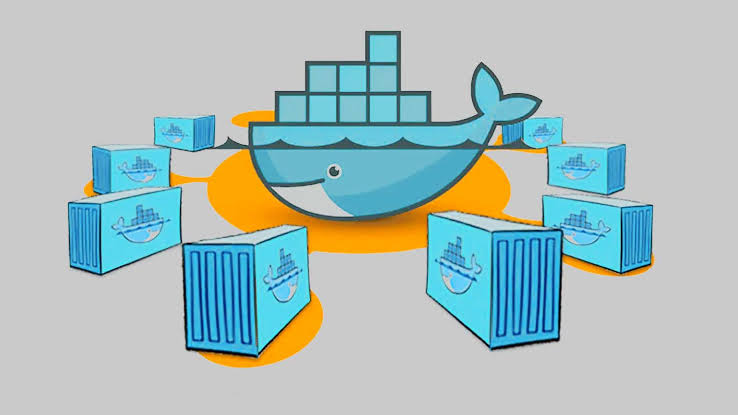
Docker Scalability Standards: A Performance Reality Check for 2026

Competing runtimes like containerd and CRI-O bypass this layer entirely, communicating directly with the kubelet. The practical difference: cold-start times that are often cited as 15–30% faster on containerd-heavy stacks. > “Docker is brilliant for laptops and CI pipelines, but once you cross the 10,000-pod threshold, the daemon becomes the bottleneck, not the workload itself,” notes a senior SRE at a Mumbai-based payments platform. Here’s the thing: image pull efficiency also diverges sharply. Docker’s registry client handles authentication and layer deduplication through the daemon, while Podman and containerd leverage parallel pulls and lazy fetching. In benchmarks widely referenced across the Kubernetes community, parallel image pulls complete in roughly half the time of Docker’s sequential approach.

Headline verdict: Docker wins on developer ergonomics; containerd wins on production scalability. The gap widens with cluster size.

The Context Behind the Numbers

Docker’s design predates the Kubernetes era. Released in 2013, it was built for developer ergonomics — single-command container launches, intuitive CLI, and a unified daemon. That simplicity became its strength during the early microservices boom. By 2020, Docker had reportedly crossed 50 billion image pulls on Docker Hub, cementing its place as the default container format. But Kubernetes adoption changed the calculus.

The Container Runtime Interface (CRI) specification allowed any compliant runtime to replace Docker, and the ecosystem shifted. Kubernetes 1.24 deprecated Docker as a default runtime in 2022, steering users toward containerd and CRI-O. Docker’s response — investing heavily in Docker Desktop subscriptions and developer tooling — kept the brand alive but shifted its centre of gravity away from production infrastructure. Worth noting: this isn’t a failure story. Docker still handles the bulk of local development workflows. The scalability gap appears specifically in high-density, multi-tenant environments — e-commerce sale events, streaming platforms during live broadcasts, and large-scale ML inference pipelines. For teams already running memory-constrained setups, the new Android RAM mandates for 2027 show that similar pressure is hitting mobile runtimes too.

What Comes Next

The container runtime landscape is fragmenting along workload lines. WebAssembly-based runtimes like Wasmtime and Spin are emerging for edge and function-as-a-service scenarios, offering near-instant cold starts. eBPF-powered networking is reducing kernel-level overhead in clusters running Cilium.

And Docker Scalability itself is reportedly investing in rootless mode and BuildKit improvements to close the gap. For teams evaluating Docker in 2026, the recommendation is workload-specific. Use Docker Desktop for development. Use containerd or CRI-O for production Kubernetes. And for the next budget cycle, allocate engineering hours to benchmark your own stack — because the scalability ceiling depends entirely on what you’re running, and at what scale. Pick the runtime that matches the workload, not the one your laptop defaults to.


Was this article helpful?

Your feedback directly improves future articles on this site.

Follow us on Google News Get real-time updates & exclusive tech coverage
Follow

Leave a Reply

Your email address will not be published. Required fields are marked *