NZ
NZ IND
IND NAM
NAM IRE
IRE MOZ
MOZ UGA
UGA Aston Villa
 Man City
 Rayo
Rayo Elche
Elche GMB
GMB ZMB
ZMB NGA
NGA LES
LES Cagliari
 Bologna
 IPS1
IPS1 NFO1
NFO1 ALA1
ALA1 MCF1
MCF1 TOR3
TOR3 MON2
MON2 BRE1
BRE1 NICE2
NICE2 TAS67/4 (15.4/50 ov, target 305)
 VIC304/7
 NZ-A133/1 (39.2 ov)
 IND-A113
 DHA
DHA RAJ
RAJ MYMS
MYMS CHATT
CHATT RAN
RAN BAR
BAR SYL
SYL KHU
KHU UAE
UAE NED
NED PAK
PAK ENG
ENG IND-W
IND-W ZIM-W
ZIM-W AFG170/3 (34.3/50 ov, target 170)
 ZIM169
 DOLPH56/0 (3.5/8 ov, target 56)
 SWD51/4 (8/8 ov)
 WSW1
WSW1 BRI1
BRI1 Como
Como Sassuolo
 Augsburg
 Union Berlin
 Cologne
 Schalke
 Mainz
Mainz Bremen
 RB Leipzig
 Elversberg
 VFB2
VFB2 BMG3
BMG3 AHL4
AHL4 KHA1
KHA1
Blizzard Entertainment just rewrote the playbook for franchise-wide content launches. During the Diablo 30th Anniversary Spotlight broadcast, the legendary ARPG developer revealed the Warlock—a demon-summoning, Hell-wielding dark caster—simultaneously arriving across Diablo IV, Diablo II: Resurrected, and Diablo Immortal.
This marks gaming’s first cross-generational class deployment spanning 25 years of franchise evolution, from the isometric dungeon-crawler roots to modern live-service RPG ecosystems. More remarkably, Diablo II: Resurrected’s Reign of the Warlock expansion launched immediately following the announcement—delivering the game’s first entirely new class since 2001’s Lord of Destruction expansion.
The First New Diablo II Class in 25 Years
Twenty-five years. That’s how long Diablo II fans waited for an eighth playable class. The Reign of the Warlock expansion transforms Diablo II: Resurrected from faithful remaster to actively evolving game, shattering assumptions that classic titles remain permanently frozen in amber. The Warlock introduces demon summoning mechanics centered on three core demon types—Goatmen, Tainted, and Defilers—each with distinct abilities and strategic applications.
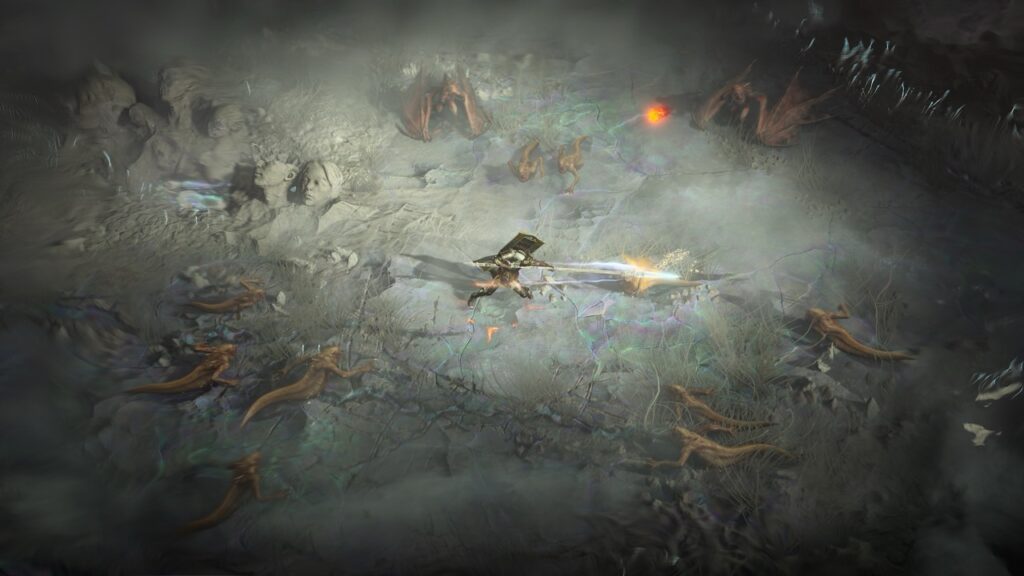
Matthew Cederquist, Lead Game Producer, positioned the Warlock as someone who “doesn’t ask permission to help” and is “willing to do what others won’t, even if it means staining his own soul.” This moral ambiguity fits Diablo II’s thematic DNA perfectly—heroes operating in ethical gray zones where survival demands compromise with corrupting forces.
| Diablo 30th Anniversary Overview | Details |
|---|---|
| Announcement Date | February 2026 |
| New Class | Warlock (across all 3 games) |
| D2: Resurrected Launch | Live immediately (surprise drop) |
| D4: Lord of Hatred Release | April 29, 2026 |
| Diablo Immortal Warlock | Summer 2026 |
| New D2R Endgame Boss | Colossal Ancients |
| BlizzCon 2026 | September 2026 |
Beyond the Warlock, Reign of the Warlock introduces Terrorized Acts—player-selected difficulty modifiers cranking specific Acts to maximum challenge levels with proportionally increased rewards. Conquering Terrorized Act bosses on Hell difficulty drops mystical statue fragments. Collect all five, and you unlock the Colossal Ancients boss encounter designed specifically to test optimized endgame builds—the type of content historically absent from Diablo II’s original design.
Quality-of-life upgrades include loot filters (finally!), advanced stash organization tabs, and a Chronicle system tracking achievement completion across characters. These features mirror modern ARPG standards set by Path of Exile and Grim Dawn, acknowledging that 2026 players expect inventory management sophistication beyond what 2000-era design provided.
Three Warlocks, Three Eras, One Fantasy
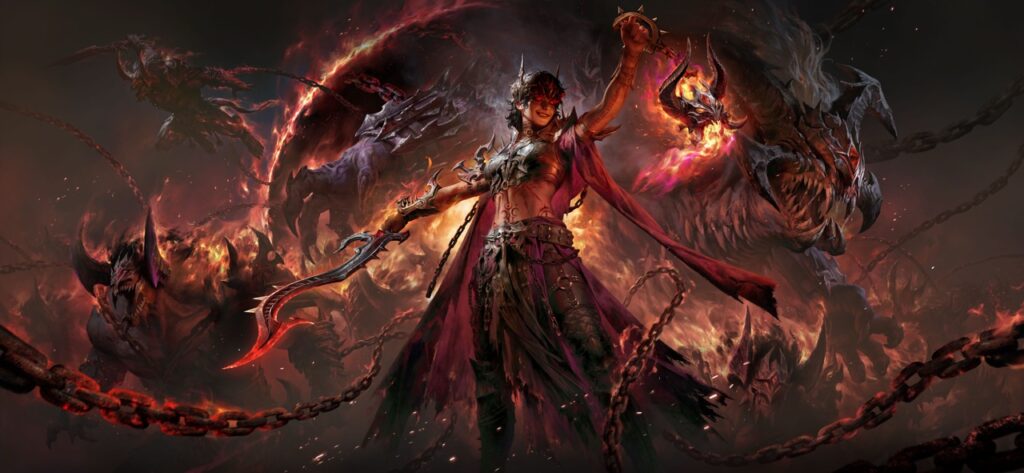
The genius of Blizzard’s approach lies in differentiation. Rather than copy-pasting a single Warlock design across games, each incarnation reflects its host game’s identity and era within Sanctuary’s timeline. Diablo II: Resurrected’s Warlock is a scholarly manipulator, Diablo Immortal’s version channels punk-rock demon commander aesthetics, while Diablo IV presents a metal powerhouse defined by chains, flames, and destructive Hell-turning-on-itself imagery.
This narrative cohesion matters more than superficial mechanics. The Warlock represents forbidden Vizjerei magic—ancient sorcery deemed too dangerous for conventional study, echoing lore established in Diablo II’s original storyline about the corrupting nature of demonic knowledge. By threading this archetype through multiple timeline periods, Blizzard demonstrates how power sources evolve, twist, and corrupt across generations.
Diablo Immortal’s Warlock arrives summer 2026 alongside the return of ruined Lut Gholein, split between the blood-spattered Common Ward and hauntingly preserved High Ward. The city reflects 20 years of demonic occupation following events players experienced in Diablo II, creating narrative bridges between games rather than treating each as isolated experience.
Lord of Hatred: Diablo IV’s Massive Expansion
The April 29 launch of Diablo IV’s Lord of Hatred expansion introduces not just the Warlock but also the Paladin—positioning divine light against infernal corruption in the fight against Mephisto, the Lord of Hatred himself. This dual-class release marks Diablo IV’s boldest content drop yet, expanding beyond seasonal updates into full narrative-driven expansion territory.
The expansion introduces Skovos, an ancient Mediterranean-inspired region where humanity first emerged in Sanctuary’s mythology. Developer updates scheduled for March 6 will detail the Warlock’s resource systems and signature abilities, but early reveals emphasize “heavy-metal might” through mechanics involving metal chains binding demons and flames weaponizing Hell’s own power against itself.
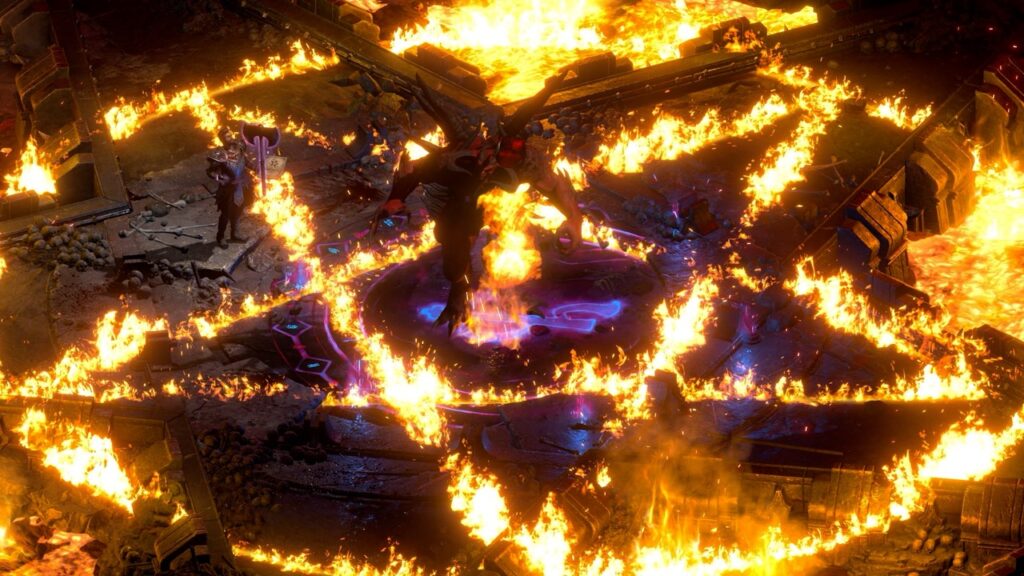
New endgame systems include War Plans—customizable activity rotations letting players construct personalized progression loops targeting specific gear objectives. Want to chain Helltides into Nightmare Dungeons into Boss runs? War Plans makes that systematic rather than randomized. Echoing Hatred encounters escalate difficulty through increasingly brutal enemy waves, stress-testing builds until breaking points emerge.
The Horadric Cube returns as itemization cornerstone, enabling affix transmutation and rarity upgrades—mechanics Diablo II veterans remember fondly and newer players will discover for the first time. This callback to franchise heritage while introducing modern systems exemplifies Blizzard’s balancing act: respect legacy while evolving mechanics.
The Broader Skill Tree Overhaul
Perhaps most transformative, Blizzard announced comprehensive Skill Tree redesigns across all Diablo IV classes—available regardless of expansion ownership. Over 80 new skill variants fundamentally reconfigure abilities, shifting buildcrafting toward sandbox experimentation rather than fixed meta strategies. This accessibility matters: players who don’t purchase Lord of Hatred still receive substantial gameplay evolution through free updates, maintaining community cohesion rather than fragmenting player bases by expansion ownership.
The strategic calculation is obvious—keep everyone engaged, then convert free players through compelling expansion content rather than gating core mechanical improvements behind paywalls. It’s the live-service RPG model Destiny 2 pioneered and games like Warframe perfected: generous free content maintains population health, which sustains matchmaking, which makes premium content more valuable.
Steam Launch and Platform Expansion
Buried in announcements: Diablo II: Resurrected simultaneously launched on Steam, expanding beyond Battle.net’s walled garden for the first time. This platform agnosticism signals Blizzard recognizing that modern PC gaming audiences expect multi-storefront availability. Steam’s massive user base and robust community features—Workshop support, achievement integration, friend systems—provide infrastructure Battle.net alone couldn’t match.
For Indian gamers particularly, Steam’s regional pricing and established payment ecosystems matter significantly. Battle.net’s payment options historically limited accessibility in markets preferring localized payment methods; Steam integration removes friction points deterring potential players.
What This Means for Franchise Longevity
Diablo turns 30 this year, but Blizzard’s strategy suggests they’re planning for 40. Simultaneous cross-franchise content deployment creates unified marketing moments while respecting each game’s distinct identity. The Warlock becomes shorthand for “Diablo is everywhere, pick your era,” converting nostalgia into active engagement rather than passive remembrance.
Compare this to competitor approaches. Path of Exile 2 launches as separate game rather than integrating with PoE 1. Last Epoch remains isolated experience without franchise expansion. Blizzard chose cohesive ecosystem development—controversial given Diablo Immortal’s monetization criticism and Diablo IV’s rocky launch year, but strategically sound if execution delivers.
The real test arrives BlizzCon 2026 in September. Will Blizzard announce additional Warlock content? Seasonal integration specifics? More classes following this cross-franchise model? The 30th anniversary kickoff suggests this year represents pivotal reinvestment in Diablo’s ARPG dominance, not just celebratory nostalgia touring.
For millions who descended into Tristram’s dungeons in 1996, who battled across Sanctuary in 2000, who faced Malthael in 2014, and who now grind Helltides in 2026—the Warlock represents continuity. Hell’s power turns against itself, wielded by those willing to pay corruption’s price. That’s been Diablo’s thesis since inception: in desperate times, heroes emerge from darkness, not despite it but because of it. Thirty years later, that darkness still compels.