SA329 (82.3 ov)
 AUS
 AFG177
 ZIM132/9 (18.3/20 ov, target 178)
 SAS1
 LAZ3
 ROMA
 CAG
 TOR
 COMO
 BAN
 WI
 IND-W
 ZIM-W
 GOA
 SC Delhi
 Milan
 Bologna
 Parma
 Udinese
 Venezia
 Inter Milan
 ABH0
 ALF1
 PAK110
 SL114/2 (18.1/50 ov, target 111)
 NAM316/7
 IRE253 (44.5/50 ov, target 317)
 NZ198/3
 IND199/4 (13.2 ov)
 SIKM184
 NAGA187 & 46/4 (34 ov)
 JHK131/4 (47 ov)
 DELHI515/5d
 ODSA194
 SVCS13/0 (5 ov)
 BRODA616
 J & K6/0 (4 ov)
 CHD685/5d
 HP49/0 (14 ov)
 CGR216/8 (95 ov)
 AP231
 HYD193/2 (54 ov)
 PNJB431
 KNTKA297/7 (95 ov)
 TPURA194
 KER101/6 (35 ov)
 BENG350
 MAHA278/9 (100 ov)
 GUJ223
 UAE
 OMA
 AUCK
 CANT
 CD
 ND
 DEN
 QAT
 KENYA
 KUW
 POA
 SPR
 NED371/5
 JAB113 (19.3/20 ov, target 133)
 KAY132/9
 PNG155
 HSV0
 SGE0
 RWE1
 RBL0
 SGS1
 FCA2
 BOC0
 M050
 CUA0
 GIR1
 EXC0
 ADO0
 Genoa
 Juventus
 Monza
 Napoli
 Sevilla2
 Osasuna0
 PSG2
 Lyon0
 Mohun Bagan1
 Chennaiyin0
 SAA2
 EST0
 BEI2
 JHM2
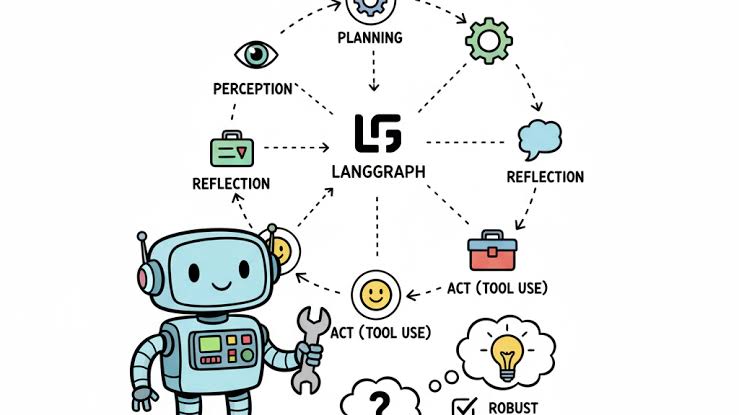
Researchers reportedly published DeReAct on arXiv on October 1, 2026. The framework reportedly splits AI agent planning from execution into three distinct roles, reportedly cutting task-completion errors by up to seven percentage points.
The architecture reportedly targets a specific weakness in ReAct-style systems: a single language model may plan, authorize actions, interact with tools, and decide whether a task is finished. The authors reportedly argue that combining these functions allows faulty actions and unsupported completion claims to pass through the same control path. Details regarding hardware requirements and repository access remain unconfirmed.
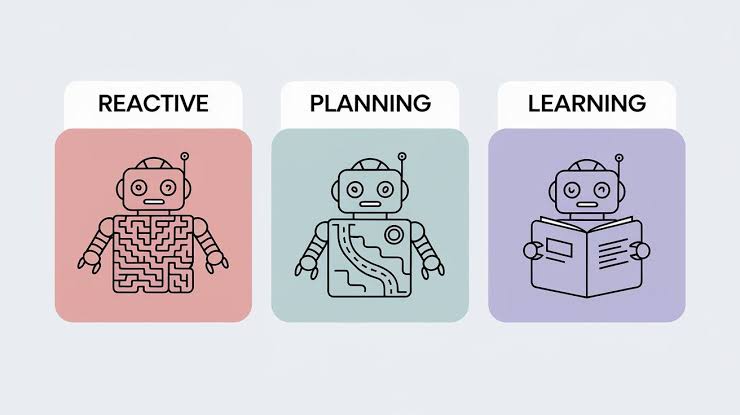
Key Details Behind DeReAct
The framework reportedly divides agent control into three roles. A Brain reportedly proposes the next step, a Critic reportedly checks whether that action is allowed, and a Context Manager reportedly rebuilds the current environment state before deciding whether the task has actually been completed. That separation reportedly matters because action approval and completion verification are different problems.
A model can choose a plausible tool call while misunderstanding the environment, or declare success without producing evidence that satisfies the original constraints. DeReAct reportedly places an external gate between the proposal and execution stages, then adds another gate before termination. According to the arXiv preprint, evaluations reportedly utilized gaia and SWE-bench Verified. The abstract reportedly indicates that the largest Pass@1 gains appeared with less capable Brain models, including reported improvements of 6.5–7.0 points for Qwen3-Coder-480B and 4.2–5.2 points for Claude Sonnet 4.5. For Claude Opus 4.5, performance reportedly remained comparable to ReAct while gene. For more detail, see VentureBeat AI.
Why Decomposed Reasoning Changes Agent Reliability
Traditional ReAct agents combine thought and action in one loop. That makes deployment simpler, but it also means a single model policy controls permissions, tool use, state interpretation, and the final answer. DeReAct reportedly introduces explicit checkpoints instead. The Critic can reportedly reject a proposed action before it reaches the environment, while the Context Manager reportedly reconstructs an evidence-based state rather than trusting the Brain’s internal description.
This approach resembles earlier concerns around agent permissions and testing, including our coverage of Lawmakers Introduce Agents. The reported gains are reportedly strongest for weaker Brain models, not the most capable systems. That finding suggests the framework is best viewed as a reliability layer for agents that frequently make targeted errors, rather than as a universal replacement for stronger reasoning models.
Hardware, Licensing, And Deployment Details
Local deployment reportedly requires at least 16 GB of RAM for the underlying language models, based on supplied specifications. Recommended infrastructure includes enterprise GPUs such as the NVIDIA A100, which positions some DeReAct deployments closer to laboratory or business-server setups than ordinary consumer laptops.
The official repository was reportedly released on GitHub under an MIT License. That licence can support commercial and academic experimentation, although deployment teams still need to inspect the model licences, tool permissions, data handling rules, and infrastructure costs separately.
| Area | Reported detail |
|---|---|
| Architecture | Brain, Critic, and Context Manager |
| Main goal | Safer action approval and completion control |
| Evaluation | HotpotQA and AlfWorld |
| Local memory | Minimum 16 GB RAM |
| Licence | MIT License repository |
What Happens Next For AI Agents
The next practical test is whether the extra control layers improve reliability outside curated benchmarks. Teams will need to measure rejected actions, false completion claims, latency, token usage, and the number of tasks that require human intervention.
DeReAct also raises a design question: should every agent use separate gates, or should gating be reserved for high-risk actions such as code changes, financial operations, and access to private systems? The answer will depend on whether the additional checks deliver measurable safety without making agents too slow or expensive for routine work. DeReAct’s strongest promise is not bigger models; it is sepa
FAQs
What is DeReAct?
DeReAct is a reportedly modular architecture for AI agents that separates task planning, action validation, environment-state reconstruction, and completion certification.
How is it different from ReAct?
ReAct commonly uses one language-model policy to propose actions, interact with an environment, and determine when a task ends. DeReAct reportedly adds a Critic and Context Manager to control those stages independently.
Which benchmarks were used?
The paper’s abstract reportedly identifies gaia and SWE-bench Verified, while the supplied evaluation details also reference HotpotQA and AlfWorld.
Can DeReAct run locally?
Local deployment reportedly requires a minimum of 16 GB RAM for the underlying language models, with enterprise GPUs such as the NVIDIA A100 recommended for heavier workloads.
Is the code commercially usable?
The official repository is reportedly listed under an MIT License, but teams should review separate licences for the models, datasets, and connected tools. Source: Arxiv
Was this article helpful?
Your feedback directly improves future articles on this site.