NZ
NZ IND
IND NAM
NAM IRE
IRE MOZ
MOZ UGA
UGA Aston Villa
 Man City
 Rayo
Rayo Elche
Elche GMB
GMB ZMB
ZMB NGA
NGA LES
LES Cagliari
 Bologna
 IPS1
IPS1 NFO1
NFO1 ALA1
ALA1 MCF1
MCF1 TOR3
TOR3 MON2
MON2 BRE1
BRE1 NICE2
NICE2 TAS129/7 (23.3/35 ov, target 276)
 VIC304/7 (50 ov)
 WA
WA NSW38/1 (9/50 ov)
 NZ-A135/3 (41 ov)
 IND-A113
 DHA
DHA RAJ
RAJ MYMS
MYMS CHATT
CHATT RAN
RAN BAR
BAR SYL
SYL KHU
KHU MEX-W
MEX-W ARG-W
ARG-W UAE
UAE NED
NED AFG170/3 (34.3/50 ov, target 170)
 ZIM169
 IND-W200/1 (27.1/50 ov, target 198)
 ZIM-W197
 DOLPH56/0 (3.5/8 ov, target 56)
 SWD51/4 (8/8 ov)
 WSW1
WSW1 BRI1
BRI1 Como
Como Sassuolo
 Augsburg
 Union Berlin
 Cologne
 Schalke
 Mainz
Mainz Bremen
 RB Leipzig
 Elversberg
 VFB2
VFB2 BMG3
BMG3 AHL4
AHL4 KHA1
KHA1
It was a rather peculiar auction for Punjab Kings this time around. They sat out the first 50-odd players — a reflection of how settled their starting XII already was. Built around a strong domestic core, the requirement was minimal: plug a couple of overseas gaps and move on. Cooper Connolly was one such addition, signed not for his name recognition or his recent form, but for a specific and transferable skill: his back-foot game against pace.
As it turned out, Mullanpur was precisely the stage that skill was built for.
The Role, The Gap, and the Unlikely Fit
The context behind Connolly’s selection matters. Josh Inglis had been released by Punjab ahead of the season — his availability for a portion of the tournament was the deciding factor — and a role needed to be filled. Inglis’ success during last season’s late surge, particularly against Mumbai Indians, had been built on his back-foot play against hard lengths. Connolly, his Western Australia and Perth Scorchers teammate, offered a comparable skill set, at least in theory.
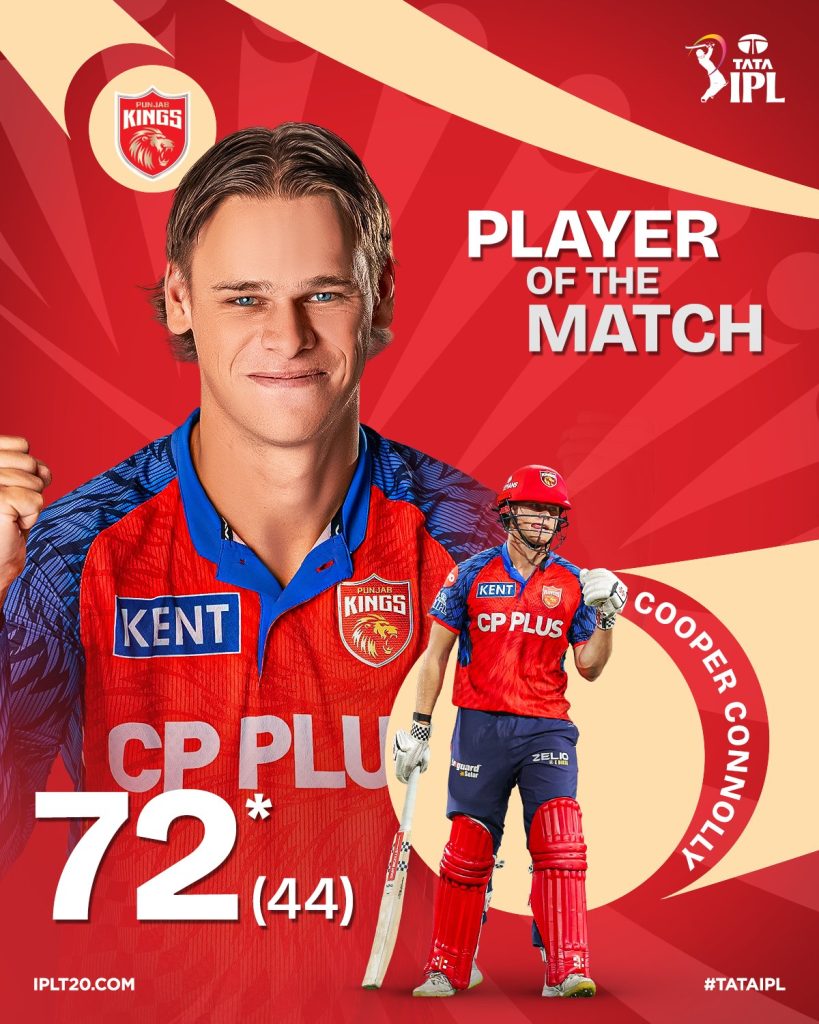
In practice, the theory had not been easy to locate recently. Since being picked up by Punjab, Connolly had managed just one 50-plus score in 16 innings, averaging 6.76 across his last 15 outings. The numbers were hard to defend. But Punjab were not recruiting for form. They were recruiting for fit — a specific technical trait against a specific type of bowling on a specific type of surface. What mattered on March 31 in Mullanpur was not what had happened in those 15 innings before. It was what was going to happen in the next 44 balls.
Why Mullanpur Made Connolly the Right Choice
The alignment between Connolly’s skill set and the Mullanpur conditions was not accidental. It was structural.
Among the ten regular IPL venues since 2024, Mullanpur has been among the toughest for batters against lengths shorter than a good length from seamers. Batters have averaged 24.07 against such balls at this ground, with a wicket falling every 16 deliveries — both figures second only to the Chinnaswamy in this period. Punjab themselves were particularly exposed to this specific challenge, losing 32 wickets to back-of-a-length and short-pitched deliveries last season — the most by any side — a vulnerability RCB had ruthlessly exploited in the first qualifier at this very venue.
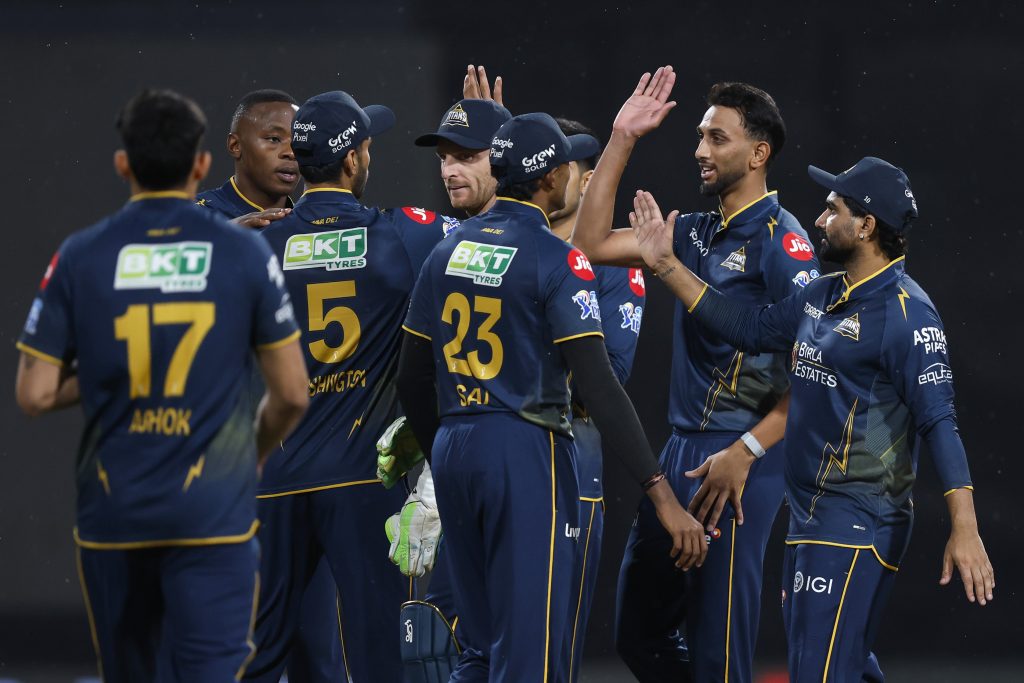
Gujarat Titans’ seam attack, equipped with the pace of Kagiso Rabada, the cutters of Ashok Sharma, and the variations of Prasidh Krishna, was well-placed to probe the same weakness. The pitch demanded a solution. Connolly was it.
Mullanpur vs Back-of-Length Bowling — Since 2024
| Metric | Mullanpur | League Average |
|---|---|---|
| Batting average vs short of length | 24.07 | — |
| Balls per wicket vs short of length | 16 | — |
| Ranking among IPL venues | 2nd hardest | — |
| PBKS wickets lost to this length (2025) | 32 (most of any team) | — |
Punjab’s own bowlers had already demonstrated the optimal method in the first innings of this match: hit the deck, take pace off, and force batters to target the longer square boundaries. As head coach Ricky Ponting noted during the broadcast, this was a surface that demanded control off the back foot. Connolly, shaped by Western Australian conditions and Perth Scorcher pitches that reward exactly that kind of play, fits that demand almost by design.
What the BBL Data Says
The evidence for Connolly’s back-foot competence against pace is not anecdotal. In the BBL, it is a defining strength. He averages 39.83 against seam bowling from the back foot, and only four players with a comparable number of deliveries faced can claim a superior combination of average and strike rate against pace from that position.
That foundation is what Punjab were banking on. Not the recent lean patch in broader T20 cricket, not the modest aggregate across those 16 innings, but the specific technical quality that makes him difficult to dislodge when bowlers try to shorten their lengths and force him onto the back foot. On a pitch like Mullanpur, where that is precisely what the best bowlers do most often, the investment made complete sense.
The Debut Innings: A Blueprint Executed
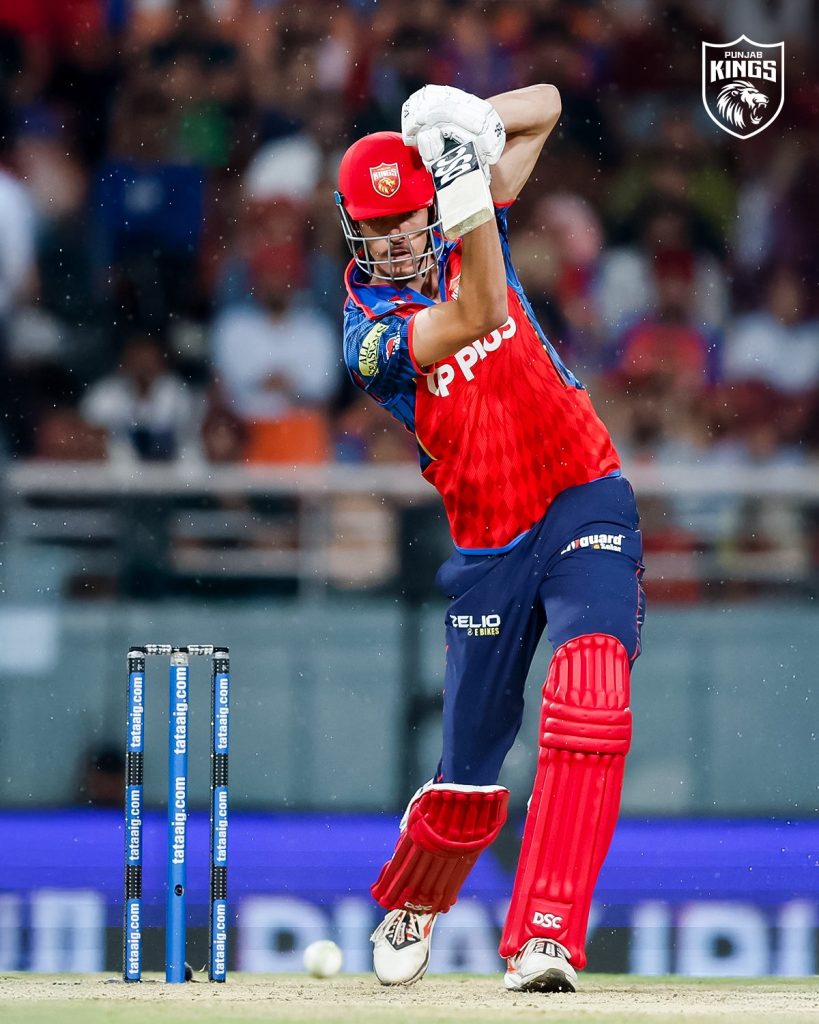
Connolly announced himself early. In the powerplay, with the field up and Ashok Sharma trying to hit the deck outside off stump, Connolly cut him flat over backward point for a maximum. It was the first declaration — he was not going to be unsettled by the short ball on this surface.
As the chase tightened and Gujarat’s bowlers looked to exploit the conditions more aggressively, Connolly returned to the same method. Rabada dug it in short — dispatched to the square boundary. Prasidh Krishna followed suit — same result. In between, he took on Rashid Khan too, finding three boundaries, all off the back foot and in front of the wicket.
The contrast between Connolly and the rest of the batting unit on this specific dimension was stark.
Back-Foot Play vs Seamers — PBKS Chase vs GT
| Balls | Runs | SR | Wickets | |
|---|---|---|---|---|
| Cooper Connolly | 13 | 25 | 192.31 | 0 |
| All other PBKS batters | 54 | 71 | 131.48 | 4 |
He faced 13 balls from seamers off the back foot, scoring 25 runs at a strike rate of 192.31 with two fours and two sixes. The rest of the Punjab batting order managed 71 runs from 54 such deliveries at 131.48, losing four wickets in the process. On the game’s defining technical battleground, Connolly did not just perform — he dominated.
The Fifty, the Collapse, and the Rescue
By the time Punjab had slipped to 121 for 6 with five overs remaining, requiring 42 from the last five, the game appeared to be tilting decisively toward Gujarat. Wickets had fallen in clusters. The drizzle had made the ball slippery and the outfield unpredictable. Prasidh Krishna was in the middle of a match-turning spell, having removed Shreyas Iyer and Shashank Singh in quick succession before also claiming Marcus Stoinis. Three wickets from the impact sub in a critical stretch had rewritten the contest.
Connolly had been batting through all of it. When width was on offer from Rabada, he cut it behind square to raise a 34-ball fifty — the landmark arrived with the composure of a player who had done it a hundred times before, not one playing his first IPL innings. He closed the same over with a six off a short ball, fetching it from outside off and depositing it into the deep square leg stand. Those two strokes brought the equation back into Punjab’s control: 30 required off the last four overs.
Marco Jansen arrived and hit a six to maintain the tempo. Xavier Bartlett did the same. But it was Connolly who threaded the chase together, rotating strike with intelligence when boundaries were not available and accelerating when they were. With two runs needed from the final over, Washington Sundar bowling, he backed away and drove through the covers on the first ball. Punjab Kings won by three wickets. Connolly walked off on 72 not out from 44 balls — five fours, five sixes, a strike rate of 163.63.
Cooper Connolly’s IPL Debut — Innings Summary
| Runs | Balls | 4s | 6s | SR | Result |
|---|---|---|---|---|---|
| 72* | 44 | 5 | 5 | 163.63 | PBKS won by 3 wickets |
What It Means for Punjab’s Home Narrative
Punjab Kings’ record at Mullanpur entering this match stood at three wins and seven losses. Correcting that imbalance over the course of a season demands personnel tailored to the conditions — batters who can handle the bounce, the carry, and the movement that makes this venue uniquely demanding. In that context, Connolly is not just a tactical option. He is a structural fit.
The one caveat worth noting: ESPNcricinfo had previously reported a suspected stress fracture in his back, which may limit or prevent him from bowling in this IPL. His value to the XI may therefore rest entirely on his batting. On the evidence of March 31, that may be enough. A batter who scores 72 not out under collapse-induced pressure, who out-scores every other Punjab batter on the game’s most critical technical dimension, and who finishes the match from 121 for 6, does not need a bowling contribution to justify his place.

It was one innings. But it was the right innings, in the right conditions, for exactly the right reasons. Mullanpur demanded a back-foot specialist. Connolly delivered one of the more composed debuts the IPL has seen in recent seasons.
Read More: Brad Haddin on How Punjab Kings Built a Squad to Last – Not Just Compete