
 SA329 (82.3 ov)
 AUS
AUS AFG175/9 (19.4/20 ov)
 ZIM
ZIM SAA0
SAA0 EST0
EST0 SAS
SAS LAZ
LAZ ROMA
ROMA CAG
CAG TOR
TOR COMO
COMO BAN
BAN WI
WI IND-W
IND-W ZIM-W
ZIM-W GOA
GOA SC Delhi
 Milan
Milan Bologna
 Parma
Parma Udinese
 ABH0
ABH0 ALF1
ALF1 PAK110
 SL114/2 (18.1/50 ov, target 111)
 NAM316/7
 IRE253 (44.5/50 ov, target 317)
 NZ198/3
 IND199/4 (13.2 ov)
 SIKM184
 NAGA187 & 46/4 (34 ov)
 JHK131/4 (47 ov)
 DELHI515/5d
 ODSA194
 SVCS13/0 (5 ov)
 BRODA616
 J & K6/0 (4 ov)
 CHD685/5d
 HP49/0 (14 ov)
 CGR216/8 (95 ov)
 AP231
AP231 HYD193/2 (54 ov)
 PNJB431
 KNTKA297/7 (95 ov)
 TPURA194
 KER101/6 (35 ov)
 BENG350
 MAHA278/9 (100 ov)
 GUJ223
 AUCK
AUCK CANT
CANT CD
CD ND
ND DEN
DEN QAT
QAT KENYA
KENYA KUW
KUW POA
POA SPR
SPR BRB
BRB VAG
VAG NED371/5
 OMA265 (49.3/50 ov, target 372)
 JAB113 (19.3/20 ov, target 133)
 KAY132/9
 JER224
 SEEB0
SEEB0 EBFC0
EBFC0 Venezia
 Inter Milan
 Genoa
Genoa Juventus
 Sevilla2
 Osasuna0
 PSG2
PSG2 Lyon0
Lyon0 Mohun Bagan1
 Chennaiyin0
 BEI2
BEI2 JHM2
JHM2 RCH0
RCH0 KRE0
KRE0
China’s quantum satellite communication network marks a significant milestone in secure data transmission. It all kicked off with the launch of the Micius (Mozi) satellite on August 16, 2016, from the Jiuquan Satellite Launch Center.
This bold initiative, formally called QUESS (Quantum Experiments at Space Scale), has changed our understanding of information security over long distances. By using quantum mechanics, researchers have gone beyond just theoretical models to create a working system that covers thousands of kilometers, connecting satellite nodes with extensive ground fiber networks.
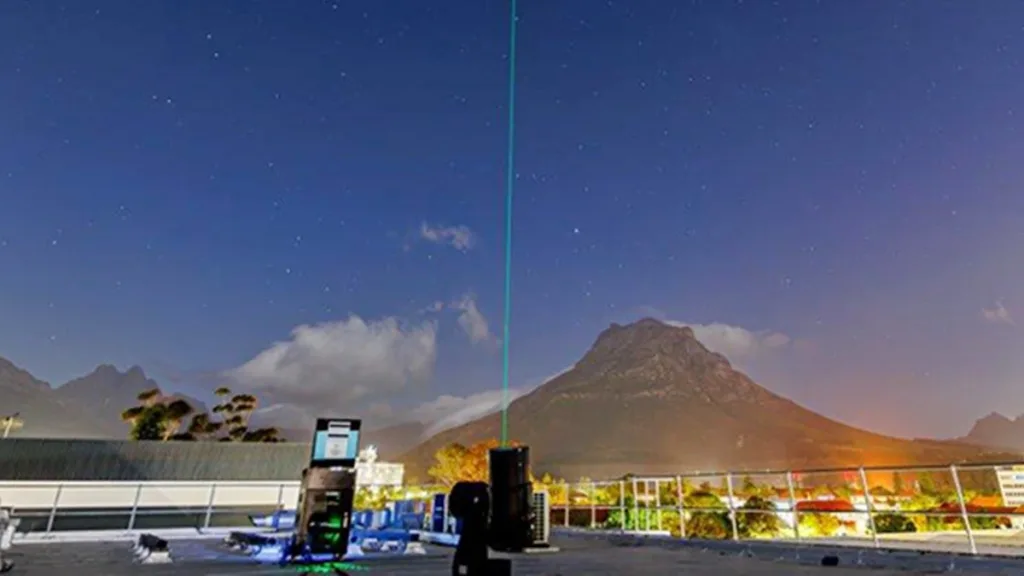
Quantum satellite: Micius and the Evolution of Quantum Key Distribution
The Micius (Mozi) satellite operates in a sun-synchronous orbit at 500 km. The Chinese Academy of Sciences designed it to enable secure communication through the BB84 protocol, introduced by Charles Bennett and Gilles Brassard in 1984. This protocol guarantees that any attempt to intercept the quantum key creates noticeable disturbances, which makes the communication inherently secure.
In 2017, the team successfully demonstrated quantum key distribution (QKD) between ground stations separated by 1,200 kilometers, showing that quantum states could be preserved over vast distances.
The network’s capabilities got even more impressive in June 2017, when they conducted a quantum-encrypted video call between Beijing and Vienna, Austria, covering about 7,600 kilometers. This development laid the groundwork for a truly global secure communication framework.
China’s ground infrastructure has advanced significantly, featuring a 2,000-kilometer fiber network linking Beijing and Shanghai that became operational in 2017. By 2021, the government announced plans to expand this system to cover over 10,000 kilometers of fiber links, effectively creating a hybrid quantum-classical network that stands strong against traditional decryption methods.
Impact on Global Cybersecurity and Future Prospects
Nations are rethinking how they handle data sovereignty and secure technology infrastructure. While we can’t confirm the timeline for a fully operational global quantum satellite network by May 2026, the current developments suggest that intercontinental quantum-secured links may soon become the norm for critical government and financial communications.
Not everyone agrees on how fast things will progress. Some experts point out that atmospheric interference presents real challenges for high-bandwidth quantum links. However, recent data indicates that the success of the Micius mission has already addressed key issues related to signal loss and decoherence, as reported by TechCrunch.
The real question now is how this technology will scale for commercial use. As Indian startups and global telecom companies map out their quantum strategies, many are looking to China’s QUESS project as the go-to model for large-scale deployment.
Transitioning from experimental phases to a fully integrated global network will require not just hardware, but also a cohesive set of international standards. As we approach 2030, the urgency to secure data against future quantum-enabled decryption will likely push for global standardization of these protocols, according to The Verge.
FAQs
How does the BB84 protocol ensure security?
The BB84 protocol uses quantum states to transmit information. According to quantum mechanics, the act of measuring or observing these states changes them, allowing both the sender and receiver to instantly detect any eavesdropping attempts.
What is the significance of the Micius satellite?
Launched in 2016, Micius was the first satellite to enable quantum-secured communication from space. It demonstrated that quantum entanglement could be maintained over 1,200 kilometers of space-to-ground distance, a feat previously thought impossible.
Will quantum communication replace current internet security?
It’s unlikely to replace the internet anytime soon. Instead, it’s expected to act as an ultra-secure layer for critical data, like financial transactions and government communications, working alongside existing classical encryption methods.
How does the Micius satellite ensure secure data transmission?
The Micius satellite uses quantum key distribution to send encryption keys via entangled photons, making any interception attempt immediately detectable by both the sender and receiver.
What is the total length of the integrated quantum communication network in China?
The integrated quantum communication network in China spans over 10,000 kilometers, combining both ground fiber-optic cables and satellite links to enable secure global communication.


