SA329 (82.3 ov)
 AUS
AUS BAN
BAN WI
WI IND-W
IND-W ZIM-W
ZIM-W GOA
GOA SC Delhi
 Milan
Milan Bologna
 Parma
Parma Udinese
 Venezia
 Inter Milan
 Genoa
Genoa Juventus
 Monza
Monza Napoli
 ROMA4
ROMA4 CAG2
CAG2 TOR1
TOR1 COMO3
COMO3 SAS2
SAS2 LAZ6
LAZ6 AFG177
 ZIM140 (19.1/20 ov, target 178)
 AUCK
AUCK CANT
CANT CD
CD ND
ND SIKM184
 NAGA187 & 46/4 (34 ov)
 JHK131/4 (47 ov)
 DELHI515/5d
 ODSA194
 SVCS13/0 (5 ov)
 BRODA616
 J & K6/0 (4 ov)
 CHD685/5d
 HP49/0 (14 ov)
 CGR216/8 (95 ov)
 AP231
AP231 HYD193/2 (54 ov)
 PNJB431
 KNTKA297/7 (95 ov)
 TPURA194
 KER101/6 (35 ov)
 BENG350
 UAE
UAE OMA
OMA ENG
ENG SL
SL DEN
DEN QAT
QAT KENYA
KENYA KUW
KUW POA
POA SPR
SPR BRB
BRB VAG
VAG PAK110
 NAM316/7
 IRE253 (44.5/50 ov, target 317)
 NZ198/3
 IND199/4 (13.2/20 ov, target 199)
 NED371/5
 JAB113 (19.3/20 ov, target 133)
 KAY132/9
 Gamba Osaka
 Buriram
 Kashima
 Pohang Steelers
 ABH0
ABH0 ALF1
ALF1 Sevilla2
 Osasuna0
 PSG2
PSG2 Lyon0
Lyon0
There was a bit of chaos in the Delhi Capitals camp, to say the least. In the middle, they had just been reduced to 26 for 4 in the fifth over. Outside, their head coach Hemang Badani was rushing towards the dugout to stop David Miller, who was about to put his helmet on and walk in.
DC were chasing only 142, a below-par target on most days in the IPL. But Wednesday was not most days. The red-soil pitch at the Ekana Cricket Stadium in Lucknow was assisting fast bowlers, and the white Kookaburra had been seaming and swinging, and singing and stinging, throughout the match.
The Daunting Task
Lucknow Super Giants were bowled out for 141 in 18.4 overs. But even that was looking insurmountable. KL Rahul was out first ball of the chase, Nitish Rana fended one to first slip, Pathum Nissanka top-edged a pull, and Axar Patel was cut in half.
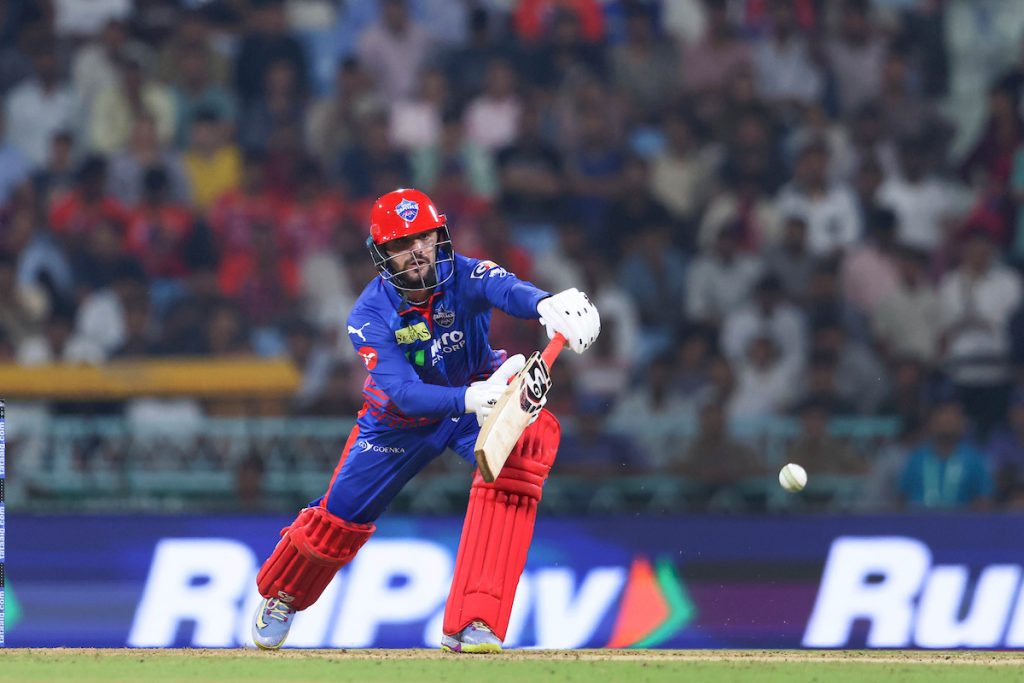
| DC Early Collapse | How Out |
|---|---|
| KL Rahul | First ball duck |
| Nitish Rana | Fended to first slip |
| Pathum Nissanka | Top-edged pull |
| Axar Patel | Cut in half |
| Score | 26-4 in 5 overs |
With Mohammed Shami, Mohsin Khan, and Prince Yadav breathing fire, Badani wanted to send in Tristan Stubbs.
The Last-Minute Switch
Things were happening too fast, though. Stubbs was still wearing his pads and had to rush. When he reached in the middle, he was greeted by two slips. He opened his account with a first-ball four but it was the 22-year-old Sameer Rizvi who played the match-defining knock.
Rizvi had come in as the Impact Player at the fall of the second wicket. DC also had the option of bringing in Ashutosh Sharma or Karun Nair. While Ashutosh, a finisher, wasn’t really suited for the situation, Nair had a strong case given his vast experience and the ability to graft an innings. Still, they went with Rizvi.
“Before the season, the coaches had told me they wanted me to play my natural, positive game,” Rizvi said after the match. “I went in with the same intent. But we lost two more wickets in the next over. That put us in a difficult situation.”
Forced to Adapt
Rizvi had to change his plan. In fact, he took nine balls to open his account. “Stubbs and I discussed that there were plenty of overs left and the target was not too big, so we should take some time,” he said.
The idea was to wait for bad deliveries but they were simply not coming. After that four by Stubbs, there was no boundary for the next 19 deliveries. DC crawled to 40 for 4 at the end of seven overs; it would have been worse if not for eight wides and four leg-byes.
| Early Struggle | Stats |
|---|---|
| Score after 5 overs | 26-4 |
| Score after 7 overs | 40-4 |
| Boundary drought | 19 deliveries after Stubbs’ four |
| Extras | 8 wides, 4 leg-byes |
| Required rate | From 7.1 to approaching 8 |
The required rate, originally 7.1, was inching towards eight. The situation was becoming desperate.
The Breakthrough Moment
Then, Anrich Nortje bowled a short ball to Rizvi. The batter arched back and ramped it fine of deep third for a six, ending the boundary drought and keeping the asking rate in check.
“It also boosted my confidence and I became a lot more relaxed,” Rizvi said.
That one shot changed everything. The pressure that had been mounting over nearly three overs was released in an instant. Rizvi had found his rhythm.
Taking Apart Shahbaz Ahmed
Since LSG had brought in Shahbaz Ahmed as Impact Player after their collapse in the first innings, they did not have a fifth frontline bowler. In the tenth over, Rishabh Pant finally introduced Shahbaz into the attack.
And Rizvi, living up to his billing as a spin-hitter, took him apart.
He swept Shahbaz’s second ball over short fine leg before cutting and glancing him for two more fours. It felt as if he had pricked the pressure bubble. In all, 16 runs came from that over.
| Rizvi vs Shahbaz (10th over) | Runs |
|---|---|
| Sweep over short fine leg | 4 |
| Cut | 4 |
| Glance | 4 |
| Other runs | 4 |
| Total from over | 16 |
Pant realised his mistake and immediately switched back to his seamers. For the next 21 balls, there was no boundary. It was Rizvi once again who ended the drought.
The Turning Point
With Aiden Markram looking to target the pads from around the wicket, Rizvi backed away and launched him over wide long-on. Finally, he was batting the way he wanted to.
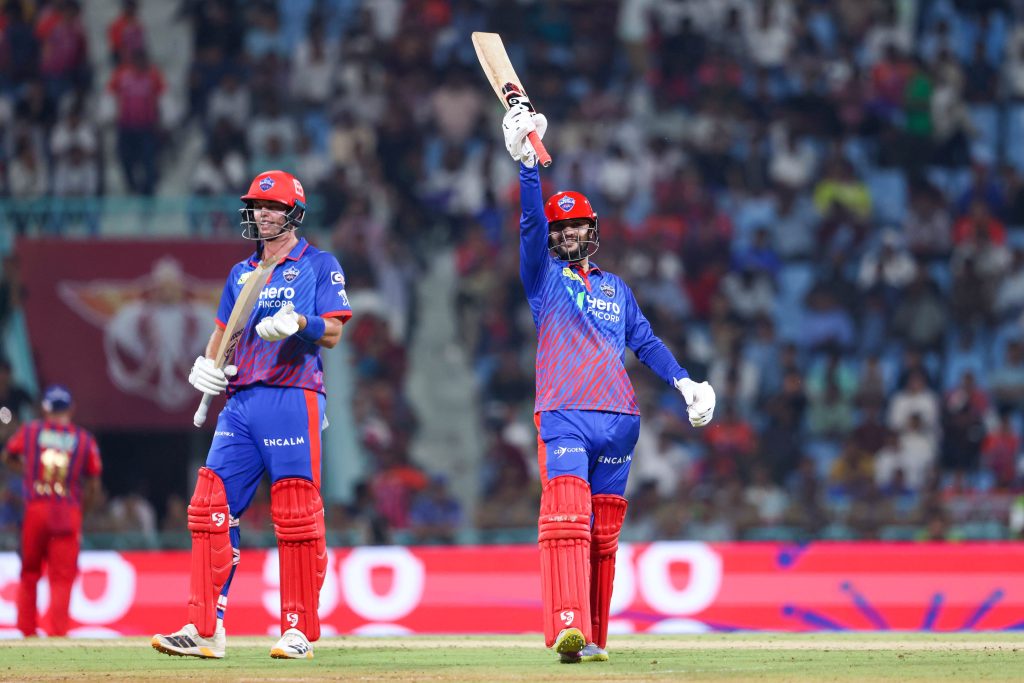
Markram angled the next ball across the right-hander, only to be cut to the point boundary. That also brought up Rizvi’s half-century, off 37 balls.
The Finishing Flourish
In the 16th over, he pulled Mohsin for a four and a six off successive deliveries before ending the game with yet another six, this time off Abdul Samad.
Rizvi finished on 70 not out off 47 balls. He hit five fours and four sixes in his innings and was named the Player of the Match. Stubbs, a far more accomplished batter, played second fiddle. His contribution in their unbroken stand of 115 off 76 balls was 39 off 32.
| Match-Winning Partnership | Stats |
|---|---|
| Rizvi | 70* off 47 balls |
| Stubbs | 39 off 32 balls |
| Partnership | 115* off 76 balls (unbroken) |
| Rizvi boundaries | 5 fours, 4 sixes |
The Local Advantage
Rizvi represents Uttar Pradesh in domestic cricket and benefited from having played a lot of cricket in Lucknow. “You have an idea of boundaries, conditions, atmosphere,” he said.
This familiarity proved invaluable. While other batsmen struggled to adapt to the difficult conditions, Rizvi’s experience at the venue gave him a crucial edge. He knew where the boundaries were shorter, understood how the pitch was likely to behave, and was comfortable with the surroundings despite the pressure.
The Consistency Challenge
This is Rizvi’s third IPL season. He was with Chennai Super Kings for IPL 2024 before moving to DC the following year. But he has played only 14 games in the league.
| Sameer Rizvi’s IPL Journey | Details |
|---|---|
| IPL 2024 | Chennai Super Kings |
| IPL 2025 | Delhi Capitals |
| IPL 2026 | Delhi Capitals |
| Total games | 14 matches |
| Age | 22 years old |
| Role | Spin-hitter |
A lack of consistency has resulted in a lack of consistent opportunities. Rizvi is aware of this and wants to fix it this time. For that, he could not have started in a better manner.
The Chaos Explained
The chaos that unfolded at the Ekana Cricket Stadium on Wednesday encapsulated everything that makes the IPL compelling yet unpredictable.
A score of 141 all out should have been straightforward to chase. On paper, DC had the batting firepower to cruise home. But the pitch had other ideas.
The red-soil surface was offering movement both through the air and off the pitch. Mohammed Shami, Mohsin Khan, and Prince Yadav exploited these conditions perfectly, reducing what should have been a comfortable chase into a nail-biting thriller.
When DC slumped to 26-4, panic set in. Badani’s desperate dash to change the batting order mid-crisis showed just how quickly things can spiral in T20 cricket. The original plan had to be abandoned on the fly.
The Impact Player Gamble
The decision to use Rizvi as the Impact Player rather than the more experienced Karun Nair was a gamble that paid off spectacularly.
Nair, with his vast experience and proven ability to construct innings under pressure, seemed the safer choice. But DC’s coaching staff backed youth and aggression over experience and solidity.
That Rizvi initially had to abandon his natural game and graft for nine balls before opening his account shows the difficulty of the situation. Even the aggressive 22-year-old recognized that recklessness would be suicidal.
The Tactical Battle
The mini-battle within the larger contest was fascinating. LSG’s lack of a fifth frontline bowler became crucial when Pant introduced Shahbaz Ahmed in the tenth over.
Rizvi pounced, recognizing this as his opportunity to break free. The 16 runs from that over shifted momentum decisively in DC’s favor.
Pant’s immediate recognition of his error and switch back to seamers showed good captaincy, but by then, Rizvi had found his confidence. The subsequent 21-ball boundary drought showed LSG weren’t done fighting, but Rizvi’s ability to repeatedly end these droughts proved decisive.
The Winning Formula
Rizvi’s innings was a masterclass in adaptation:
- Initial Aggression Planned: Came in wanting to play his natural game
- Forced Adjustment: Took nine balls to score, discussed strategy with Stubbs
- Calculated Risk: Ramped Nortje for six to break drought
- Exploiting Weakness: Destroyed Shahbaz Ahmed for 16
- Sustained Pressure: Repeatedly broke boundary droughts
- Clinical Finish: Four and six off Mohsin, then six off Samad to seal victory
His 70 not out wasn’t a blazing innings from the start—it was intelligent, adaptive cricket played with aggression when opportunities arose and patience when required.
What It Means
For Rizvi, this innings could be career-defining. After 14 IPL games across three seasons with limited impact, he’s delivered when it mattered most, under immense pressure, in front of a home crowd.
For DC, it validated their decision to invest in young talent and trust them in crisis situations.
For LSG, it was a painful lesson in how quickly fortunes can change in T20 cricket. Defending 142 with the ball seaming and swinging, they had DC on the ropes at 26-4 and 40-4. Yet they couldn’t close out the game.
The IPL’s chaos is part of its charm. Wednesday’s match at Lucknow epitomized this perfectly—a low-scoring thriller on a helpful pitch, a team collapsing while chasing a modest target, a last-minute tactical switch, a 22-year-old rising to the occasion, and a finish that defied all early expectations.
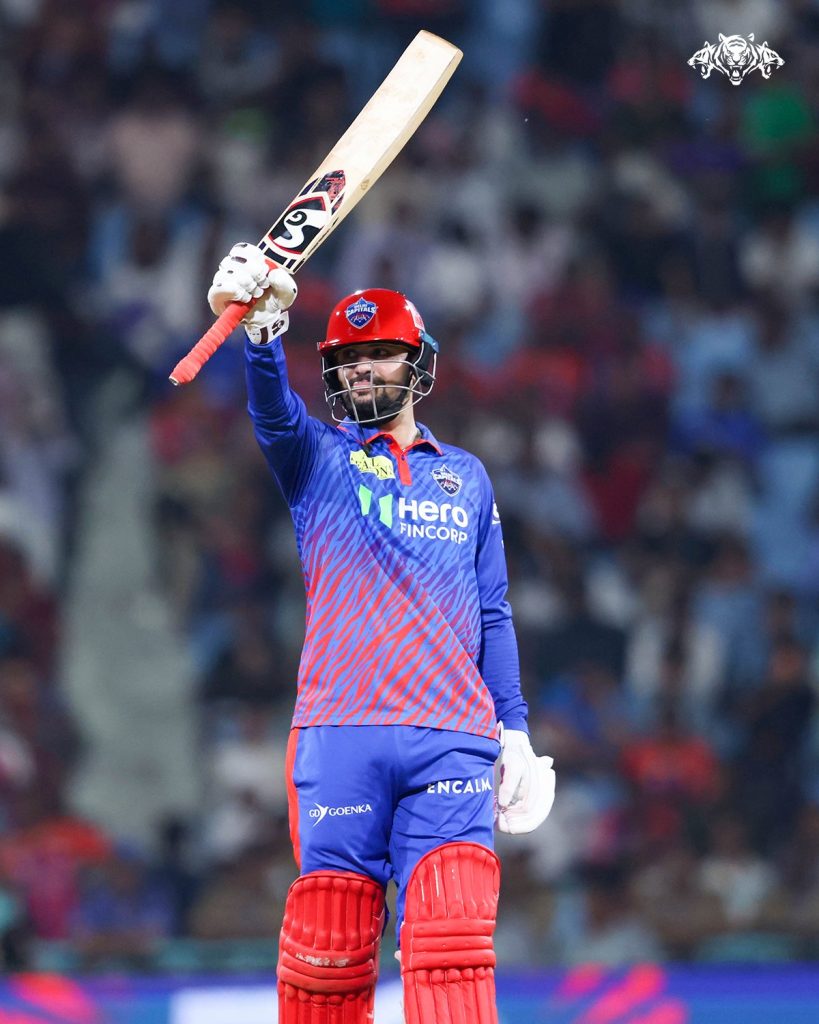
Sameer Rizvi’s unbeaten 70 off 47 balls rescued Delhi Capitals from the brink of disaster and gave him the platform to establish himself as a consistent IPL performer.
As he acknowledged, he couldn’t have started his quest for consistency in a better manner.
Read More: What’s Gone Wrong for Varun Chakravarthy and Why It May Not Last